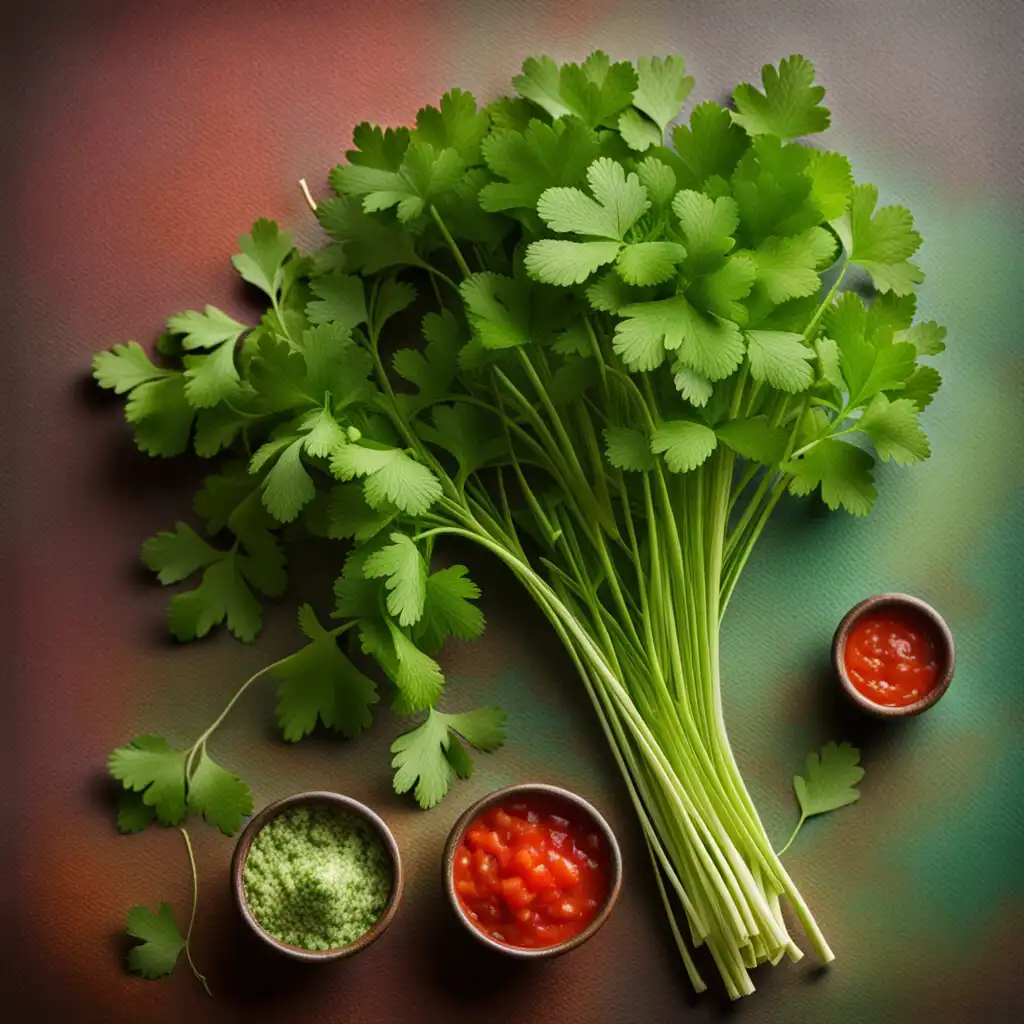
cilantro
noun cilantro
sɪˈlɑːntrəʊ
An herb with green leaves and a strong smell, often used in cooking
I added some chopped cilantro to the salsa for extra flavor.
cilantro
sɪˈlɑːntrəʊ
Loading…
sɪˈlɑːntrəʊ
An herb with green leaves and a strong smell, often used in cooking
I added some chopped cilantro to the salsa for extra flavor.
Audio could not be loaded. Please try again later.
Cilantro is a type of herb that is often used in cooking, especially in Mexican, Latin American, and Asian cuisine. It has a distinct, fresh and slightly citrusy taste, and is most commonly used to add flavor to dishes like salsa, guacamole, and curry. When you see cilantro mentioned in a recipe or food menu, it refers to the leaves and stems of the plant, which are usually chopped or minced and added to the dish.
Cilantro and coriander come from the same plant. Cilantro usually refers to the fresh leaves of the plant, while coriander refers to the seeds that the plant produces.
Both cilantro and coriander are used in cooking to add flavor to dishes, but they have different applications.
Cilantro is often used in fresh salsa, guacamole, and other Mexican dishes, while coriander is used in spices, curry powder, and pickling spices.
Essentially, cilantro is the leafy part of the plant while coriander is the dried seed.
Open word: Coriander →The smelly mystery of...
Watch on YouTube ↗One of the biggest problems with young chefs is too much addition to the plate. You put cilantro and then tarragon and then olive oil and then walnut oil or whatever. It's too much.
Seafood and Survival %\PIPE%...
Watch on YouTube ↗One of my favorite ways to use cilantro is in a beautiful clear soup with monkfish and lime. It's a great dish for cooler weather, especially because monkfish is very good in fall and winter. Also, I like the meatiness and rich texture of monkfish.
I usually eat six times a day, small meals. For breakfast, an egg and a corn tortilla, salsa and cilantro, and some ham. For snacks, I'll have an apple, some string cheese, a yogurt. For lunch I'll have salad with protein in it and for dinner usually steamed vegetables and chicken or fish.
I use a lot of citrus for seasoning. There's lemon or lime juice in just about everything, and that balances with salt very nicely. Things like toasted cumin seeds for the beans. The use of fresh herbs like oregano and cilantro.
The real secret to guacamole is that you use exactly the elements that you need, which is cilantro, onion, tomato, and jalapenos. And, of course, avocado.
Does a bona fide chimichurri have cilantro in it? Who cares? Cooking for your family, unless your family includes Joel Rubouchon, is liberating in that regard.
When I eat cilantro, it's like someone sprayed perfume down my throat. It closes up my throat, even if there's only a little piece. I like Mexican food, and I'll go out to a Mexican restaurant and tell them, 'Look, I will die if you get cilantro in my food.' Then there's always that one little piece that falls in, and I gag.
As a historian, I love every little detail, but whole long passages about wood paneling and journeys on horseback and every stop at every inn had to go out the window. I decided the history in the books should be like spice in a soup - a little went a long way. Like cilantro.
I believe in the magic of preparation. You can make just about any foods taste wonderful by adding herbs and spices. Experiment with garlic, cilantro, basil and other fresh herbs on vegetables to make them taste great.
When you're in Portuguese-African Brazil, or Lisbon, or Mozambique, sometimes piri piri is used as a condiment. Sometimes piri piri is just spices from a jar, and sometimes it's made with garlic, olive oil, cilantro, parsley, and some light chilies.