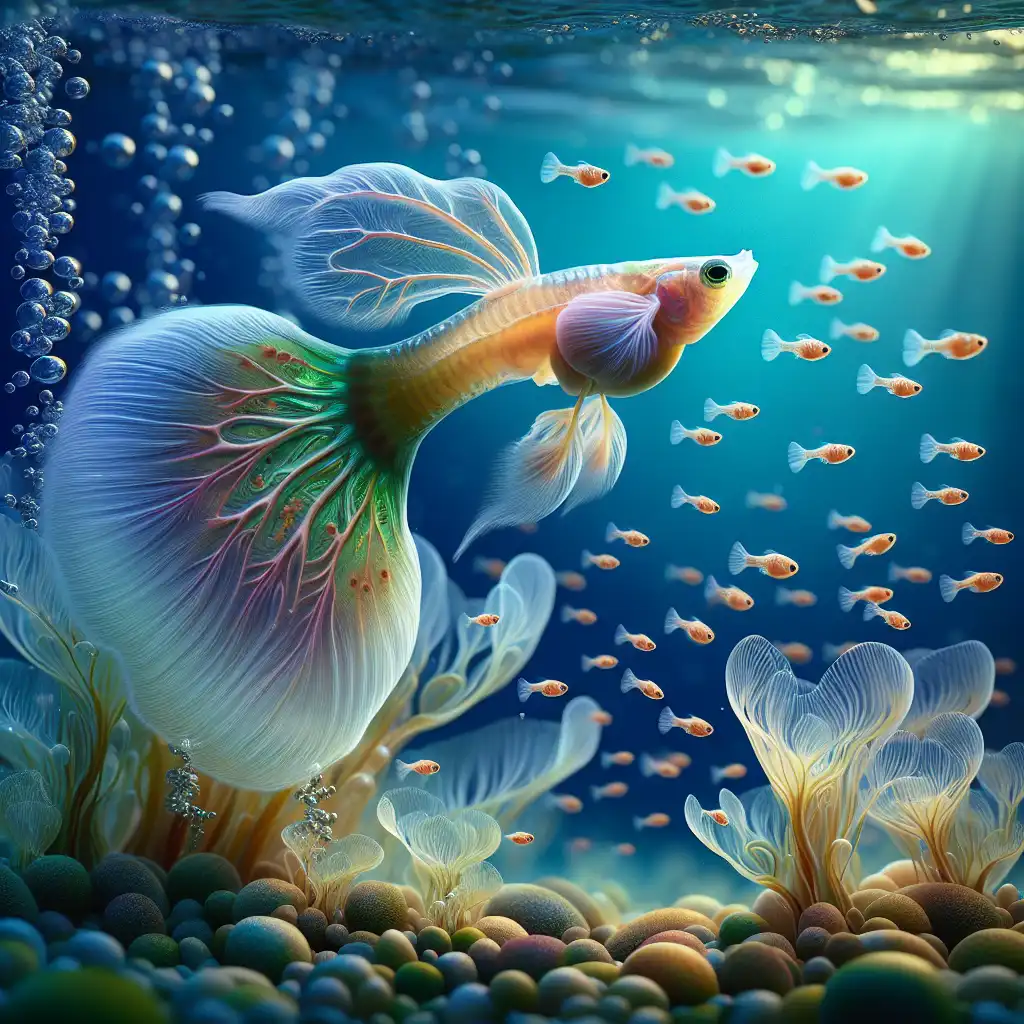
ovoviviparous
adjective ovoviviparous
ˌəʊvəʊvɪˈvɪpərəs
Describes an animal that hatches eggs inside its body then gives live birth.
Guppies, a type of fish, are ovoviviparous.
ovoviviparous
ˌəʊvəʊvɪˈvɪpərəs
加载中…
ˌəʊvəʊvɪˈvɪpərəs
Describes an animal that hatches eggs inside its body then gives live birth.
Guppies, a type of fish, are ovoviviparous.
音频无法加载,请稍后再试。
The word 'ovoviviparous' describes a way that some animals give birth. It means that instead of laying eggs outside of their body or giving birth to live young, they keep the eggs inside their body until they hatch and give birth to the live young. This process happens in animals like some snakes, sharks, and insects. It is not a commonly used word in everyday language, but may be useful in biology or animal sciences.
Ovoviviparous describes an organism that gives birth to live young but the eggs hatch inside the body, so the young are born fully formed.
Examples of ovoviviparous animals are sharks and some reptiles such as snakes and lizards.
Viviparous describes an organism that gives birth to live young that have developed in the mother's uterus. Examples of viviparous animals are mammals such as dogs, cats, and humans.
Ovoviviparous applies to animals that lay eggs that hatch inside the body, leading to live births, while viviparous applies only to animals that give live birth after developing the young ones in their uterus.
打开单词: Viviparous →