inexact
adjective inexact
ˌɪnɪɡˈzækt
Not completely accurate or correct
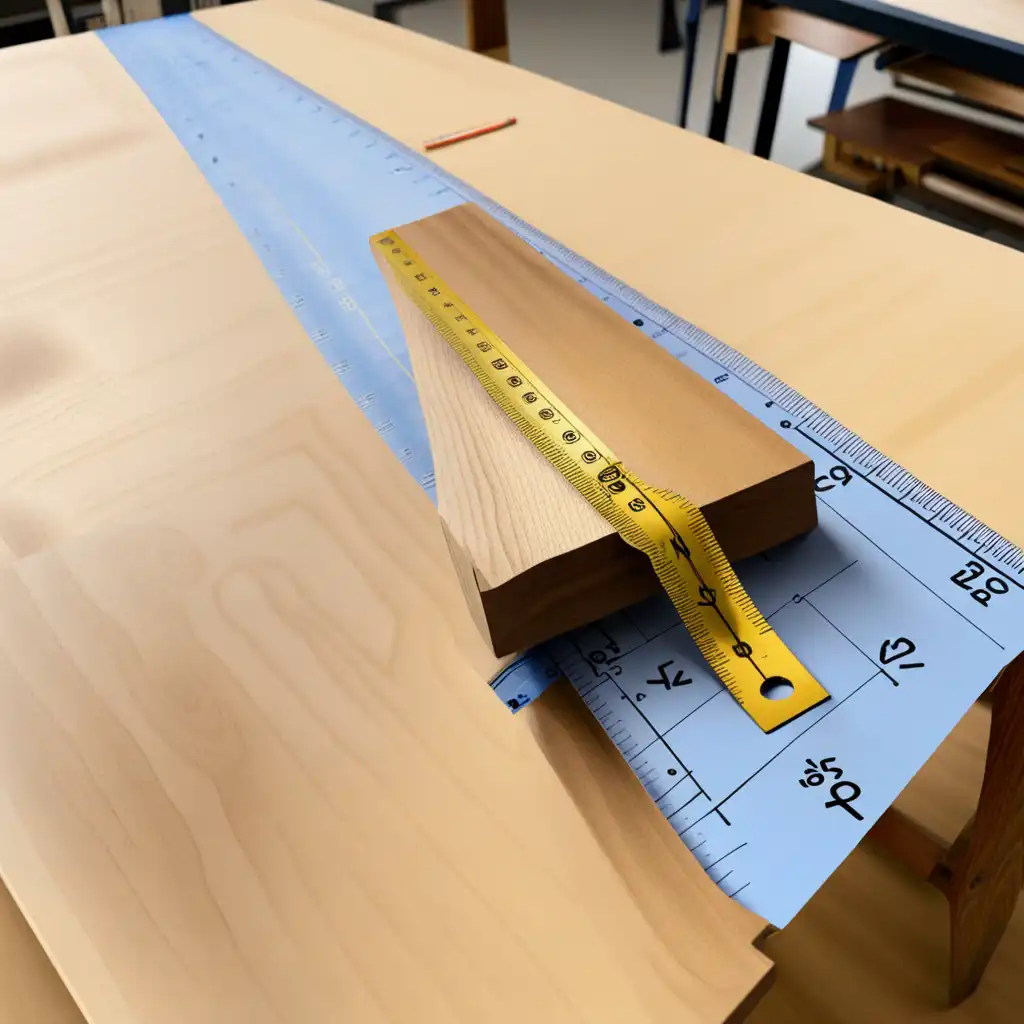
The measurements were inexact, so the final product was flawed.
inexact
ˌɪnɪɡˈzækt
불러오는 중…
ˌɪnɪɡˈzækt
Not completely accurate or correct
The measurements were inexact, so the final product was flawed.
오디오를 불러오지 못했어요. 잠시 후 다시 시도해 주세요.
'Inexact' is an adjective that describes something that is not precise or accurate. It means that the information given or the answer given is not completely correct or specific. We use the word 'inexact' in situations where we want to express that the information or answer is close to being right, but not exactly right or accurate. For example, saying "the estimate given by the salesman was inexact" means that the estimate given by the salesman was not completely accurate.
Approximate means close to an exact value or quantity, but not quite exact. For example, if a store sells a shirt for $19.99, you might approximate the price as $20.
Inexact is not the same as approximate. An approximation can be pretty close to the exact value, while an inexact measurement could be quite far off.
Approximate is used when you want to give an estimate that is close to the exact value, while inexact is used when you want to point out that something is not precisely accurate or consistent.
단어 열기: Approximate →Erroneous refers to something that is incorrect or mistaken. This means that the information or statement is completely wrong and not true.
For example, if someone said that the sky is purple instead of blue, that would be an erroneous statement.
Erroneous means completely wrong while inexact means not entirely accurate. Erroneous is applicable when something is completely untrue, while inexact is applicable when something is partially true but not precise.
단어 열기: Erroneous →Faulty means that something is flawed or defective. It suggests that there is a problem with the thing in question and it is not working properly.
For example, a faulty car might have a problem with the engine that prevents it from starting or running smoothly.
Faulty suggests something is broken or not functioning correctly, while inexact suggests a lack of precision or accuracy.
Faulty is applicable when talking about something that is defective or has a problem, while inexact is applicable when talking about something that is not precise or accurate.
단어 열기: Faulty →A flaw is a mistake or a defect in something that makes it not able to function properly. For example, a car with a flaw in its engine might not start or might run poorly.
The term flaw is used when there is a problem with the design, construction, or functioning of something, while inexact is used when there is a lack of precision or accuracy in some measurement or calculation.
Both words can be used in a wide range of contexts, from a flawed argument to an inexact measurement of time.
단어 열기: Flaw →The words imprecise and inexact are similar in meaning, but have a slight difference. Imprecise means not exact, with a lack of detailed accuracy, while inexact means not exactly correct, not accurate, or not precise.
An example of using imprecise would be measuring something with a ruler that has marks only every half-inch, making it difficult to get an exact measurement.
Imprecise describes things that lack precision or accuracy, while inexact describes things that are not exactly correct or accurate.
단어 열기: Imprecise →Inaccurate means that something is not correct or true. For example, if a news article reports incorrect numbers, it is inaccurate.
If someone's measurements are wrong, they are inaccurate.
Inaccurate means wrong or untrue, while inexact means imprecise or not exact.
단어 열기: Inaccurate →Incorrect means something is factually or logically wrong, while inexact means something is not precise or accurate. Incorrect is usually used when something is completely wrong or false, while inexact is usually used when something is not exact or not completely accurate.
For example, a math answer can be incorrect if it is completely wrong, but it can be inexact if it is close to the correct answer but not precise.
단어 열기: Incorrect →Mistaken means that something is wholly wrong or incorrect. It implies that a misunderstanding or misinterpretation has occurred, leading to a totally incorrect outcome.
For example, if a clock is not perfectly accurate and is off by a few minutes, it would be considered inexact. But if someone completely misreads the time on the clock and shows up an hour late for a meeting, they would be considered mistaken.
Inexact refers to slight imprecisions or errors, while mistaken implies a complete misunderstanding or incorrectness.
단어 열기: Mistaken →The problem with feature filmmaking is that it offers you this mirage of being able to achieve perfection, as the theory of it is that you have control of every part of the film, though in reality, it is as inexact as the next thing in your life.
Trust your gut instinct over spreadsheets. There are too many variables in the real world that you simply can't put into a spreadsheet. Spreadsheets spit out results from your inexact assumptions and give you a false sense of security. In most cases, your heart and gut are still your best guide.
My father was a research scientist in tropical medicine, so I always assumed I would be a scientist, too. I felt that medicine was too vague and inexact, so I chose physics.
The parts of physics that are exact are the parts of physics that are exact. The parts that are inexact are vastly greater. Sensible scientists don't waste their time pushing against doors that endlessly will not give. They are opportunistic and go where they can, but there are pitfalls in that.
I suspect that most playgoers don't understand how inexact a science literary translation is. Even the simplest of lines may lend itself to multiple renderings.
Thomas More's birth was noted by his father upon a blank page at the back of a copy of Geoffrey of Monmouth's 'Historia Regum Britanniae'; for a lawyer John More was remarkably inexact in his references to that natal year, and the date has been moved from 1477 to 1478 and back again.