entomological
adjective entomological
ˌentəməˈlɑːdʒɪkl
Connected to the study of insects
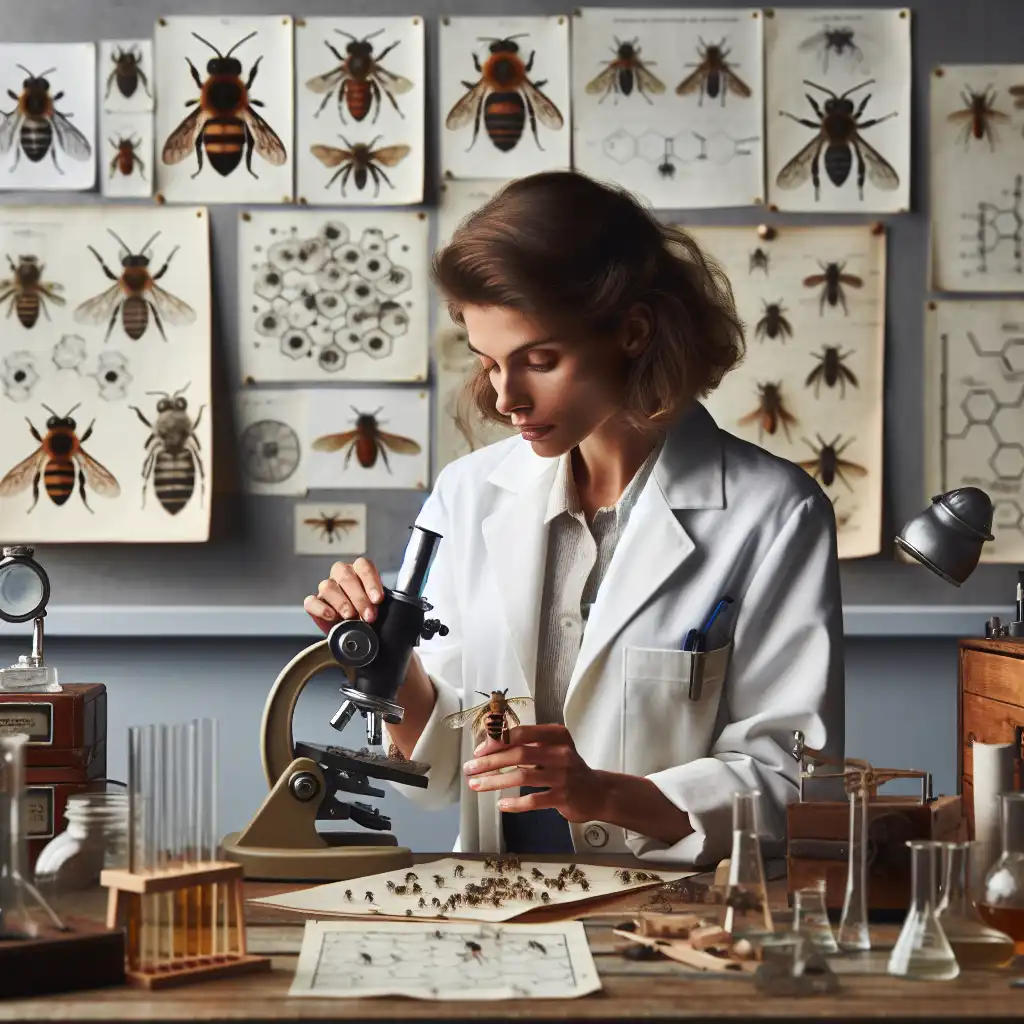
She is an entomological researcher, specializing in bees.
entomological
ˌentəməˈlɑːdʒɪkl
Loading…
ˌentəməˈlɑːdʒɪkl
Connected to the study of insects
She is an entomological researcher, specializing in bees.
Audio could not be loaded. Please try again later.
'Entomological' is an adjective used to describe anything related to insects. It is often used in scientific or academic contexts when discussing the study or classification of insects. For example, an entomological researcher might study the behavior and biology of mosquitoes or the diversity of beetle species. If you are talking about insects or researching them, you might use the word 'entomological' to describe your work or findings.
Biological pertains to all living organisms, including plants and animals, and their processes and functions. Entomological pertains specifically to insects and their study.
Biological is a broader term that encompasses all living things, while entomological is more specific and focuses only on insects.
Biological can be applicable in a variety of fields, such as medicine, genetics, ecology, or botany, while entomological is mainly used in the study of insects and their behavior, ecology, taxonomy, management, or conservation.
Open word: Biological →Entomological relates to the scientific study of insects while naturalistic relates to a style of art or literature that attempts to represent things as they appear in nature.
Entomological can apply to scientific research, collecting and studying insects, while naturalistic is applicable to creative expression that emphasizes the realistic portrayal of nature without embellishment or interpretation.
Open word: Naturalistic →Scientific refers to anything related to the study and practice of science, which can include biology, chemistry, physics, and many other fields.
The word entomological specifically refers to the study of insects. It is a more specialized term that is only applicable to a particular subset of scientific inquiry.
You would use the word scientific to describe anything related to the practice of science, while you would use entomological to describe something specific to the study of insects.
For example, you might say that a particular study is scientific if it follows the scientific method and draws conclusions based on empirical evidence, while a study of bee behavior would be entomological because it focuses specifically on insects.
Open word: Scientific →Systematic refers to the study of the taxonomic classification and relationships between organisms. It is applicable when studying the diversity of life and how organisms are related to each other.
Entomological is specific to the study of insects, while systematic is broader and focuses on the classification and relationship of all organisms.
Open word: Systematic →Taxonomic refers to the system of organizing and naming living organisms. This classification system helps scientists better understand the diversity and relationships between different species.
So while entomological research might focus on the specific behavior or biology of a particular insect species, taxonomic classification would be used to group that species with others within a larger group, such as its genus or family.
Open word: Taxonomic →Entomological pertains to the study of insects, while zoological pertains to the study of animals. Entomology focuses specifically on insects such as beetles, butterflies, and bees, while zoology encompasses a much broader range of animals, including mammals, reptiles, birds, fish, and amphibians.
Open word: Zoological →