
depression
noun depression
dɪˈpreʃn
A feeling of sadness, like when you lose interest in things you used to enjoy
She has been dealing with depression since her husband's death
depression
dɪˈpreʃn
読み込み中…
dɪˈpreʃn
A feeling of sadness, like when you lose interest in things you used to enjoy
She has been dealing with depression since her husband's death

dɪˈpreʃn
A period when the economy of a country is bad, many people are unemployed, and there's little trade or activity
The Great Depression in the 1930s caused major economic damage

dɪˈpreʃn
A low point or dip in a surface
He accidentally stepped into a depression in the ground
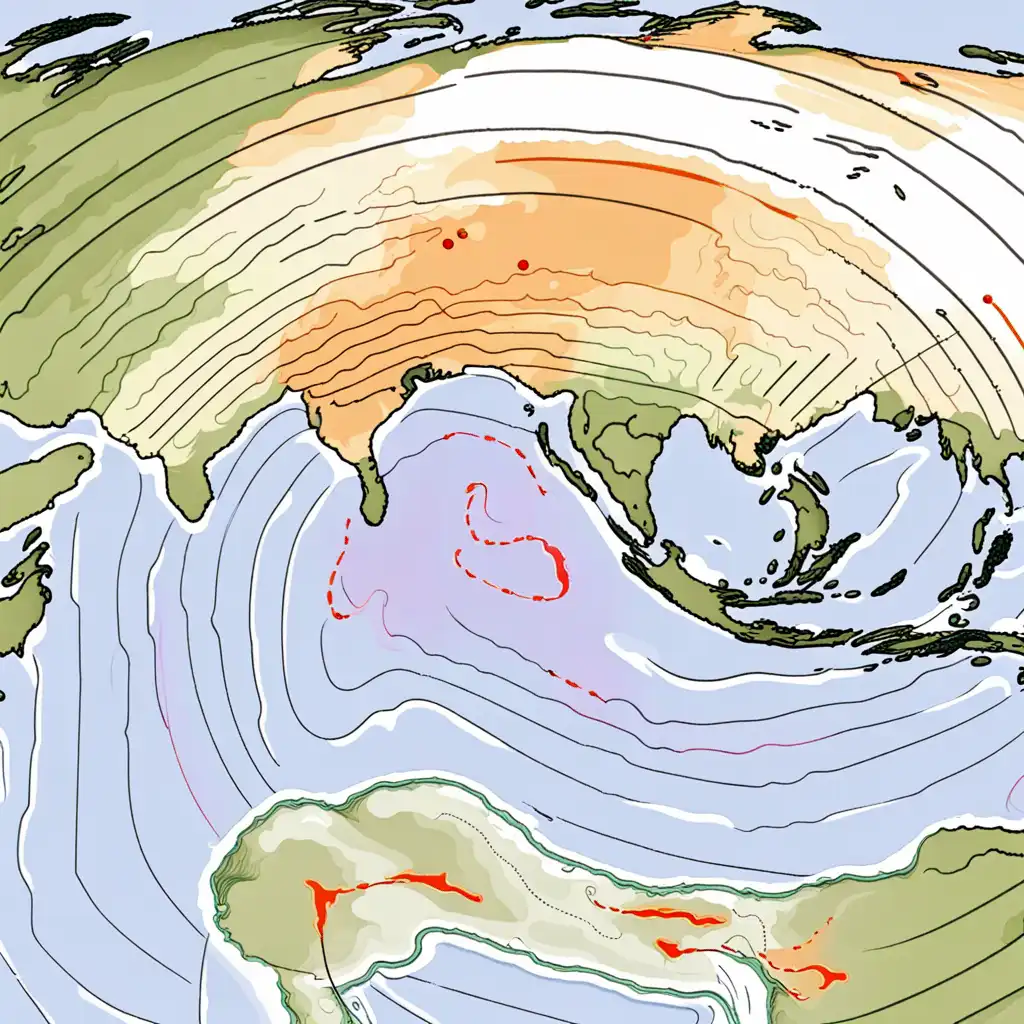
dɪˈpreʃn
In weather, a region where the atmospheric pressure is lower than its surrounding areas
The weather map shows a depression moving in from the west
音声を読み込めませんでした。しばらくしてからもう一度お試しください。
The word 'depression' can have different meanings depending on the context in which it is used. In a medical context, 'depression' refers to a mental health condition that can affect a person's mood, thoughts, and behavior. If someone is diagnosed with depression, it means they may feel sad or hopeless for long periods of time, have low energy, difficulty sleeping or concentrating, and may even have thoughts of suicide. In a more general context, 'depression' can also refer to feeling sad or down for a longer period of time, sometimes without an obvious cause. It can affect anyone, regardless of their situation or background. It's important to use the word 'depression' with sensitivity and awareness, as it can be a serious and complex issue for those experiencing it. If you're ever unsure of how to use the word or discuss the topic, it's always best to ask for clarification or seek out reliable information.
Dejection refers to a state of sadness or low spirits that can be temporary and situational, such as feeling down after a breakup or failure.
Dejection is a temporary feeling of sadness, while depression is a more serious and ongoing mental health condition.
単語を開く: Dejection →Despair is a feeling of complete hopelessness and loss of faith in oneself or one's future. It is a more extreme version of depression, often stemming from a specific traumatic event or prolonged stress.
Despair can be harder to treat, and may require intense therapy or support.
Both words refer to negative emotions, but depression is a broader term that includes a range of feelings, while despair is more severe and specific.
If you're feeling down for a few days or weeks, it might be depression, but if you're feeling completely hopeless and unable to function, it could be despair.
単語を開く: Despair →Depression often refers to a medical condition where a person experiences persistent feelings of sadness and hopelessness, whereas despondency is a feeling of extreme sadness or discouragement.
Depression is a medical diagnosis that requires professional treatment, while despondency is a temporary feeling that can be caused by various situations.
Depression is applicable when a person has a mental health condition that causes them to feel sad and hopeless, while despondency can be applicable in any situation where someone feels discouraged or down.
単語を開く: Despondency →Dismay is a feeling of shock, disappointment, or anxiety often caused by a sudden or unexpected event or news. It is a short-term emotion that can be resolved once the cause of the dismay is addressed.
In simpler terms, depression is a more serious and prolonged feeling of sadness that affects a person's overall well-being, while dismay is a temporary feeling of disappointment or shock caused by a specific event.
単語を開く: Dismay →Gloom is a feeling of sadness or hopelessness that can be caused by a variety of factors, such as bad news or a rainy day.
Depression is a serious medical condition that requires professional help, while gloom is a temporary feeling that can be lifted through positive actions.
単語を開く: Gloom →Depression and melancholy are both words that describe feelings of sadness but have different implications.
Melancholy is a more poetic term that describes a deep, reflective sadness.
Melancholy can be a natural response to a difficult situation, such as a breakup or the loss of a loved one, but it can also be a chronic feeling that is difficult to shake.
Depression is a clinical disorder that requires medical attention, whereas melancholy is a more natural feeling that can be a part of the human experience.
単語を開く: Melancholy →It is often characterized by feelings of sadness, hopelessness, and emptiness that last for long periods of time. Misery refers to a feeling of extreme unhappiness or distress that can be caused by a variety of different factors, such as physical pain, relationship problems, or financial struggles.
While depression is a specific mental health condition, misery is a broader term that can describe any intense emotion of sadness or distress.
単語を開く: Misery →Depression is a serious medical condition that can affect how a person thinks, feels, and functions. It is a long-lasting state of sadness, hopelessness, and loss of interest in enjoyable activities.
Sadness is a common and normal human emotion. It is a temporary feeling of disappointment, grief, or unhappiness that is usually triggered by a specific event or situation.
Depression is a medical condition that requires professional help, while sadness is a temporary emotion that is a natural part of the human experience.
単語を開く: Sad →Sorrow is a natural emotion that arises from a sad event, like the death of a loved one, the end of a relationship, or a significant loss.
It can cause feelings of sadness, grief, and heartache. Sorrow is a temporary emotion that usually fades over time.
Both depression and sorrow are feelings of sadness, but depression is a more severe and ongoing condition that requires treatment, while sorrow is a natural emotion that is a normal part of the human experience.
単語を開く: Sorrow →is also very helpful. Other promising treatments, like transcranial magnetic stimulation, are being investigated too. So if you know someone struggling with depression, encourage them gently to seek out some of these options. You might even offer to help with specific tasks,
YouTube で見る ↗I've had a tremendous problem with depression in my life. I'd rather not talk about it, because it's over. But depression is real.
I wanted to sit with the leading experts in the world about what causes depression and anxiety and crucially what solves them, and people who have come through depression and anxiety and out the other side in all sorts of ways. And I learned a huge amount from the amazing people I got to know along the way.
YouTube で見る ↗Oh, sure, we have another world war coming, and another great depression, but where are the leaders this time?
They're usually characterized as large depressions in the ground called calderas, located above multiple openings in the Earth's crust. In terms of eruptions, supervolcanoes explode at a magnitude of eight, the highest and most violent classification
YouTube で見る ↗I found that with depression, one of the most important things you could realise is that you're not alone.
depression is one of the biggest problems now affecting schools around the world and don't be surprised if the whole thing in the end is a source of more frustration than it is success for a lot of people and my answer for a lot of education systems is that you know often policymakers scratch their head and think how can we solve all these
YouTube で見る ↗I've suffered through depression and anxiety my entire life.
For the many millions experiencing bipolar disorder around the world, life is split between two different realities - elation and depression. Although there are many variations of bipolar disorder, let's consider a couple.
YouTube で見る ↗When you are in depression, almost magically, nothing motivates you.
and it got so bad for him that he suffered severe depression, and spent the last half of his life in and out of mental institutions. But eventually his ideas won out. Today they're considered fundamental and magnificent. All research mathematicians accept these ideas, every college math major learns them, and I've explained them to you in a few minutes.
YouTube で見る ↗I have had periods of depression in my life.
but as a mental condition similar to depression. Psychologists of the time speculated that it represented difficulties letting go of childhood, or even a longing to return to one's fetal state. But over the next few decades, the understanding of nostalgia changed in two important ways.
YouTube で見る ↗I suffer from deep depression, so my only release is music.
can also make it easier to establish a regular habit of exercise. School sport participation has also been shown to reduce the risk of suffering from depression for up to four years. Meanwhile your self-esteem and confidence can get a big boost. There are a few reasons for that.
YouTube で見る ↗I truly, truly suffered depression, to the deep core.
A mass in space creates a depression in space-time, and a ball rolling across a depression will curve like it's being attracted to the other mass. The bigger the mass, the deeper the depression and the stronger the gravity.
YouTube で見る ↗Earlier in my life, I had a tendency toward depression.
Stress chemicals help mobilize energy and increase alertness. However with chronic stress our bodies become flooded with these chemicals, resulting in a loss of brain cells and an inability to form new ones, which affects our ability to retain new information. Depression is another culprit.
YouTube で見る ↗Depression is something I've dealt with every day of my life.