ventilator
noun ventilator
ˈventɪleɪtər
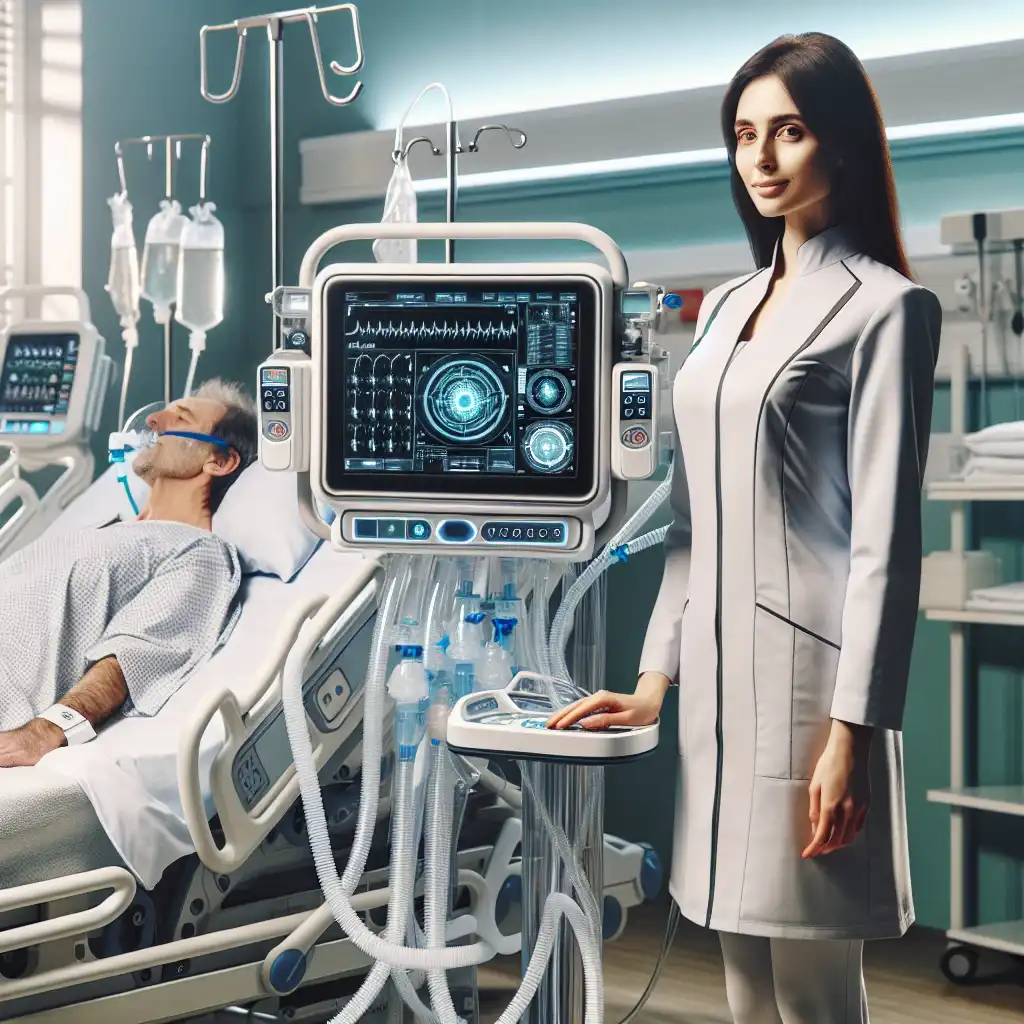
A machine that helps people breathe by pushing air into their lungs when they cannot do it themselves.
The patient in critical condition was immediately put on a ventilator.
ventilator
ˈventɪleɪtər
読み込み中…
ˈventɪleɪtər
A machine that helps people breathe by pushing air into their lungs when they cannot do it themselves.
The patient in critical condition was immediately put on a ventilator.

ˈventɪleɪtər
A device that allows fresh air to come in and stale air to go out from a closed space.
The room was stuffy, so they opened the window and turned on the ventilator.
音声を読み込めませんでした。しばらくしてからもう一度お試しください。
A ventilator is a machine that helps a person breathe when they are unable to do so on their own. It is used in hospitals when someone's lungs are not working properly, such as in cases of respiratory distress or failure. The machine pumps oxygen into the person's lungs and removes carbon dioxide. It is a life-saving device that is essential in critical care situations.
An oxygenator is a device that adds oxygen to a liquid, such as blood in a heart-lung machine during open-heart surgeries. It helps the blood circulate and get oxygenated.
An oxygenator is used during surgical procedures to add oxygen to the blood, while a ventilator is used in hospitals to help patients who can't breathe properly.
単語を開く: Oxygenator →A respirator is a device that helps a person breathe by filtering and circulating air. It's often used in industrial settings, to protect workers from harmful particles, and by people with respiratory problems like asthma, to assist with breathing.
A ventilator is a machine that helps a person breathe when they can't do so on their own. It's commonly used in hospitals and is often used in critical care situations for patients with severe respiratory issues, like those experiencing acute respiratory distress syndrome (ARDS).
To summarize, respirators help you breathe easier by filtering and circulating air, while ventilators help you breathe when you can't do so on your own.
単語を開く: Respirator →But mechanical ventilators take over the process, getting oxygen into the body when the respiratory system cannot. These machines can bypass constricted airways, and deliver highly oxygenated air to help damaged lungs diffuse more oxygen.
YouTube で見る ↗Ventilators are life-saving tools in the fight against COVID-19. They are durable medical devices intended to control or assist a critically ill patient's breathing by mechanically delivering them a predetermined percentage of oxygen.
And she was barely breathing and she was blue. And the emerg. staff pulled out all the stops. They gave her medications to raise her blood pressure. They put her on a ventilator. And I was shocked and shaken to the core.
YouTube で見る ↗A journal of the 'subjective' kind I have always thought foolish, as nurturing a morbid self -consciousness in the writer; and yet, alone so much as I am, it is well to have some sort of a ventilator from the interior.
operation and we have to put you to sleep under general anesthesia and the anesthesiologist you see in this picture in his left hand he has a laryngoscope in his right hand he has an endotracheal tube and that's the tube that we connect to the ventilator that helps to breathe for you
YouTube で見る ↗I will take personal responsibility for transporting the 20,000 ventilators anywhere in this country that they want, once we are past our apex. But don't leave them sitting in a stockpile, and say well we're going to wait and see how we allocate them across the country.
of the doctors said that there was an 80% chance she would either die or develop serious disabilities everything from blindness to paralysis to ventilator
YouTube で見る ↗Masks. Test Supplies. Ventilators. Gloves. Gowns. These are the most critical tools that our doctors, nurses and other first responders on the front line of the coronavirus pandemic need to continue their tireless work and save lives.
with multiple broken bones and multiple lacerations. He needs immediate surgery seven units of blood, a mechanical ventilator to help him breathe and several more operations along the way. It's amazing he survived. But perhaps even more amazing, he was not wearing a seat belt.
YouTube で見る ↗Ventilators can be reused but hospitals need a sufficient supply to treat critically ill patients while still allowing enough time for each ventilator to be refurbished between patients.
despite the nerve pain and the spasms and the infections and the shortened life spans. And I accept that it is way more difficult for people who are paralyzed from the neck down. For those who rely on ventilators to breathe,
YouTube で見る ↗don't use any ventilator pieces that are in the supply chain of current ventilators; make sure that we use as few parts as really necessary; make sure that we can get those parts anywhere in the world, because we want people in lots of different countries to be able to make these same things; and then make it easy to use,
YouTube で見る ↗In pandemics robust agile supply chains deliver the masks ventilators, testing kits and vaccines that we all need. It saves lives, and it helps to reopen our economy.
YouTube で見る ↗trying to deal with a huge caseload of patients and then very sick patients and just scrambling to be really creative around these these limited resources that we have everything from personal protective equipment to the medications and space and ventilators and healthcare workers to just being in full-on
YouTube で見る ↗there in trying to import with an air bridge medical equipment is urgent neither because in many countries there are not even enough ventilators just for the hospitals that already exist nevermind the onslaught of patients that are coming and perhaps most importantly
YouTube で見る ↗