
knoll
noun knoll
nəʊl
A small, rounded hill or mound
The house was built on a small knoll overlooking the sea.
knoll
nəʊl
Đang tải…
nəʊl
A small, rounded hill or mound
The house was built on a small knoll overlooking the sea.
nəʊl
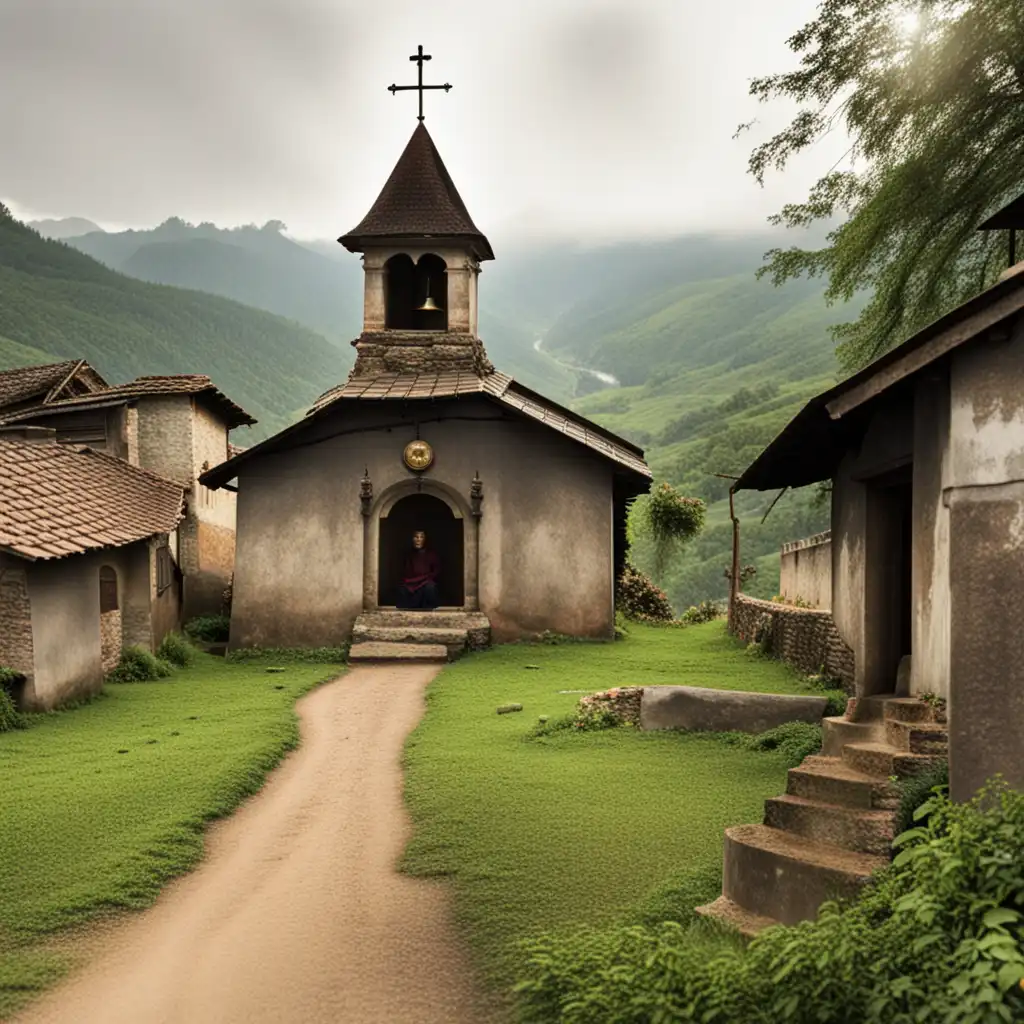
A bell, or the sound made by a bell
I heard the knoll of the church bell calling the villagers to prayer.
Không tải được âm thanh. Vui lòng thử lại sau.
A knoll is a small hill that is usually grassy and rounded on top. Knolls can often be found in fields, parks, or other open areas. It's a word that's used to describe a specific type of hill, rather than just any hill. For example, you might say "Let's have a picnic on top of that knoll over there" or "I love to sit on the knoll in the park and watch the sunset." It's a pretty specific word that's not used all that often, but it can be useful when you want to describe a certain type of hill or landscape feature.
A butte is a raised area of land with a flat top and steep sides. It usually stands alone in a plain, and is formed by erosion.
A knoll is a small, rounded hill or mound. It is less steep and smaller compared to a butte.
In simpler terms, a butte is a big hill with a flat top and steep sides, while a knoll is a small hill or mound. Buttes are formed through erosion and stand alone in a plain while knolls are usually found in groups or on the slopes of hills.
Mở từ: Butte →Elevate means to raise something to a higher position or level.
It can be applied to physical objects like a platform or a building, or it can be used figuratively to describe someone's status, mood or thoughts being elevated.
Elevate is used when something is being raised higher, while knoll describes a naturally occurring small hill or mound.
Mở từ: Elevate →Eminence refers to a high point or hill, often used to describe a prominent or important person in a field. For example, a mountain peak can be an eminence, or a respected professor might be referred to as an eminence in their field of study.
Both words have to do with hills or elevated land, but eminence implies a greater height or significance, while knoll suggests a smaller and more gentle rise in the landscape.
Mở từ: Eminence →Both hill and knoll refer to raised areas of land, but there is a subtle difference between the two.
A hill is a larger and steeper raised area of land than a knoll. Hills are often rocky, and can take a longer time to climb to the top.
They are generally used to describe a significant change in elevation in the landscape, such as hills in a mountain range.
A knoll is a small, rounded hill. If you see a rise in the earth, but it's not as tall or steep as a hill, it could be called a knoll.
They are generally softer in appearance and have a gentler slope than hills.
Both words can be used in similar situations, but a hill tends to be more significant in size and scale, while a knoll is smaller and generally refers to a gentle rise in the ground.
Mở từ: Hill →Both hillock and knoll refer to small mounds or hills, but there are some slight differences in their usage.
Hillock is typically used to refer to a small, natural hill or mound, usually covered in grass or vegetation.
A knoll may also have a flatter or more rounded top than a hillock.
Hillock emphasizes the natural or organic qualities of a small mound, while knoll emphasizes its built or designed qualities.
Mở từ: Hillock →A hummock and a knoll are both small hills or mounds of raised earth, but they have slightly different characteristics.
A hummock is a small hill or hillock that is usually created by the movement of soil or rocks, such as in a glacier or landslide.
Essentially, while both hummocks and knolls are small hills, hummocks are more irregular and often created by natural processes, while knolls are more distinct and often created intentionally.
Mở từ: Hummock →A knoll is a small hill or a mound of earth that is often located in a grassy area.
A mound is a large pile of earth or stones, often created by human activity.
It can be used for various purposes like burial or building structures, and it is usually much larger than a knoll. Mounds are often found in archaeological sites, sports fields or in landfills.
A knoll is a small and gentle hill while a mound is a larger pile of earth or stones often created by human activity.
Mở từ: Mound →A knoll is a small hill with a round shape, while a rise is a gradual elevation or incline in the land.
A rise is applicable when describing a gradual elevation in the land that may not necessarily form a distinct shape.
A knoll is a small hill with a distinct shape and a rise is a gradual elevation in the land.
Mở từ: Rise →A knoll is a small hill with gentle slopes, while a tor is a hill or rocky peak with a jagged summit. Knolls are usually gentle, grassy hills that are found in low-lying areas, while tors are rocky outcrops that can be found in higher altitudes or mountainous regions.
In simpler terms, a knoll is like a small, grassy bump on the ground, while a tor is a rocky mountain peak.
Mở từ: Tor →there's sub-colonies that are on top of all these little hills so you've got these rolling hills that go all the way to the sea and then there's a cliff drop to the sea and on the top of each of those little knolls uh is it is a little penguin colony chin
Xem trên YouTube ↗The world has become one big grassy knoll, crawling with lone gunmen who think they're the Warren Commission.
essentially the wider view and I'm surprised to see it's a second crevasse of snow but now seriously the storm is upon us and so I hasten off the knoll to
Xem trên YouTube ↗I would not call myself a veteran conspiracy theorist. Or an obsessed one. I pretty much peaked on the whole conspiracy theory thing in the '60s, with the grassy knoll, who really killed JFK, and who ordered the hit on Lee Harvey Oswald.
Another possible approach is right up the western front of the mountain. You can see why we sometimes call it Long Mountain. And from where you're standing at 6,000 feet in the valley, it's an easy hike up to the mature pinyon and juniper forest through that knoll at the front at 7,600 feet.
Xem trên YouTube ↗