
sump
noun sump
sʌmp
The bottom part of a machine, car or boat where undesirable substances collect.
There was oil leaking from the sump of the car.
sump
sʌmp
Cargando…
sʌmp
The bottom part of a machine, car or boat where undesirable substances collect.
There was oil leaking from the sump of the car.
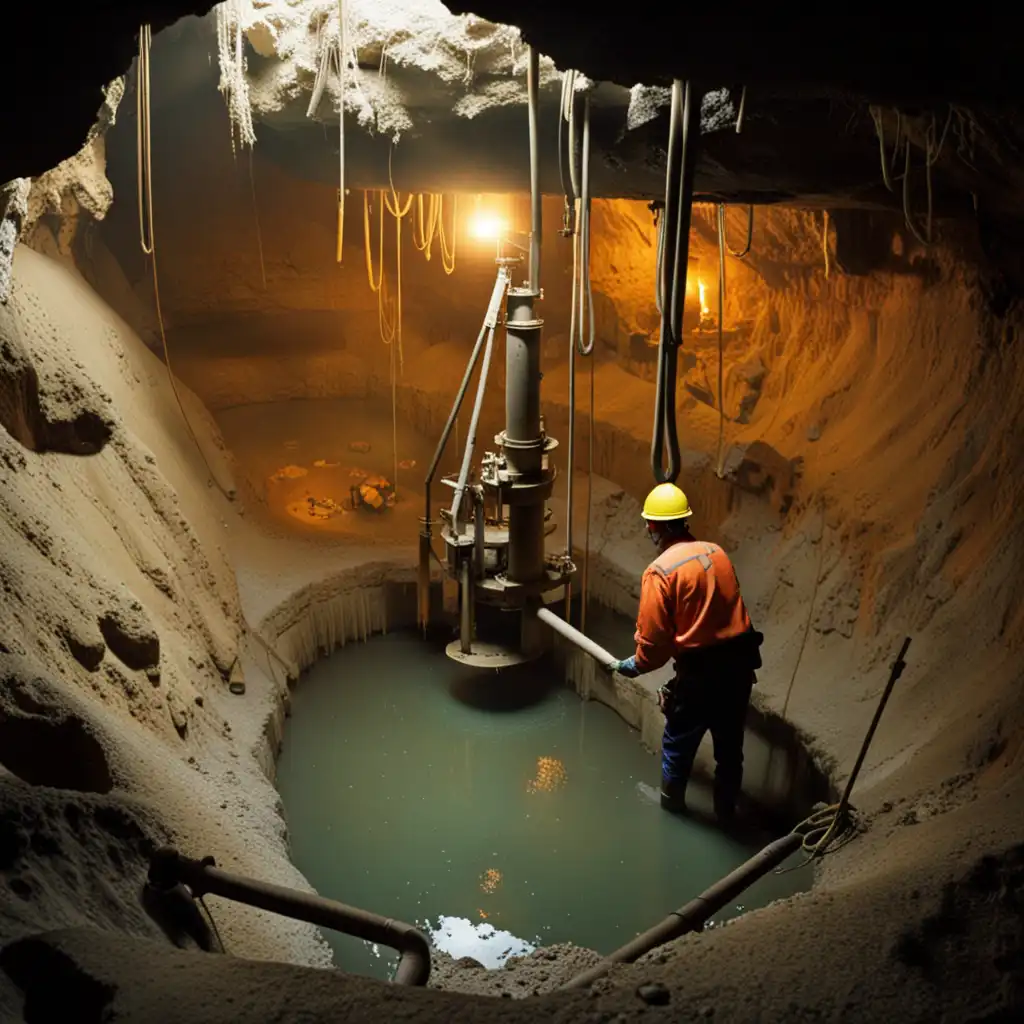
sʌmp
A pit or hollow where liquid collects, specifically in a mine or cave.
The crew pumped water from the sump to keep the mine dry.
No se pudo cargar el audio. Inténtalo de nuevo más tarde.
The word 'sump' refers to a low-lying area, often found in the basement of a building, where water collects and drains away. It can also refer to a pit in the ground used for collecting oil, coolant or other liquids in machinery. The word 'sump' is commonly used in the context of plumbing, construction, and industrial settings.
A basin is a wide and shallow container that is used for holding water, usually for washing or bathing.
A basin is for holding water for use, while a sump is for collecting water or other liquids that need to be removed.
Abrir palabra: Basin →A cistern is a container, typically an underground tank, used for storing water that is used for human consumption or other purposes.
A cistern is used for storing water that is meant to be used, while a sump is used for collecting water that needs to be drained.
Cisterns are usually used for drinking and cooking purposes, while a sump may be used for water drainage in a basement or for collecting rainwater.
Abrir palabra: Cistern →Depression and sump are both words used to describe a low spot or area.
A depression is a wide, shallow area in the ground or surface that is lower than the surrounding area.
It is commonly used in plumbing and drainage systems to prevent flooding or overflow. Depression refers to a low spot or feeling low emotionally, while sump refers to a deep pit that collects liquid waste in plumbing or drainage systems.
Abrir palabra: Depression →A hole is a general term used to describe an opening or cavity in a surface or object. For example, a hole can be a gap in the ground, a gap in a wall, or a gap in clothing.
A sump is a specific type of hole that is used for collecting water or other fluids. Sumps are often found in basements or underground areas and are used to prevent water from flooding the area.
Therefore, while both words describe an opening, hole is used for any type of opening while sump is used specifically for an opening that collects water or fluids.
Abrir palabra: Hole →A pit is an excavation or hole in the ground, often dug for a specific purpose such as coal mining or automobile repairs.
A sump is a low space or pit that collects or holds liquids or debris, often found in the basement of a building or in the bottom of a ship.
It is usually shallow and wider than a pit.
A pit is a deep and narrow hole in the ground while a sump is a shallow and wide collection area for liquids or debris.
Pits are commonly used for mining or repairs, while sumps are used for drainage and collection of fluids.
Abrir palabra: Pit →A reservoir is a large container used for storing fluids such as water, oil or gas.
A reservoir is usually used to supply or store fluid for a specific purpose such as providing water for a city's water supply, or storing oil for use in manufacturing.
A reservoir is a large container used to store fluid for a specific purpose, while a sump is a small container used to collect excess or unwanted liquid and prevent it from causing harm.
Abrir palabra: Reservoir →A sump is a low space that collects liquid or waste, whereas a tank is a large container that holds liquid or gas. Sumps are often found in basements, garages, or mechanical rooms to collect excess water or oil.
Tanks are used to store substances such as water, fuel, or chemicals. Sumps are typically smaller and used for drainage purposes, while tanks are larger and meant for storage.
Abrir palabra: Tank →A well is a deep hole drilled in the ground to reach underground water sources.
A sump is typically found in basements or other areas prone to flooding or excess moisture, while wells are used for accessing clean drinking water in rural or remote areas.
A sump is used to remove unwanted liquid, while a well is used to access a valuable liquid (water).
Abrir palabra: Well →Underwater Cave Diving:...
Ver en YouTube ↗The Indian elite send their children to expensive private schools, bypassing the public school system. They have their own infrastructure for water, with sumps to store it, pumps to lift it, and fancy filters to de-risk from erratic, polluted government water. Most access private healthcare to bridge the health services deficit.