lama
noun lama
ˈlɑːmə
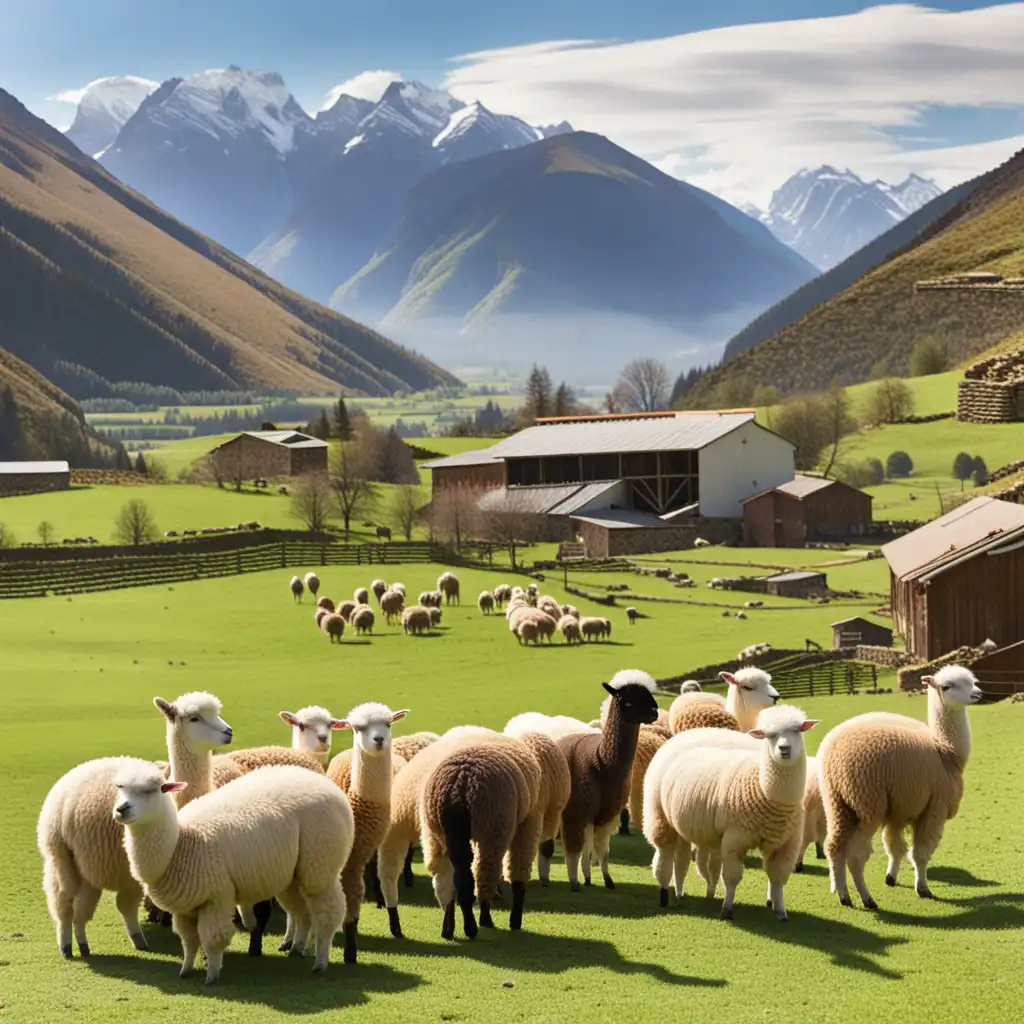
A type of long-necked mammal from South America, often used for carrying things.
The farm in the valley is home to sheep, alpacas, and lamas.
lama
ˈlɑːmə
Loading…
ˈlɑːmə
A type of long-necked mammal from South America, often used for carrying things.
The farm in the valley is home to sheep, alpacas, and lamas.

ˈlɑːmə
A Buddhist spiritual teacher.
The Dalai Lama is the spiritual leader of Tibetan Buddhism.
Audio could not be loaded. Please try again later.
The word 'lama' refers to a Buddhist spiritual teacher or monk. It is commonly used in discussions about Buddhism or when referring to the leaders of certain Buddhist sects. The term can also be used generally to refer to someone who is wise, knowledgeable or respected in a particular field or area. For example, a person might say, "She is a lama in the world of finance, and many people seek her advice." In general conversation, it is important to understand the context in which the word 'lama' is being used, to ensure that it is being used correctly.
The words guru and lama are both used to describe spiritual teachers or leaders, but they come from different religious traditions.
Guru is a word from the Hindu tradition of India that means "teacher" or "preceptor".
A guru is someone who is knowledgeable in a certain field or practice, and who has the ability to guide and inspire others along that path.
For example, a yoga guru might be someone who has mastered the practice of yoga and can teach others how to do it.
So, while both words refer to spiritual teachers, guru is used more broadly across different religions, whereas lama specifically refers to a leader in Tibetan Buddhism.
Open word: Guru →Monk refers to a member of a religious community or order, typically in Christianity or Buddhism. Monks are individuals who have renounced worldly possessions and dedicate their lives to serving their faith.
A lama is a spiritual teacher in Buddhism while a monk is a religious follower who has renounced worldly possessions in service of their faith.
The term lama is used specifically in relation to Tibetan Buddhism, while the term monk is more broadly applicable to religious communities in different faiths.
Open word: Monk →Sage can refer to a wise person, often in a general sense, who is respected for their knowledge and experience.
So, while both words can refer to someone who is respected for their wisdom and guidance, lama specifically applies to the Buddhist tradition and their spiritual leaders, while sage can be used more broadly to describe any wise person.
Open word: Sage →Lama refers to a Buddhist spiritual leader or teacher who helps guide individuals on their spiritual path. It refers specifically to someone who has achieved a high level of spiritual understanding through their own personal practice and experience.
Teach refers to the act of imparting knowledge or skills to someone else. This can be done in a variety of settings, such as in a classroom, through mentorship, or through self-study.
The two words are applicable in different contexts. Lama is specifically used in reference to the Buddhist spiritual tradition, while teach can be used in any context where knowledge or skills are being shared.
Open word: Teach →The moral roots of...
Watch on YouTube ↗I have done one thing that I think is a contribution: I helped Buddhist science and modern science combine. No other Buddhist has done that. Other lamas, I don't think they ever pay attention to modern science. Since my childhood, I have a keen interest.
Sky Caves of Nepal Part...
Watch on YouTube ↗I saw the Doctor as a kind of lama, one of those long-lived old boys out in Tibet who might be anything up to eight hundred years old but only look seventy-five.
Sky Caves of Nepal Part...
Watch on YouTube ↗Safari Live - Day 178 %\PIPE%...
Watch on YouTube ↗See Potala Palace the...
Watch on YouTube ↗Searching for the...
Watch on YouTube ↗Inside Saddam's...
Watch on YouTube ↗Safari Live - Day 340 %\PIPE%...
Watch on YouTube ↗Safari Live - Day 194 %\PIPE%...
Watch on YouTube ↗Wade Davis: Into the...
Watch on YouTube ↗