
agglomeration
noun agglomeration
əˌɡlɑːməˈreɪʃn
A big cluster of things brought together, clearly noticeable as a mass
The agglomeration of skyscrapers in the city was quite a sight.
agglomeration
əˌɡlɑːməˈreɪʃn
불러오는 중…
əˌɡlɑːməˈreɪʃn
A big cluster of things brought together, clearly noticeable as a mass
The agglomeration of skyscrapers in the city was quite a sight.
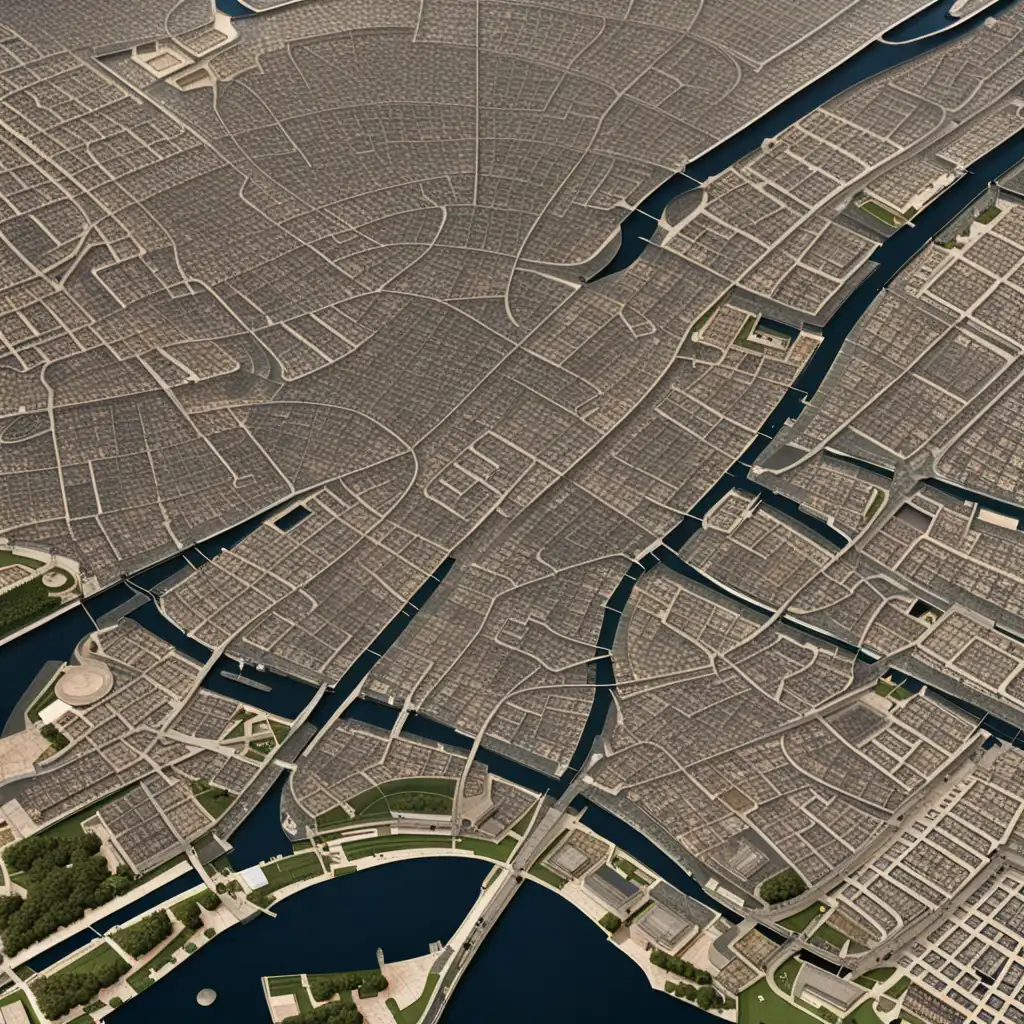
əˌɡlɑːməˈreɪʃn
An administrative division or unit formed by merging several towns or cities
The greater agglomeration of Paris includes several smaller towns with the city.

əˌɡlɑːməˈreɪʃn
A process that involves sticking or clumping together, usually for particles
The formation of planets involves an agglomeration of cosmic particles over a long time.
오디오를 불러오지 못했어요. 잠시 후 다시 시도해 주세요.
Agglomeration refers to the clustering or grouping together of objects or people in one place. It can refer to a large city where many people live and work close to each other, or to a manufacturing process where small particles are pressed together to form larger ones. For example, a group of buildings and businesses located close to each other in a city can be called an agglomeration of businesses.
Accumulate means to gradually gather or collect something over time. For example, you might accumulate a lot of books over the years if you enjoy reading.
The main difference between these two words is that accumulate describes a gradual process of gathering or collecting over time, while agglomeration describes a collection of things that are grouped together in one place.
Each word can be applied to different situations. You might use accumulate to describe saving money over time, while you might use agglomeration to describe a cluster of people waiting at a bus stop.
단어 열기: Accumulate →Assembly refers to the act of putting together or constructing something according to a predetermined plan or design.
Agglomeration involves gathering things together without a specific plan, while assembly involves constructing something according to a plan or design.
단어 열기: Assembly →Both agglomeration and cluster refer to the grouping of things or people together, but there is a subtle difference in meaning.
Cluster refers to a group of businesses or industries located close to each other based on shared resources, expertise or technologies.
A cluster can take many forms, including industrial parks, technology parks, or research parks. An example of a cluster is the Silicon Valley, where many tech companies are located close to each other and share resources and expertise.
Agglomeration refers to the concentration of people and businesses in a specific geographic area, while cluster refers to the concentration of businesses in a specific industry or field.
단어 열기: Cluster →Agglomeration refers to the process of particles sticking or coming together to form a bigger mass or cluster, while collection refers to the act or process of gathering things together.
Collection is a more general term that can be used in many different contexts, from collecting stamps or coins to gathering data or information.
In simpler terms, agglomeration means particles sticking together to form a bigger mass, while collection means gathering different things together.
단어 열기: Collection →Agglomeration and conglomerate both refer to the idea of things being grouped or clustered together.
Conglomerate typically refers to a specific type of company that is made up of multiple smaller companies operating under a single parent company.
For example, a large corporation might be a conglomerate that owns several smaller companies in different industries or sectors.
So, in short, agglomeration is a more general term for things coming together or clustering, while conglomerate specifically refers to a type of company organization.
단어 열기: Conglomerate →Agglomeration refers to the process of collecting or clustering things together in a compact mass, whereas gather simply means to bring together or collect.
Gathering is appropriate when there is a need to collect or assemble items or people, as in organizing a meeting or a social event.
단어 열기: Gather →Heap refers to a loosely piled group of individual items or materials. It is applicable in contexts such as gardening, where a heap of compost or manure can be used to enrich soil.
단어 열기: Heap →Pile refers to a collection of items that are stacked on top of each other. An example would be a pile of books or a pile of leaves.
Both words can describe a group of things that are collected together, but agglomeration implies a slightly different connotation because it suggests that the items are more closely connected or intertwined than items in a pile.
Pile suggests a more loose and disorganized grouping.
단어 열기: Pile →Buggin' Out %\PIPE% Duck...
YouTube에서 보기 ↗In Hong Kong there is agglomeration beyond my fondest imaginings. The Kowloon district claims a population density four times that of New York City.
A New Understanding of...
YouTube에서 보기 ↗