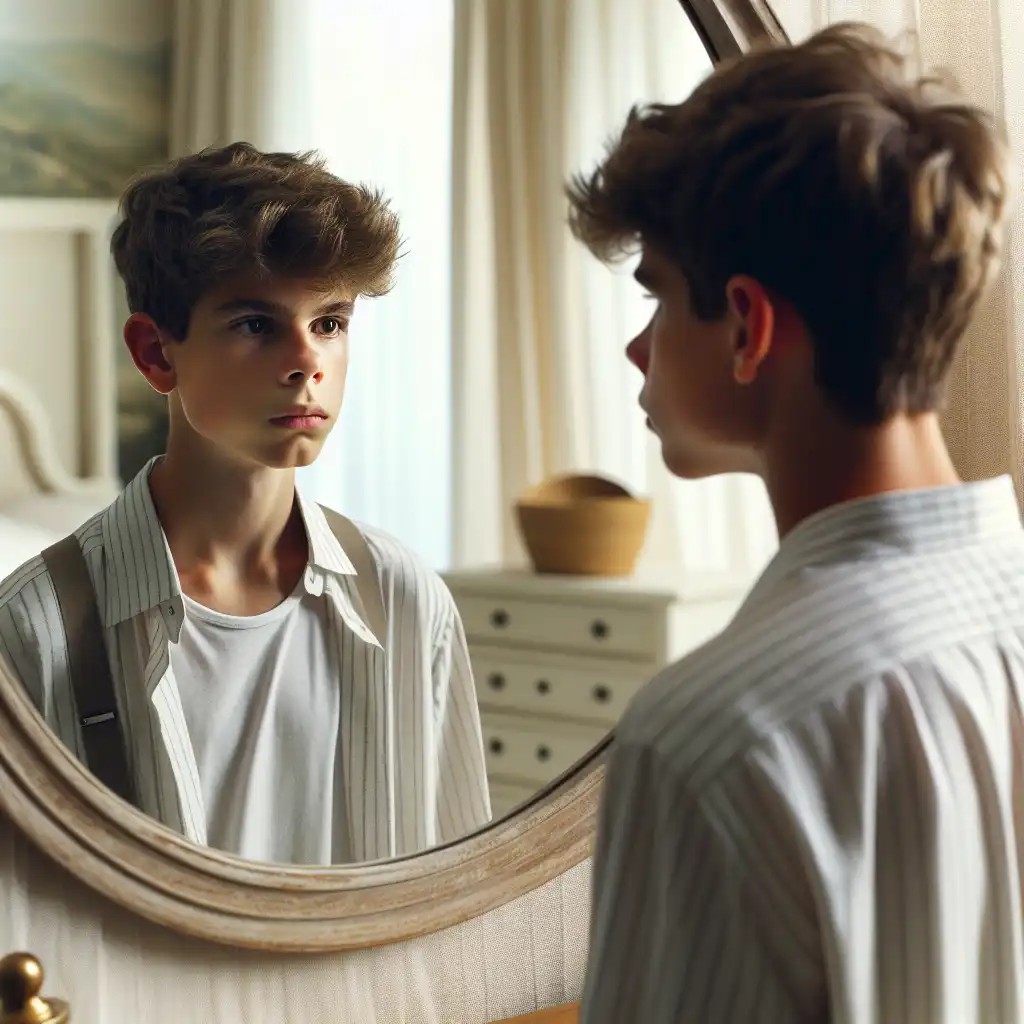
adolescence
noun adolescence
ˌædəˈlesns
The period in someone's life when they are changing from a child to an adult.
She had a lot of trouble during her adolescence.
adolescence
ˌædəˈlesns
Loading…
ˌædəˈlesns
The period in someone's life when they are changing from a child to an adult.
She had a lot of trouble during her adolescence.
ˌædəˈlesns
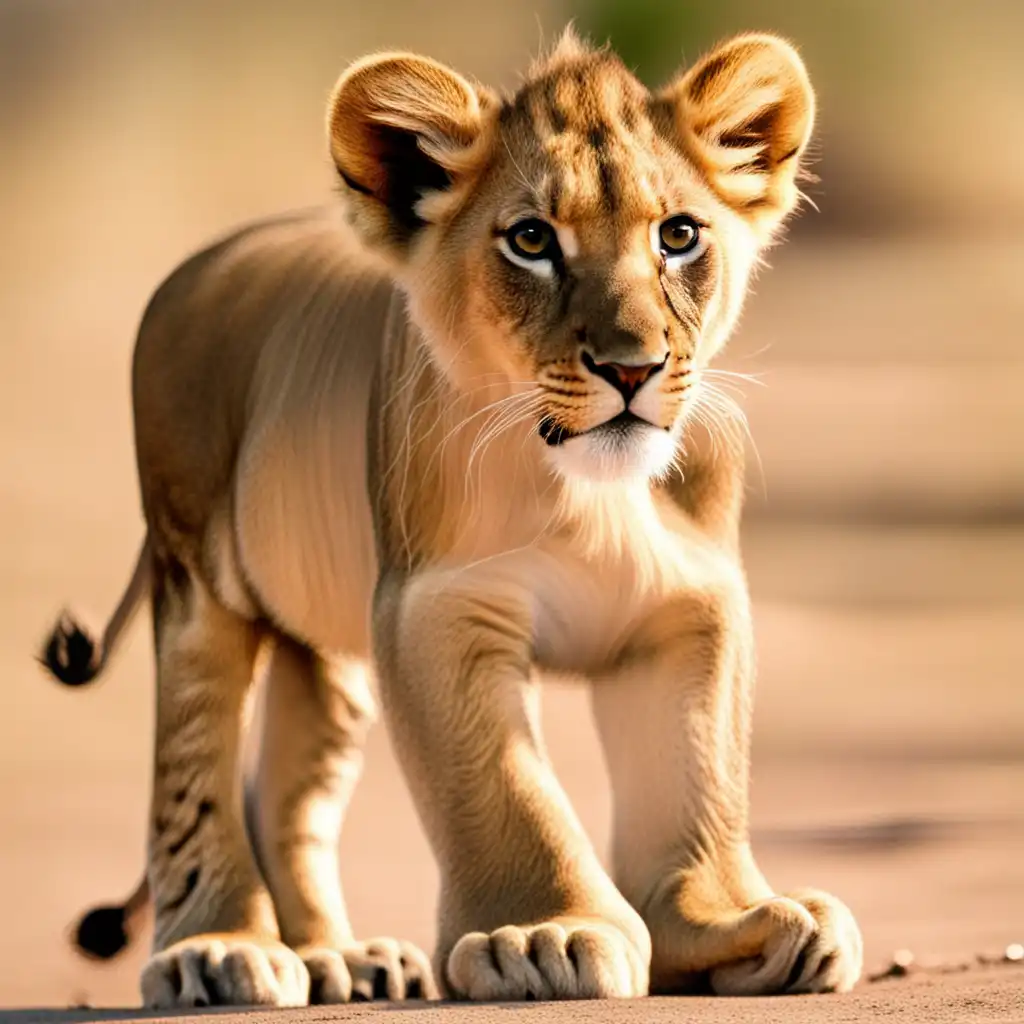
In biology, the period in the life of an animal when it becomes sexually mature.
The lion cub's aggression is typical for animals in adolescence.
Audio could not be loaded. Please try again later.
Adolescence is a word used to describe the period of time when a person is no longer a child but not quite an adult yet. This period often starts around the age of 11 and ends around the age of 19. During adolescence, people go through a lot of changes in their body and mind as they start to mature into adulthood. This can be a complex and sometimes difficult time for many people. The word adolescence is often used in conversations or in writing when talking about this period of life.
Juvenile refers to a person who is not yet fully grown or mature, particularly a young person who has committed a crime.
Juvenile is a more specific term that refers to a person who has not yet reached full maturity. This can apply to young children as well as teenagers and young adults who have committed a crime.
Both adolescence and juvenile are applicable in different contexts depending on the specific stage of development or behavior being discussed.
However, if the same 15-year-old committed a crime, they might be referred to as a juvenile in legal proceedings.
Open word: Juvenile →Puberty specifically refers to the period of time when a person's body begins to develop and change in preparation for sexual maturity.
This usually occurs between the ages of 9 and 14 for girls and 10 and 17 for boys. During puberty, the body undergoes a range of changes, including the development of breasts and pubic hair in girls, and the growth of facial hair and deepening of the voice in boys.
Ultimately, adolescence and puberty are both important parts of growing up, but adolescence refers to the entire period of time between childhood and adulthood, while puberty specifically refers to the period of physical changes that mark the onset of sexual maturity.
Open word: Puberty →Teenage is a narrow term referring to the actual age range of being 13-19 years old.
In simpler terms, adolescence is a whole phase of growing up while teenage refers to a specific age range within that phase.
Open word: Teenage →Youngster is a more general term that can apply to any child or young person, from babies to teenagers.
To sum up, adolescence refers specifically to the teenage years when a person is going through significant changes and becoming more independent, while youngster is a more general term that can refer to children and young people of any age.
Open word: Youngster →Adolescence and youth are both stages of life between childhood and adulthood.
Youth is a broader term that encompasses the period from childhood to young adulthood, typically up to age 25 or 30. It includes the teenage years, but also encompasses the early twenties and the transition to adulthood.
Adolescence is a specific stage of youth, while youth is a more general term that covers a broader range of age groups.
Open word: Youth →That the whims of adolescence are too dangerous for your breath, that you cannot simply be curious, that you are not afforded the luxury of making a mistake, that someone's implicit bias might be the reason you don't wake up in the morning. But this cannot be what defines us. Because we have parents who raised us to understand
Watch on YouTube ↗The chief symptom of adolescence is a state of expectation, a tendency towards creative work, and a need for the strengthening of self-confidence. Suddenly, the child becomes very sensitive to the rudeness and humiliations which he had previously suffered with patient indifference.
I know my mom would say she has the phone bills to prove it. If it seems like friendships formed in adolescence are particularly special, that’s because they are. Early childhood adolescent and adult friendships all manifest a little differently
Watch on YouTube ↗I had the classic 40 meltdown. I did. It's embarrassing. It was pretty funny. But then I recovered. To me, it was like a second adolescence. Hormonally, my body was changing, my mind was changing, and so my relationship to myself and the world around me came to this assault of finiteness.
in life no one knows exactly how or why they do this though the core bond of a mob revolves around clusters of females males usually wander off around adolescence so the sisterhood looks after itself
Watch on YouTube ↗I'd say I'm drawn to characters that ring true to me. Adolescence is a troubled time for everyone, so a lot of those characters have been troubled, tortured people. It's been a great way to navigate my adolescence by having these more troubled kids as an outlet.
tales that tell us that love appears magically and adolescence we read romantic tragedies that tell us that love appears by faith now these might sound like fanciful fictions of our youth but researchers find that these beliefs that love is both delivered and ensured by faith continue well into
Watch on YouTube ↗After adolescence, if one's life is sufficiently interesting, the desire to tell oneself stories diminishes.
So from that night onwards, much akin to humanity in its adolescence, I learned the crude tools of survival. And the framework of life was very very simple then to be honest. You know you just ate what you got and did whatever you were told to do.
Watch on YouTube ↗Criticism starts - it has to start - with a real passion for reading. It can come in adolescence, even in your twenties, but you must fall in love with poems.
but I found it in the most unlikely and unexpected place. I found it in lessons that I had learned earlier in life about how creativity can survive its own failure. So just to back up and explain, the only thing I have ever wanted to be for my whole life was a writer. I wrote all through childhood all through adolescence,
Watch on YouTube ↗Well, I had this little notion - I started writing when I was eleven, writing poetry. I was passionately addicted to it; it was my great refuge through adolescence.
And the entirety of their time in the rivers of Europe is essentially eel adolescence. So when do eels reproduce and where do they do it? Despite its name the life of a freshwater eel actually begins
Watch on YouTube ↗I'm very comfortable with the nature of life and death, and that we come to an end. What's most difficult to imagine is that those dreams and early yearnings and desires of childhood and adolescence will also disappear. But who knows? Maybe you become part of the eternal whatever.
In my own adolescence, I went to extreme lengths to try to be straight. I enrolled myself in something called "sexual surrogacy therapy," in which people I was encouraged to call doctors
Watch on YouTube ↗I spent the first summer after my diagnosis creeping about in giant sun hats and tents, cursing the sun, staying inside as much as possible. Now I am beginning to think the most important thing is educated sun exposure, because the melanomas of today are not caused by today's sunbathing, but by our childhoods and early adolescence.
And thus adolescence and early adulthood are the years where environment and experience sculpt your frontal cortex into the version you're going to have as an adult in that critical moment. But pushing back even further, even further back to childhood and fetal life
Watch on YouTube ↗When you have little girls, you're the coolest person in the world. I know at some point that's going to end; in their adolescence I'll become the opposite of that, especially if I'm parked outside a high school party.
experience eating disorders, people of all genders can be affected. As these disorders intimately affect the development of one’s identity and self-esteem, people are particularly vulnerable to developing them during adolescence. Although these are among the most challenging
Watch on YouTube ↗When I was about seven, one or two people encouraged me, and art became an enormous and important refuge. By adolescence, I was absolutely passionate about it and felt those paintings and those painters, whether they lived a few hundred years ago or were still alive, were somehow my companions.