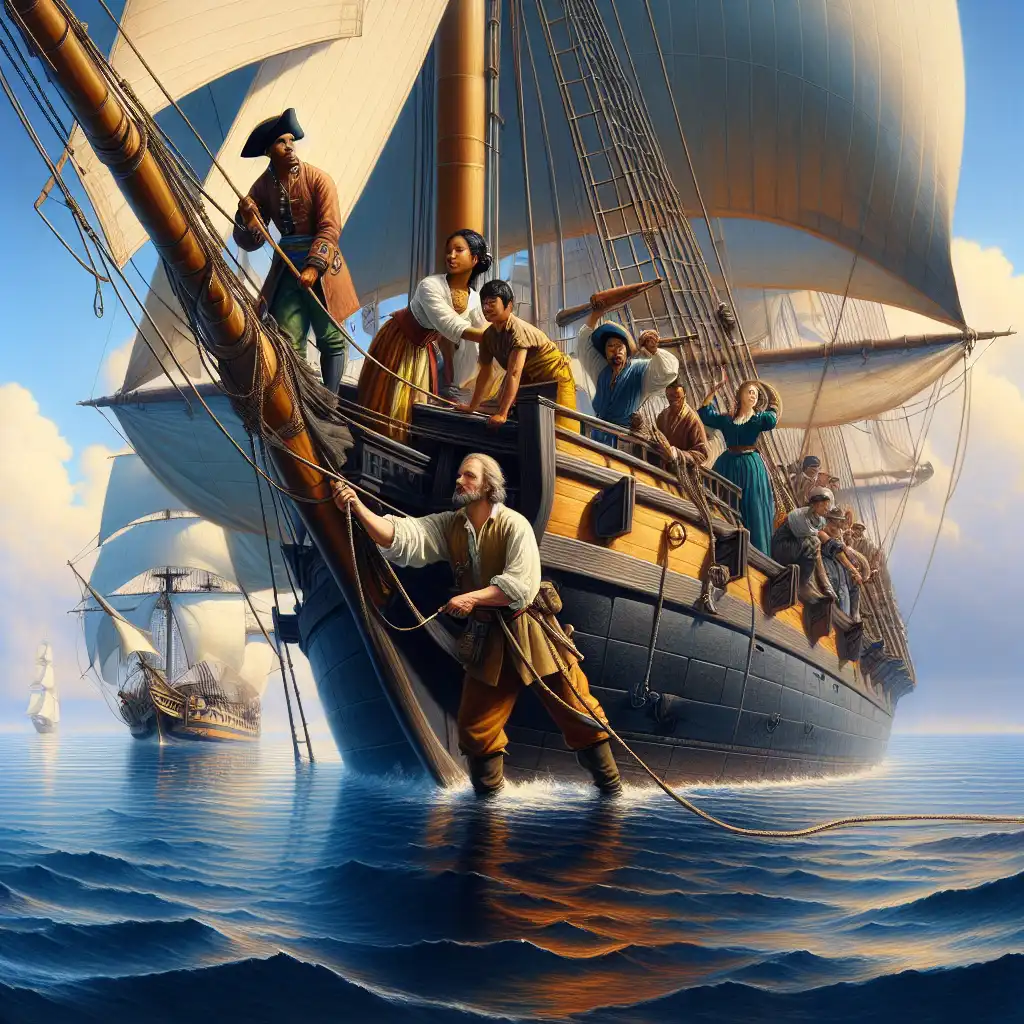
foresail
noun foresail
ˈfɔːrseɪl,ˈfɔːrsl
The sail that is placed at the front of a ship.
The captain ordered the sailors to hoist the foresail.
foresail
ˈfɔːrseɪl,ˈfɔːrsl
Cargando…
ˈfɔːrseɪl,ˈfɔːrsl
The sail that is placed at the front of a ship.
The captain ordered the sailors to hoist the foresail.
No se pudo cargar el audio. Inténtalo de nuevo más tarde.
The word 'foresail' is commonly used in the context of sailing. It refers to a sail on the front or forward part of the boat, which is used to catch the wind and move the vessel forward. It is usually smaller than the main sail and can be adjusted to change the direction of the boat. This term is used mainly in sailing communities and might not be familiar to everyone. However, if you are learning the vocabulary of sailing or taking sailing lessons, you may encounter the word 'foresail.'
Both foresail and jib are types of sails, which provide propulsion to a sailing vessel. The main difference between the two is their position on the boat.
A jib is a triangular sail that is located at the front of the boat, attached to the forestay. It is generally smaller than the mainsail and is used to help the boat turn or change direction, rather than to provide power.
Jibs are commonly used on small boats and sailboats for racing, cruising or day sailing.
A jib is a smaller sail located at the front of the boat, used for turning and maneuvering, while a foresail is a larger sail located between the mast and the bow, used for powering and controlling the boat.
Abrir palabra: Jib →