theatricality
noun theatricality
θiˌætrɪˈkæləti
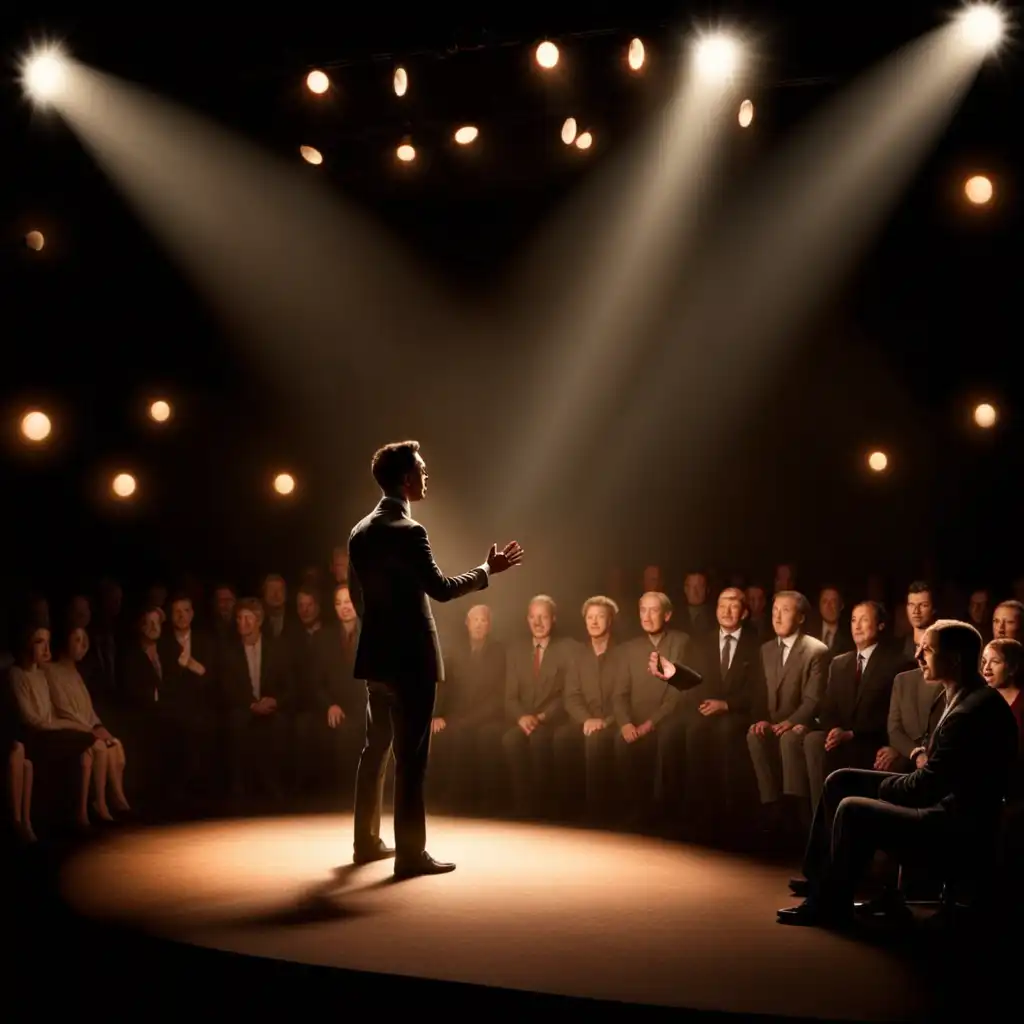
The quality of being showy or dramatic, like in a theater.
His speeches were impressive, full of theatricality and drama.
theatricality
θiˌætrɪˈkæləti
Cargando…
θiˌætrɪˈkæləti
The quality of being showy or dramatic, like in a theater.
His speeches were impressive, full of theatricality and drama.

θiˌætrɪˈkæləti
The methods and skills used in theater
The actor's theatricality was clear in her expressive gestures and powerful voice.
No se pudo cargar el audio. Inténtalo de nuevo más tarde.
Theatricality refers to a person's behavior or performance that is exaggerated or showy - as if they were on stage. It is often used to describe things that are meant to be seen or heard by a lot of people, like movies or plays. It can also describe the way someone talks or acts when they want attention or to make an impression.
Drama refers to a specific type of literature, film, or television where there is conflict between characters that is resolved through action and dialogue.
Theatricality refers more broadly to the use of drama techniques, such as costumes, lighting, and staging, to create a performance or show.
Drama is applicable to stories that revolve around a conflict or tension between characters, while theatricality can be applied to any performance that uses technical elements to create a certain mood or atmosphere.
Abrir palabra: Drama →Exaggerate means to make something seem more important or more extreme than it really is.
Exaggerate is about making something seem bigger or more extreme, while theatricality is about adding drama and performance to a situation.
Abrir palabra: Exaggerate →Grandiose means impressive or magnificent in appearance or style, especially in a pretentious or excessive way.
It describes things that are showy and intended to impress people, often in a negative way. For example, someone who claims to have invented a perpetual motion machine might be dismissed as grandiose.
Grandiose refers to something that is showy and overly impressive, while theatricality refers to the quality of being dramatic and engaging in performance.
Abrir palabra: Grandiose →Ostentation refers to showing off something in a way that appears excessive or unnecessary, often for the purpose of impressing others.
Ostentation can be used to show off wealth or status, while theatricality can be used in acting or public speaking.
Abrir palabra: Ostentation →Performance refers to an act or show that someone presents to an audience, typically involving some kind of skill, such as acting, singing, or dancing.
Theatricality refers to the quality of being dramatic or exaggerated, often used in the context of performances that are intended to be entertaining or engaging the audience emotionally.
Performance refers to the act of presenting skills to an audience while theatricality emphasizes the dramatic or exaggerated aspects of a performance.
Both terms are applicable in the world of theater and other performing arts, but theatricality is more focused on the dramatic and showy elements of the performance.
Abrir palabra: Performance →Showiness refers to being flashy or gaudy and trying to attract attention through one's appearance or behavior.
While both terms are related to performance and showmanship, showiness is more about outward appearance and attention-seeking, while theatricality involves more of an intentional performance or storytelling aspect.
Showiness might be applicable in situations where someone is trying to impress others with their appearance or possessions, while theatricality might be used in a play or musical performance.
Abrir palabra: Showiness →Spectacle is something that is meant to be seen and is usually grand or impressive. An example of a spectacle is a fireworks show.
Both words can be applicable in the context of performance or entertainment, but spectacle focuses more on the visual aspect while theatricality focuses on creating a dramatic effect.
Abrir palabra: Spectacle →Theatrical refers to something related to theater or acting, such as a theatrical performance or a theatrical prop. Theatricality refers to the quality or style of being theatrical, such as exaggerated gestures, dramatic lighting, or stylized costumes.
In other words, theatrical describes something specific to the world of theater, while theatricality is a broader term that encompasses the techniques and styles used to create a theatrical experience.
Theatrical can describe a specific element of a performance, while theatricality can describe the overall mood or atmosphere of the production.
Abrir palabra: Theatrical →There's no such thing as...
Ver en YouTube ↗I am fascinated by the engineering. The science of constructing and understanding why it stands. And I am drawn by the madness, the beauty, the theatricality, the poetry and soul of the wire. And you cannot be a wire-walker without mingling those two ways of seeing life.
I love a period drama - the theatricality of going into work and having that distance between yourself and the character you're playing.
Eroticism is born at a time in civilisation when sexual instinct becomes deanimalised and enriched with contributions from art and from literature. A world of theatricality emerges around the act of love.
When I work onstage, I want to play roles that have real, deep theatricality, that aren't the sort you would easily see on television and in the movies.
Everything has its own kind of theatricality and its own drama.
Theatricality is a concept. It's not a specific language.
I was very interested in theatre, so my first love of fashion comes from costume, and I think that's pretty clear within my work and the level of theatricality.
Koons's work has always stood apart for its one-at-a-time perfection, epic theatricality, a corrupted, almost sick drive for purification, and an obsession with traditional artistic values.
I think theatricality is just one way of performing. I don't think it's a better way or the way, but it's my way.
Women in music have always been associated with pop - with prettiness, theatricality, melodic hooks and dance beats.