
equipoise
noun equipoise
ˈekwɪpɔɪz
A state where things are balanced or equal
The company tries to maintain an equipoise between work and personal life for its employees.
equipoise
ˈekwɪpɔɪz
Cargando…
ˈekwɪpɔɪz
A state where things are balanced or equal
The company tries to maintain an equipoise between work and personal life for its employees.
ˈekwɪpɔɪz
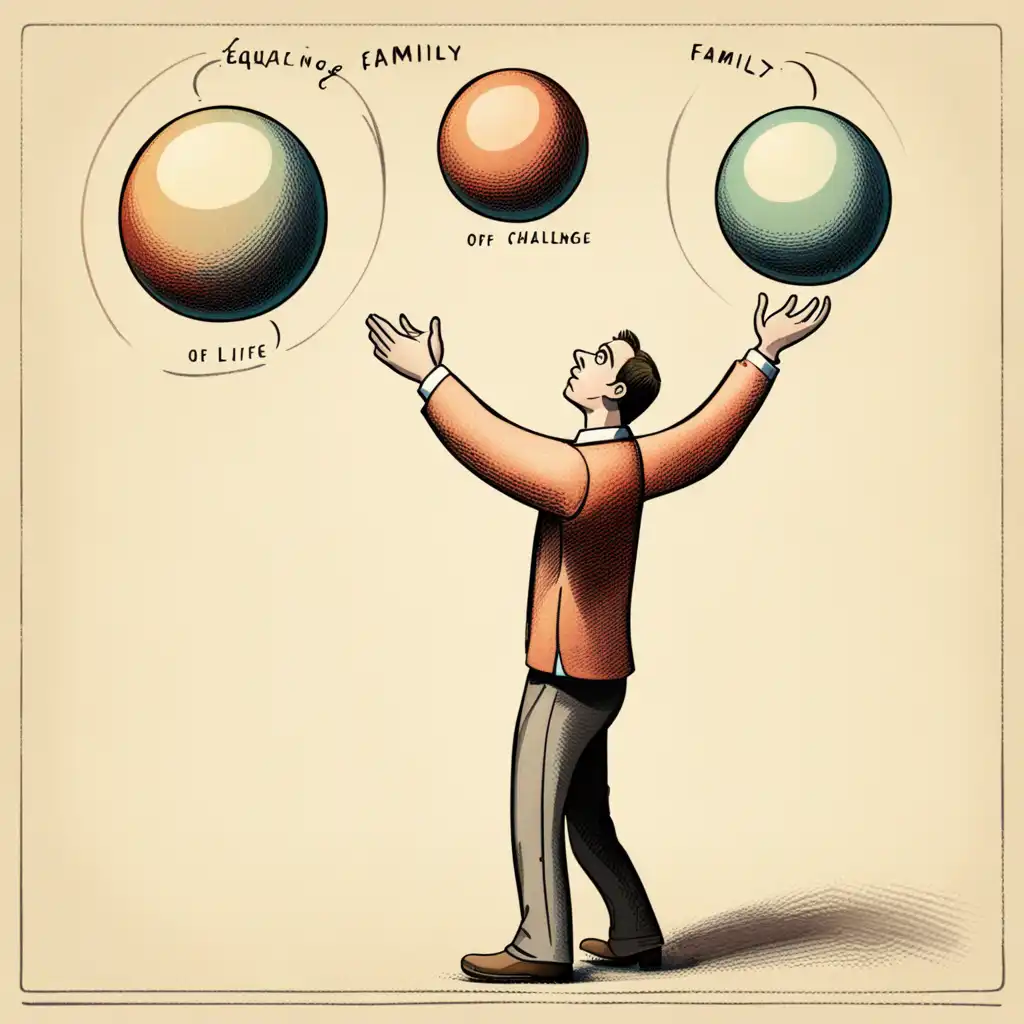
To balance or make equal
It's very challenging to equipoise work, life, and family commitments.
No se pudo cargar el audio. Inténtalo de nuevo más tarde.
'Equipoise' is a noun that means balance or evenness. It is used to describe a situation where two things are equal in weight or importance. For example, in a debate, the two sides might be in a state of equipoise, meaning that they are equally strong and it is difficult to determine which side is winning. You can also use it to describe a situation where two things are in balance, such as when you are trying to balance a scale or a budget. It's a slightly formal word, so you might not use it in everyday conversation, but it's a useful word to know if you need to describe a situation where things are evenly matched.
Balance refers to an even distribution of weight or the ability to maintain stability. It is applicable in physical settings like walking on a tightrope or balancing on one foot.
It can also be used in a broader sense to refer to a balanced or fair approach to a situation.
The word equipoise refers to a state of balance or stability that is achieved through the equal distribution of forces.
It is often used in a scientific or philosophical context to refer to a state of equilibrium or balance between opposing forces or ideas.
In summary, while both words refer to a state of balance, balance is more commonly used in physical settings, while equipoise is used in more abstract and intellectual contexts.
Abrir palabra: Balance →Counterbalance means to offset the weight of something with an equal or opposing force. For example, a crane uses a counterbalance weight to prevent itself from tipping over while lifting heavy objects.
In everyday usage, counterbalance means to compensate for or offset something negative with something positive.
Counterbalance is applicable when dealing with physical objects and situations where there is an imbalance, while equipoise is applicable when describing a state of balance, often in a more abstract or metaphorical sense.
Abrir palabra: Counterbalance →Equality refers to the state of being equal or having the same rights, opportunities, and treatment as others. It is applicable in situations where fairness and justice are important, such as in the workplace, education, and society in general.
In simpler terms, equality is about treating everyone fairly and giving them the same opportunities, while equipoise is about finding balance and stability in different situations.
Abrir palabra: Equality →Both equilibrium and equipoise refer to a state of balance or stability.
Equilibrium is a term commonly used in physics or chemistry to describe a state where opposing forces or actions are balanced, resulting in a stable system.
For example, a seesaw that is at rest and horizontally level is in a state of equilibrium. In the context of biology, equilibrium can also refer to the balance of different systems within the body, such as the balance of electrolytes or hormones.
Equilibrium refers to a state of balance in a physical or biological system, while equipoise refers to a state of impartiality in decision-making.
Abrir palabra: Equilibrium →Equipoise and harmony are both words that are used to describe balance or a sense of unity.
Harmony is a broader term that describes a sense of pleasantness or agreement between things or people.
In a social context, harmony might refer to a group of people who get along well and work together smoothly.
Equipoise refers specifically to a state of balance or equilibrium, often in a technical or scientific context, whereas harmony refers more broadly to a pleasing sense of unity or agreement between things or people.
Abrir palabra: Harmony →Equipoise refers to a balanced or equal state between two opposing forces or interests.
Example: "The government tried to maintain equipoise between the rights of workers and the interests of business owners."
Poise refers to a state of grace, composure, and balance in one's physical or mental state.
Example: "She moved across the stage with poise and grace, captivating the audience."
Abrir palabra: Poise →Stability refers to a state of consistency or permanence. It is applicable when describing situations where things remain the same or steady over time.
In simpler terms, equipoise is about finding a balance between two options, while stability is about maintaining a consistent state or condition.
Abrir palabra: Stability →Symmetry refers to a balanced or proportional arrangement of parts or elements, usually in a geometric or visual context.
Equipoise relates to a balance between opposing factors in a scientific context, while symmetry refers to balanced proportions in a visual or geometric context.
Abrir palabra: Symmetry →David Brooks: The social...
Ver en YouTube ↗Are we ready for...
Ver en YouTube ↗