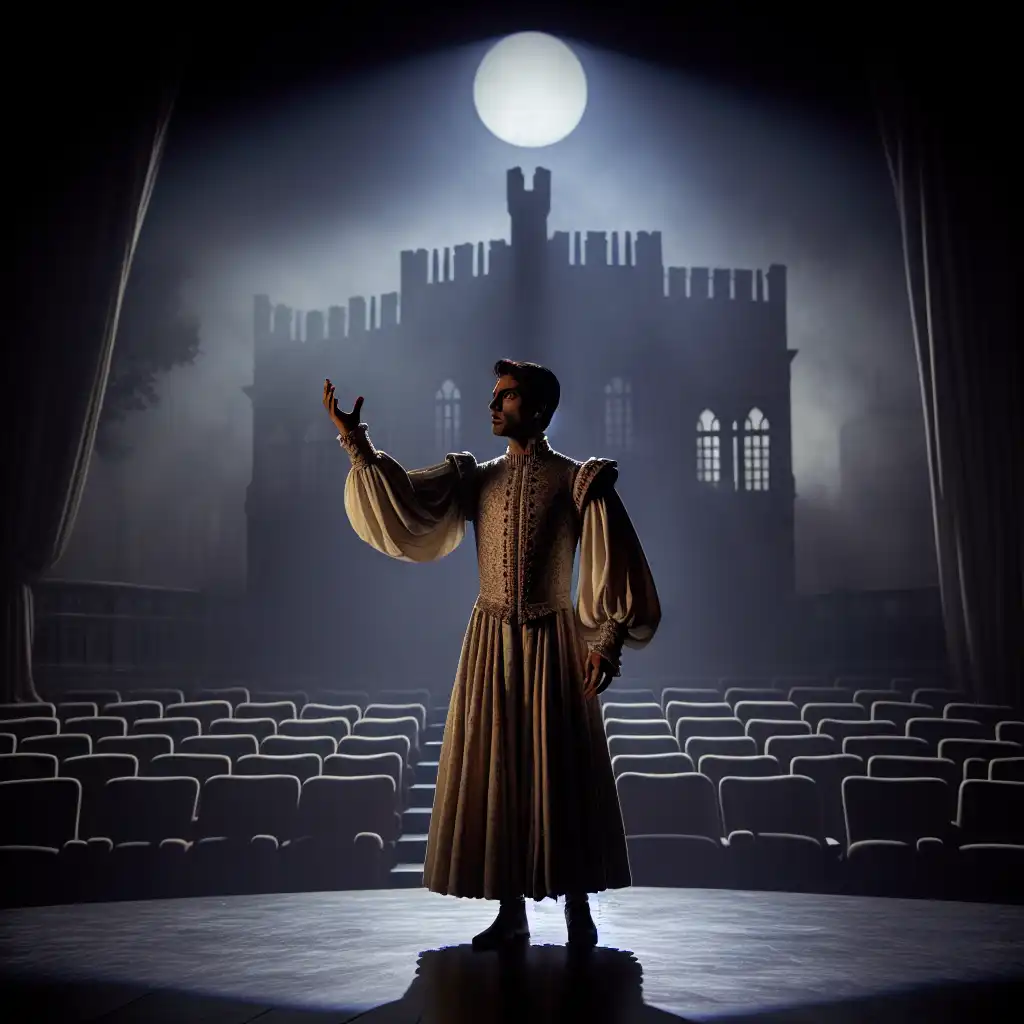
A soliloquy is when a person talks to themselves out loud in a play, movie, or book, usually to express their thoughts and feelings. It's like having a conversation with yourself that everyone can hear. It's a way for the audience to understand what the character is thinking and feeling. For example, a character might give a soliloquy when they are alone on stage, talking about their inner turmoil or trying to make a decision.
Address refers to a speech given to a particular audience, usually with a specific purpose in mind, like a presentation, a lecture or a formal talk.
In simpler terms, an address is a formal speech aimed at a specific audience, while a soliloquy is a dramatic monologue given by a character to reveal their thoughts and feelings to the audience.
Contemplate means to think deeply about something. It's usually used when you are considering a decision or trying to understand a difficult concept.
You would use contemplate when you are thinking about something, whereas you would use soliloquy when a character in a book or play is speaking their inner thoughts aloud.
Discourse refers to a conversation or discussion between two or more people.
In simpler terms, discourse is when multiple people are talking or discussing, while soliloquy is when one person is speaking alone, usually in a dramatic or introspective context.
Meditate means to focus one's mind for a period of time, usually for peace or relaxation. This is typically done in silence or with calming music.
Meditation is a way to calm and quiet the mind, reduce stress and anxiety, and increase inner peace and clarity.
In short, meditation is a personal practice used for relaxation and inner peace, while soliloquy is a literary device used for storytelling and dramatic effect.
A monologue is a long speech given by one character to another character or a group of characters in a play or movie. It is meant to convey a certain emotion or message to the audience.
For example, if a character is giving a speech to convince others to join their cause, it would be a monologue.
Both monologues and soliloquies are used in plays and movies to reveal character motivations and emotions, but they differ in their purpose and audience.
Reflection refers to the act of thinking deeply about something or examining one's own thoughts and feelings about a situation.
Reflection is applicable in everyday life when we need to take time to think deeply about something before making a decision or to gain a better understanding of ourselves and the world around us.
A soliloquy is a type of speech in a play or a movie where a character speaks their thoughts out loud, usually when they are alone on stage.
A speech is a formal address given to an audience for a specific purpose. It's usually prepared in advance and delivered on a specific topic or occasion.
A speech is a prepared formal address given to an audience to communicate a particular message.
A soliloquy is when a person speaks their thoughts aloud to themself, usually in a play or drama, whereas thinking is the silent process of considering something in one's mind.
Soliloquies are applicable in plays or dramas as a way for a character to express their internal thoughts and emotions to the audience, while thinking is applicable in everyday life when one needs to process information or make a decision.
Simply put, soliloquy is speaking one's thoughts out loud, while thinking is keeping them silent in your head.
In writing 'William Shakespeare's Star Wars,' I had the freedom to go beyond the original script and add asides, soliloquys and even new scenes. The main characters all get a soliloquy or two - or in Luke's case, several.
The trap in Hamlet is he's the most passive of Shakespeare's characters. He's not a Richard III, not out there taking a lot of action. It's a lot of asides and soliloquies where he's wrapped in angst, and that's not a very interesting character.
Horrible things happen all our lives; we all experience loss and death and trauma. Usually, most people, I think, we just get on with it. We don't have a whole soliloquy in the middle of something.
When 'Deadwood' came along, it was totally like Shakespeare. The long speeches were like soliloquies. If one phrase of a monologue was out of whack, the entire one-page speech didn't work.
One hundred percent, all your Shakespeare training serves you in the work in musical theater today: specifically in modern musical theater, our soliloquies, and now what we call rap. It's the reason it's so easy to learn, because it's verse; it's rhyme! It just sticks in the soul very easily.
The media love coarse debate because coarse debate drives ratings and ratings generate profits. Unless the TV producer happens to be William Shakespeare, an argument is more interesting than a soliloquy - and there will never be a shortage of people willing to argue on TV.
Hamlet' was the first movie I saw. In 1948, my mother said, 'I'm going to take you to see 'Hamlet' with Laurence Olivier.' She was worried about taking me to it because she wasn't sure I was old enough to understand it or to maybe be adversely affected by it, but I got recordings of it and memorized all the soliloquies.
The first time I saw 'Macbeth' was not the entire play. It was at acting school, and this student was working on Lady Macbeth's soliloquy. I felt something very special, and I knew then that I would one day experience Lady Macbeth, but I always thought it would be on stage and in French.