derangement
noun derangement
dɪˈreɪndʒmənt
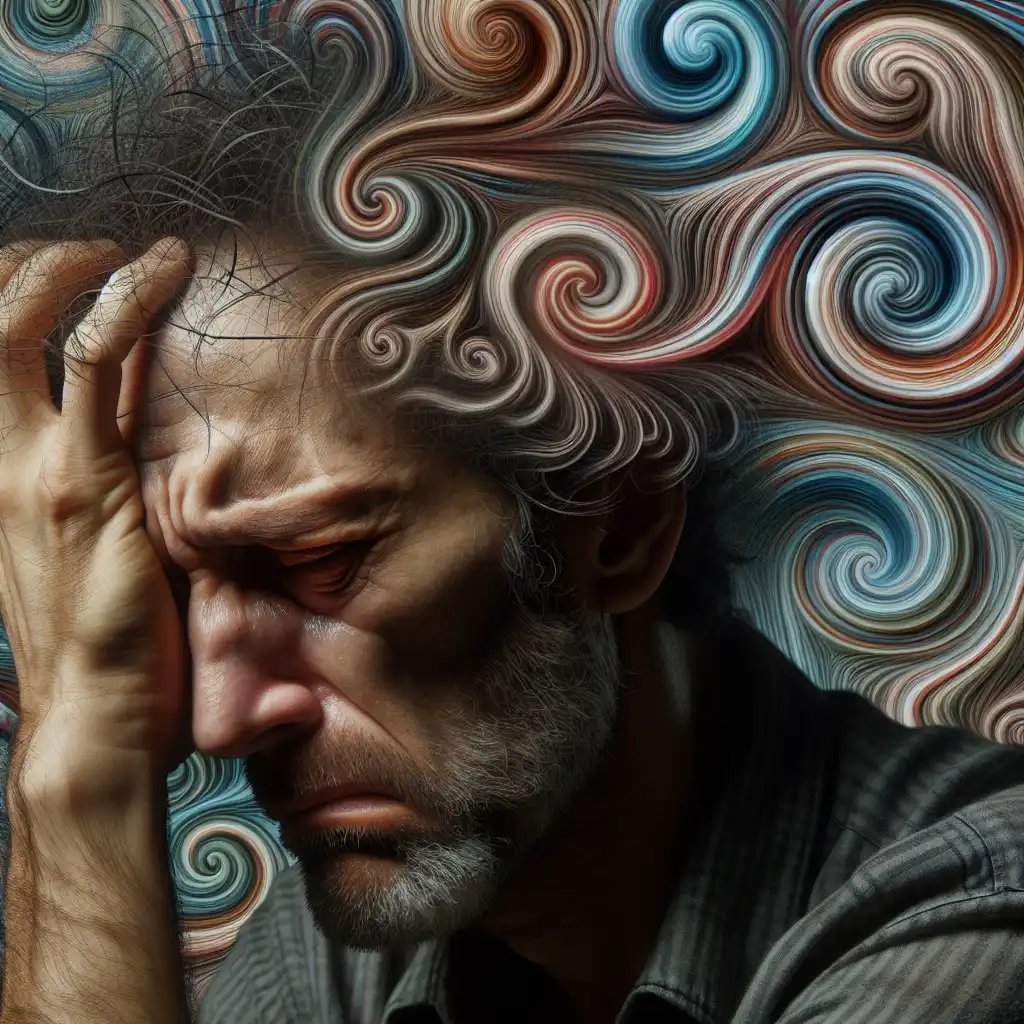
The state of being mad, insane or not having a clear mind.
He was suffering from mental derangement.
derangement
dɪˈreɪndʒmənt
Đang tải…
dɪˈreɪndʒmənt
The state of being mad, insane or not having a clear mind.
He was suffering from mental derangement.

dɪˈreɪndʒmənt
A disturbance or disorder in something's normal function or arrangement.
A derangement in the engine caused the car to stop working.
dɪˈreɪndʒmənt
In mathematics, a permutation of the elements of a set where none of the elements appear in their original order.
In combinatorial mathematics, the number of derangements of a set is interestingly large.
Không tải được âm thanh. Vui lòng thử lại sau.
The word 'derangement' is used to describe a situation where something is not working the way it should or when something is out of control. For example, if there is a derangement in a person's behavior, it means they are acting in a crazy or unpredictable way. In the medical field, derangement can refer to a condition where organs or body systems are not functioning correctly. Overall, it's a word that is used to indicate a disruption or a problem in something.
Confusion refers to a state of being uncertain or unclear about something.
Confusion can also arise when there are conflicting ideas or information, and you are not sure which one to believe.
Confusion is a temporary feeling of uncertainty, while derangement is a more serious and ongoing issue with a person's mental or emotional state.
Confusion can be a normal and expected part of learning or processing information, while derangement requires professional help and intervention.
Mở từ: Confusion →Dementia and derangement are both words that refer to changes in a person's mental state, but they have different meanings and uses.
Dementia is a term used to describe a group of conditions that affect a person's memory, thinking, and ability to perform everyday tasks.
Dementia can cause confusion, forgetfulness, and difficulty with language and communication, among other symptoms.
Dementia is a specific medical condition that affects cognitive function, while derangement is a broader term that describes a variety of mental states that are disturbed or disordered.
Mở từ: Dementia →Derangement and disorder both refer to a situation where things are not working properly, but they are used in different contexts.
Disorder refers to a situation where something is not organized or is chaotic.
It can refer to physical spaces, such as a messy room, or to medical conditions, such as a digestive disorder or a sleep disorder.
Derangement is more focused on mental and emotional states, whereas disorder is more focused on physical states.
Mở từ: Disorder →Derangement refers to a state of mental or emotional disturbance, whereas disruption refers to something that disturbs or interrupts the normal functioning of something else.
Derangement is typically used in reference to a state of mind or mood, whereas disruption can refer to anything from a power outage to a protest that disrupts traffic.
Derangement is more about an individual's mental state, while disruption is more about the impact on a system or situation.
Mở từ: Disruption →Distortion refers to a change in the shape or condition of something that alters its appearance or meaning.
Derangement refers to a disruption or disturbance in an individual or system, while distortion refers to a change in the appearance or meaning of something.
Derangement is applicable mostly to mental health, emotional states, and disruptions in systems, while distortion is more generally applicable to anything that undergoes a change in appearance or meaning.
Mở từ: Distortion →Imbalance refers to a lack of balance or an unequal distribution of something.
It is often used when referring to physical objects or systems, such as the distribution of weight on a seesaw or an imbalance in a person's diet.
Derangement is more applicable to mental or emotional states while imbalance is more applicable to physical objects and systems.
Mở từ: Imbalance →Turmoil refers to a state of great disturbance, confusion, or uncertainty. It is applicable in the context of social or political unrest, economic crisis, or any other situation that causes chaos and upheaval.
In simpler terms, derangement describes a state of mental instability, while turmoil describes a state of social or political unrest.
Mở từ: Turmoil →Both derangement and upset describe a state of being disturbed or distressed, but they differ in intensity and cause.
Upset is a milder form of distress that can be caused by a variety of factors, such as a minor setback, disappointment, or disagreement.
It often resolves with time and does not necessarily require intervention. For example, a student who receives a lower grade than expected on a test may be upset but can recover by studying harder next time.
In brief, derangement is a more serious and extreme form of upset that requires immediate attention, whereas upset is a common and often temporary state of distress that can be managed with coping strategies.
Mở từ: Upset →I believe in a long, prolonged, derangement of the senses in order to obtain the unknown.
I learned a lot from Arthur Rimbaud. People talk about how he wanted to be a seer and do that through the derangement of the senses. What they forget was that he also advocated, sternly and austerely, that one must be able to go through all that - and then articulate it.
There is no other way to break the frozen cinematic conventions than through a complete derangement of the official cinematic senses.
Holiday eating is a study in paradox. You're surrounded by food, but you're so busy shopping and cooking that you don't have time to eat. Then, when your blood sugar dips to the point of derangement, you make a desperate lunge for the closest foodstuff - and the next thing you know, you've eaten an entire box of regifted peppermint bark.
In order to have the stuff of a tyrant, a certain mental derangement is necessary.
I don't think I suffer from Trump derangement syndrome in a sense that I can separate the man from the White House.