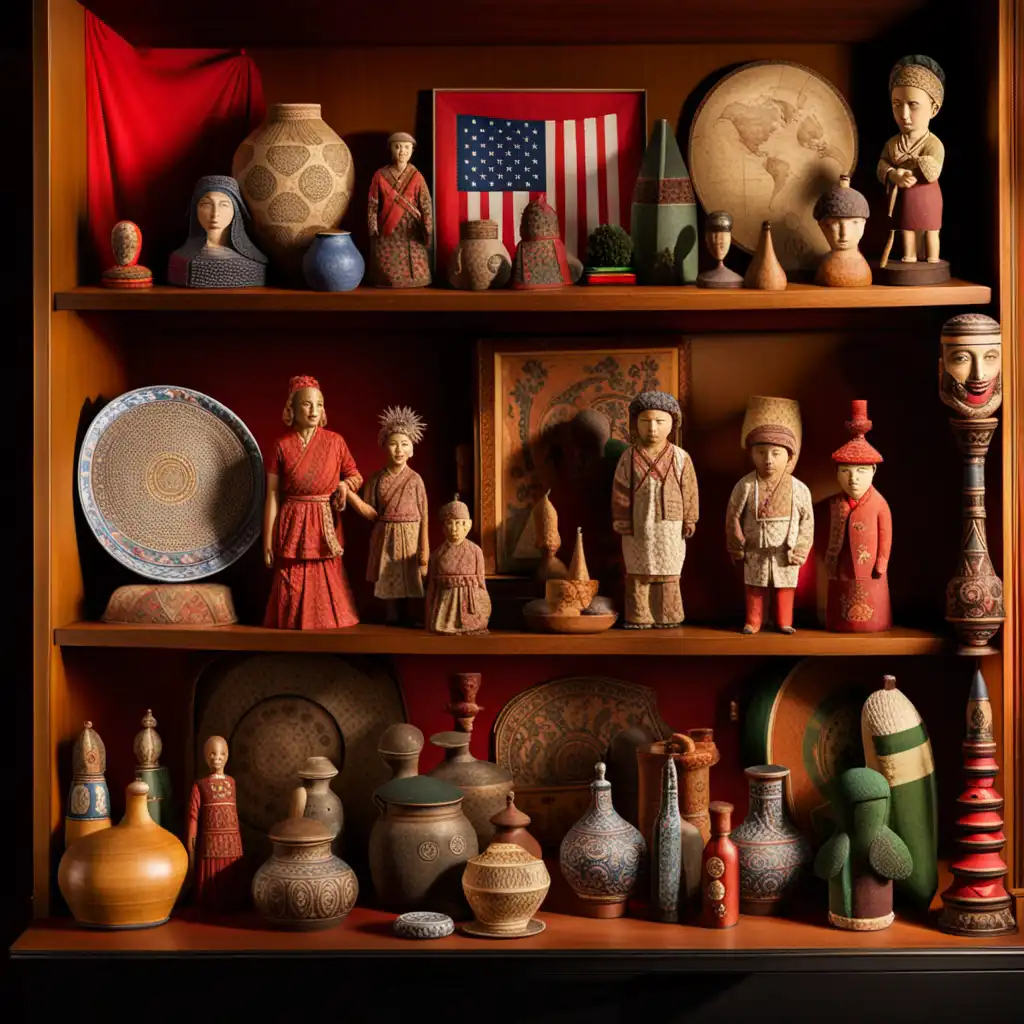
curio
noun curio
ˈkjʊriəʊ
An object that is interesting because it's unusual or old
She collected curios from every country she visited.
curio
ˈkjʊriəʊ
加载中…
ˈkjʊriəʊ
An object that is interesting because it's unusual or old
She collected curios from every country she visited.
音频无法加载,请稍后再试。
The word 'curio' is often used to describe an interesting and unusual object that someone collects or displays for show. These objects can be anything from an old coin to a piece of art. You might use this word when talking about visiting a friend's house and seeing their collection of curios or when describing a unique item in a museum. It's a way to refer to something that is not only valuable but also fascinating to look at.
Antique refers to an object that is old and valuable because of its age, history, quality and rarity.
It is typically at least 100 years old and has some cultural or historical significance. Examples of antiques include vintage furniture, old coins, and ancient jewelry.
The difference between antique and curio is that antique refers to something old and valuable with historical significance while curio refers to something unique or peculiar that can be old or new but has some sort of interesting trait that makes it captivating.
打开单词: Antique →Bauble refers to a small, decorative trinket that is often cheaply made and has little value.
It is often collected and displayed in a cabinet or museum. Hence, while bauble is applicable in casual settings and is not of much value, curio is applicable in formal or educational settings and has value due to its rarity or historical significance.
打开单词: Bauble →Collect means to accumulate or gather items of a particular kind or interest, such as stamps or coins. It typically implies a passion or hobby of the collector.
Curios can be decorative or functional, and are often displayed as part of a collection or as standalone creations.
Collect involves a focus on amassing a collection of items, while curio refers to individual objects of interest or intrigue.
Collecting is a broader term, while curios are specific items that may or may not be part of a larger collection.
打开单词: Collect →Curiosity refers to a desire to know or learn something new. It is a mental state or emotion that motivates people to explore, investigate or inquire about the world around them, such as "I have a curiosity about space travel or history".
In brief, curio is a tangible object, while curiosity is an intangible feeling.
打开单词: Curiosity →Oddity refers to something unusual or strange that is out of the ordinary. It is applicable when referring to strange behavior, peculiar things or unusual ideas.
Oddity is often used to describe something that stands out because it is different from what is expected.
打开单词: Oddity →It is often valued for its uniqueness or historical significance, and is typically not as decorative as an ornament.
An ornament is a decoration that is typically used to beautify an object or space.
It can be made of various materials and come in a variety of shapes and sizes. Ornaments are often used during holidays or special occasions, such as Christmas trees, wedding centerpieces or wreaths.
In summary, curios are unique and interesting objects that are displayed, while ornaments are decorations used to beautify an object or space.
打开单词: Ornament →A trinket is a small decorative object that is often inexpensive and sometimes has little value beyond aesthetic appeal.
It can be used as a decoration or given as a souvenir or token of affection. Examples of trinkets include keychains, decorative magnets, or small figurines.
In summary, curios are unique and significant objects meant to be displayed as collector's items, while trinkets are small, decorative objects meant for aesthetic appeal or to be used as souvenirs.
打开单词: Trinket →Why eyewitnesses get it...
在 YouTube 上观看 ↗Pilgrims who are looking for a cure are soon looking for a curio.
How to build your...
在 YouTube 上观看 ↗