pelagic
adjective pelagic
pəˈlædʒɪk
Related to the open sea, especially the deeper parts well away from the coast and sea bed
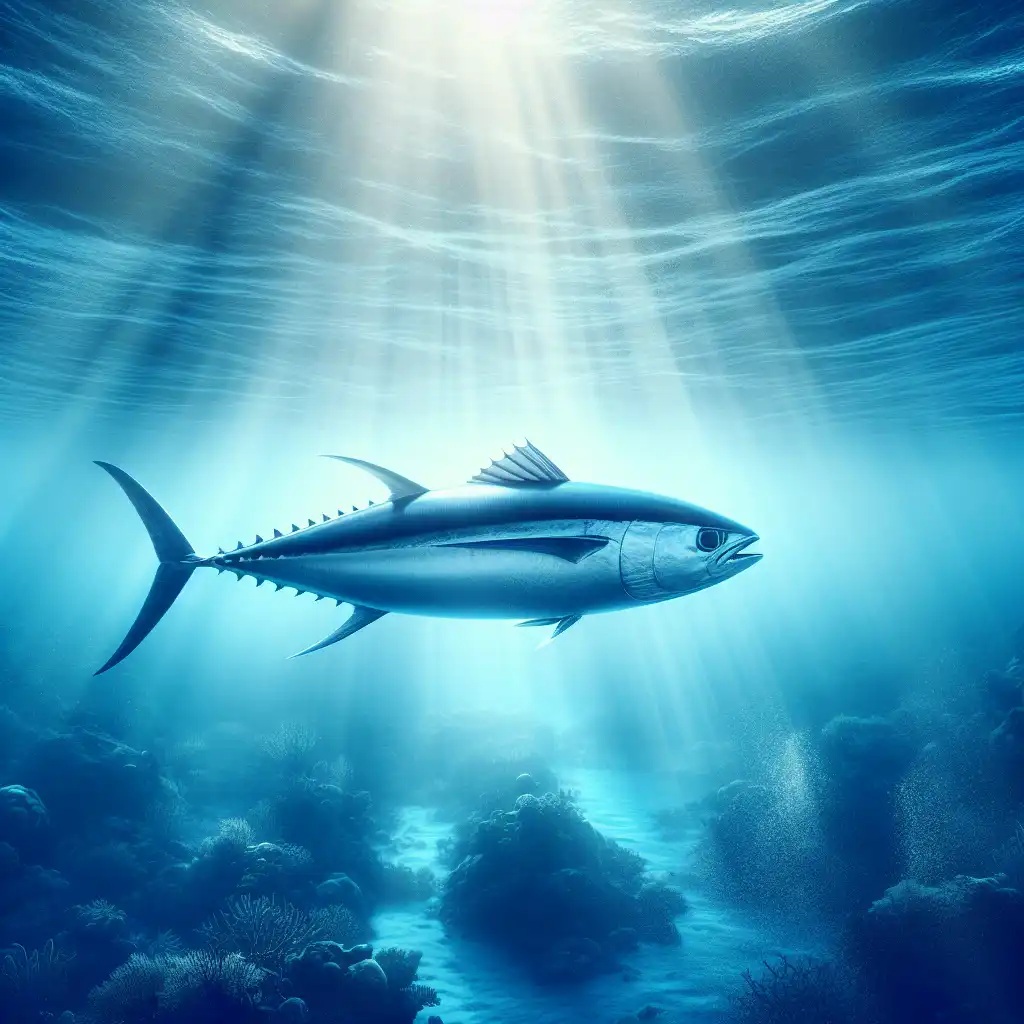
Pelagic fish like tuna live in the open ocean, away from the coast.
pelagic
pəˈlædʒɪk
Chargement…
pəˈlædʒɪk
Related to the open sea, especially the deeper parts well away from the coast and sea bed
Pelagic fish like tuna live in the open ocean, away from the coast.
Impossible de charger l’audio. Réessayez plus tard.
Pelagic is an adjective that describes things related to open oceans or seas, away from the coast or the ocean floor. It can be used to describe marine animals, plants, or habitats that are found in open waters, as well as activities like fishing or scientific research that take place in these areas. For example, "The pelagic zone is the vast, open area of the ocean where sunlight penetrates and supports many forms of marine life."
Abyssal and pelagic are both terms used to describe different regions of the ocean.
Abyssal refers to the depths below 2,000 meters where it is cold, dark, and the water pressure is extreme. It is the region of the ocean where temperatures are near freezing and there is little to no light.
Abyssal means deep, dark, and under intense pressure, while pelagic refers to the open water zone between the surface and the ocean floor where many marine animals live.
Ouvrir le mot: Abyssal →Aquatic refers to anything related to water or living in water, such as fish, plants, or animals.
So, while all pelagic organisms are aquatic, not all aquatic organisms are pelagic. Aquatic is a broader term that encompasses all types of water environments (lakes, rivers, oceans, etc.), while pelagic describes a specific subset of aquatic organisms that live in the open ocean.
Ouvrir le mot: Aquatic →Marine refers to anything related to the ocean or sea, including plants, animals, and physical features such as beaches, shorelines, and reefs.
So, while marine can refer to anything related to the ocean, pelagic is a more specific term that applies only to the open waters of the ocean.
Ouvrir le mot: Marine →Nautical refers to things related to ships and navigation, specifically in relation to the sea and coastal areas.
Nautical refers to the sea and coastal areas in relation to ships and navigation, while pelagic refers specifically to the open ocean beyond the continental shelf.
Ouvrir le mot: Nautical →Oceanic refers to anything related to the ocean as a whole, including its physical, chemical, and biological characteristics.
For example, if we talk about oceanic currents, we're referring to the movement of water throughout the entire ocean. But if we talk about pelagic fish, we're talking about fish that live in the open ocean, like tuna or swordfish.
Oceanic encompasses everything related to the ocean while pelagic refers specifically to living in the open ocean.
Ouvrir le mot: Oceanic →Offshore refers to the area of ocean water that is relatively close to the shoreline or coast, usually within 30 meters of the shore.
People can still see the shore when they are offshore. This is where you will typically find a wide range of plant and animal life, including various types of fish and marine mammals.
This area is much deeper than the offshore area, and it is often too far out to be seen from the coast. It is characterized by a vast expanse of open water, and it is home to many migratory species of fish and marine mammals.
Offshore and pelagic are both important terms in marine biology and are used to differentiate two different parts of the ocean.
Offshore is often used to describe the area where humans go to fish or engage in recreational activities, while pelagic is used more in scientific studies and describes the area where scientists study marine life and ecosystems in the open ocean.
Ouvrir le mot: Offshore →Pelagic refers to the open water in the ocean or a lake, whereas salt refers to a chemical compound that is commonly found in the ocean.
Pelagic is applicable when describing marine life that lives in the open water, while salt is applicable when discussing the chemical composition of seawater.
In simpler terms, pelagic describes the location and salt describes a substance.
Ouvrir le mot: Salt →Seafaring refers to activities related to traveling on or working at sea, such as sailing, fishing, or piloting a ship.
For example, a seafaring career could include being a sailor, a fisherman, or a ship captain.
Pelagic is mostly used to describe things that live in the open ocean, while seafaring describes activities related to traveling or working at sea.
Ouvrir le mot: Seafaring →Meet the Vampire Squid %\PIPE%...
Voir sur YouTube ↗Even if the ocean on Enceladus starts out being as microbially poor as the pelagic ocean on Earth, which is the worst case, we still have a chance of seeing lots of organisms in the plumes.
Brian Skerry reveals...
Voir sur YouTube ↗Measuring the ocean’s...
Voir sur YouTube ↗Journey 1000m Below The...
Voir sur YouTube ↗Vampire Squid Turns...
Voir sur YouTube ↗Never Before Seen!...
Voir sur YouTube ↗Could Sport Fishing...
Voir sur YouTube ↗Fabien Cousteau: What I...
Voir sur YouTube ↗Brian Skerry: Ocean Soul...
Voir sur YouTube ↗Octopus vs. Sea Lion %\PIPE%...
Voir sur YouTube ↗