peasant
noun peasant
ˈpeznt
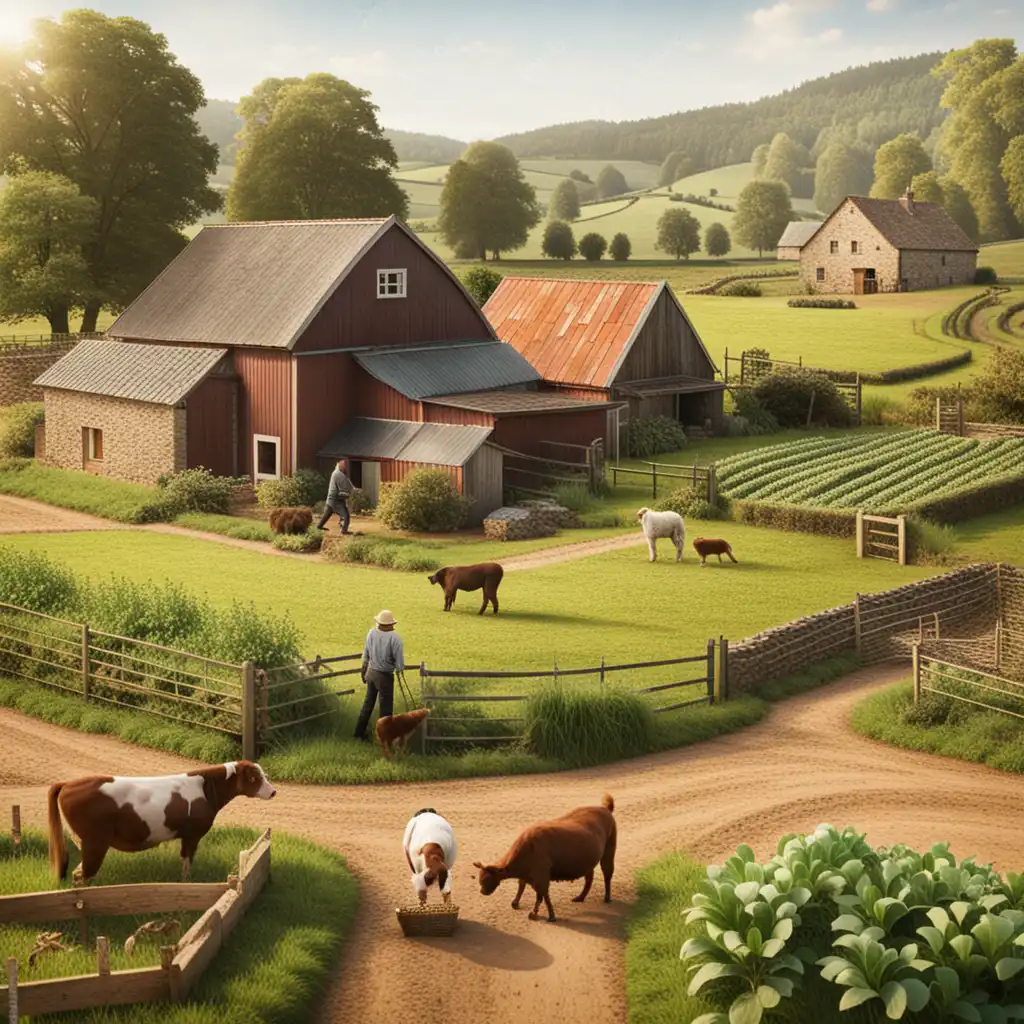
A person who owns or works on a small farm in the countryside
In the middle ages, peasants were required to give a portion of their harvest to the local lord.
peasant
ˈpeznt
불러오는 중…
ˈpeznt
A person who owns or works on a small farm in the countryside
In the middle ages, peasants were required to give a portion of their harvest to the local lord.
ˈpeznt
A person who is seen as having low intelligence, sophistication or status
He called them peasants, showing his arrogant attitude.
ˈpeznt
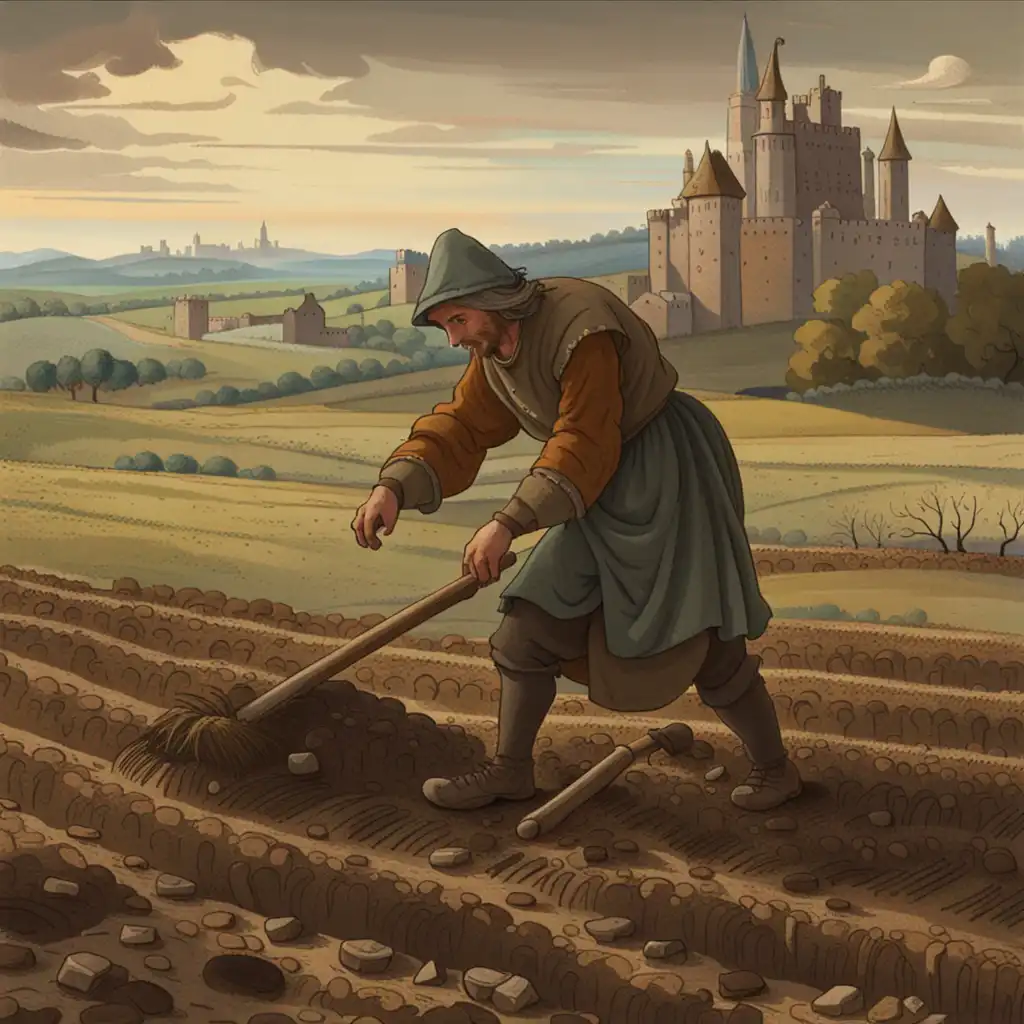
In history, a person who is legally bound to work on a lord's land
The life of a medieval peasant was laborious and often short.
오디오를 불러오지 못했어요. 잠시 후 다시 시도해 주세요.
The word 'peasant' is used to describe a farmer or farmworker who is poor and lives in a rural area. It is usually used to refer to someone who is uneducated or has a simple way of life. It is important to use this word respectfully and not in a derogatory manner.
Agrarian refers to a society that is centered on farming, where people rely mainly on agriculture to make a living. It defines people's relationship with the land, such as their ownership of farms or their dependence on farming for their livelihood.
Agrarian refers to a society that is centered on farming, while peasant refers to an individual who works in small-scale agriculture to sustain their livelihood.
Agrarian can describe a society or an economy, while peasant describes an individual's occupation or social status.
단어 열기: Agrarian →Countryman refers to someone who lives in the country or rural areas. This term suggests a certain level of respectability and implies that the person might work in farming or other rural occupations.
Peasant typically refers to someone who is from a lower social class than the countryman. Peasants are typically seen as uneducated and living in poverty.
Countryman refers to someone who lives in the country and may work in farming, while peasant typically refers to someone from a lower social class who does manual labor in rural areas.
Countryman carries a more positive connotation, while peasant has a more negative connotation.
단어 열기: Countryman →Farmer refers to someone who owns or manages a farm, typically to grow crops or breed animals for food or other purposes.
In contrast, peasant refers to a rural laborer or small-scale farmer who owns or rents a small plot of land. They typically use traditional farming methods and have limited access to resources such as modern technology or education.
The term farmer is applied to those who engage in modern agriculture practices on a larger scale, whereas peasant tends to be applied to smaller-scale farmers or rural laborers who use more traditional methods.
단어 열기: Farmer →A labourer is a person who performs physical work, usually in a factory, construction site or farm. They are involved in the manual labor part of a work process.
In simpler terms, a labourer works with their hands in a factory or construction site, while a peasant works with the land and cultivates crops.
Both terms can be applied to different areas of work, but usually, a labourer is associated with more industrialized and urbanized areas, while a peasant is associated with rural areas and traditional farming practices.
단어 열기: Labourer →Peasant and rustic are two words that are related to rural areas or countryside.
Rustic refers to the quality of something that is simple, rough, or unsophisticated.
Peasant is more applicable when referring to a person's social status or occupation, while rustic is more applicable when describing the appearance or quality of something.
단어 열기: Rustic →Meanwhile, a serf was an agricultural laborer who was bound to work for a lord under feudalism and was not free to leave the land they were tied to.
Serfdom was abolished in many countries during the 19th century, while peasants still exist in various forms around the world.
단어 열기: Serf →A tenant is a person who rents a property, such as a house, apartment, or piece of land, from a landlord. They pay rent to the landlord and are responsible for maintaining the property.
Unlike a peasant, a tenant usually does not own the property they occupy, and their livelihood is not tied to agricultural activities.
The main differences between peasants and tenants are that peasants are farmers who work on land they own or rent, while tenants rent property for residential or commercial use.
Peasants are common in rural areas, while tenants can be found in both urban and rural areas.
단어 열기: Tenant →Villager refers to someone who lives in a village, regardless of their occupation or social status.
Peasant is more specific to farming and social status, while villager is more general and refers only to where someone lives.
단어 열기: Villager →Peasant and yeoman are both words that describe a type of farmer, but they have different connotations and usages.
Yeoman typically refers to a small-scale landowner who is independent and self-sufficient. Yeomen traditionally owned their own land (usually between 40 and 100 acres) and could support themselves through farming and other trades.
This term is often associated with England's feudal system, in which yeomen were considered part of the gentry class but were lower in status than aristocrats or nobles.
In modern usage, peasant is still used to describe poor rural farmers in some countries, while yeoman is now mostly used in historical or literary contexts to describe a certain type of landowner.
단어 열기: Yeoman →full of illiterate peasants to a modern industrial superpower, with one of the world's best educated populations, unprecedented opportunities for women, and some of the most important scientific advancements of the century. Life may not have been luxurious,
YouTube에서 보기 ↗He is happiest, be he king or peasant, who finds peace in his home.
sullied by the Restless peasants what's surprising about sumo is the sheer size of the wrestlers a traditional diet that includes choco lava a stew made from fatty meats cabbage eggs and bean sprouts helps them bulk up entering the
YouTube에서 보기 ↗Give the peasants neither life nor death.
It's one of the most lethal things we've seen in circulation in the world in any recent centuries. And we've dealt with it by killing off lots and lots and lots of chickens, and unfortunately often not reimbursing the peasant farmers with the result that there's cover-up. It's also carried on migration patterns
YouTube에서 보기 ↗I don't ever want to be like a peasant. I want to always be all right. But motivation is fans - not your kids, your mum, none of that. All of that matters, but number one is your fans.
The fur was it was almost like a year salary for a peasant boy. So it was very valuable.
YouTube에서 보기 ↗One of the amazing things about 'Seven Samurai' is that there are a lot of characters. And considering you have so many, and they all have shaved heads, and you've got good guys and bad guys and peasants, you get to understand a lot of them without too much being said.
sophisticated detailed crucifix from wood and upon seeing it his friend Donatello proclaimed I've put peasants and farmers on the cross until now he built watches and timing mechanisms but none of this would prevent him from
YouTube에서 보기 ↗I come from a long line of below-stairs maids and gardeners. Good ol' peasant stock. My mother and her sister made a quantum leap out of that life. Then I made another quantum leap.
these can often be understood the first time you hear them. And sometimes a new word isn't new at all. Obsolete words gain new life by adopting new meanings. Villain originally meant a peasant farmer but in a twist of aristocratic snobbery
YouTube에서 보기 ↗We love fantasy novels in which the characters think that they're peasants but turn out to be princes and kings.
and they were the only ones who paid taxes, not just to the king but to the other Estates as well. In bad harvest years, taxation could leave peasants with almost nothing
YouTube에서 보기 ↗This world is run by people who know how to do things. They know how things work. They are equipped. Up there, there's a layer of people who run everything. But we - we're just peasants. We don't understand what's going on, and we can't do anything.
killing any suspected spies or dissenters. He also helped peasants build health clinics and schools, taught them to read, and even recited poetry to them. His harsh discipline was necessary against a much stronger enemy
YouTube에서 보기 ↗I remember I once went to a nutritionist who said I come from good Russian-Jewish peasant stock, which means I can hold a potato in my body for a week, if need be.
Yet as the night wore on, and their strange guests took hearty gulps of wine, the clay vessel never ran dry. The couple at first relieved grew terrified. Their guests weren’t humble peasants traveling the countryside.
YouTube에서 보기 ↗You know most of the food that Americans hold so dear - things like hamburgers and hot dogs - were road food, but even before they were road food, they were peasant food.
Namely we seem to be getting more humane. Centuries ago our ancestors would burn cats alive as a form of popular entertainment. Knights waged constant war on each other by trying to kill as many of each other's peasants as possible. Governments executed people for frivolous reasons,
YouTube에서 보기 ↗There is but one stage for the peasant and the actor.