pessimist
noun pessimist
ˈpesɪmɪst
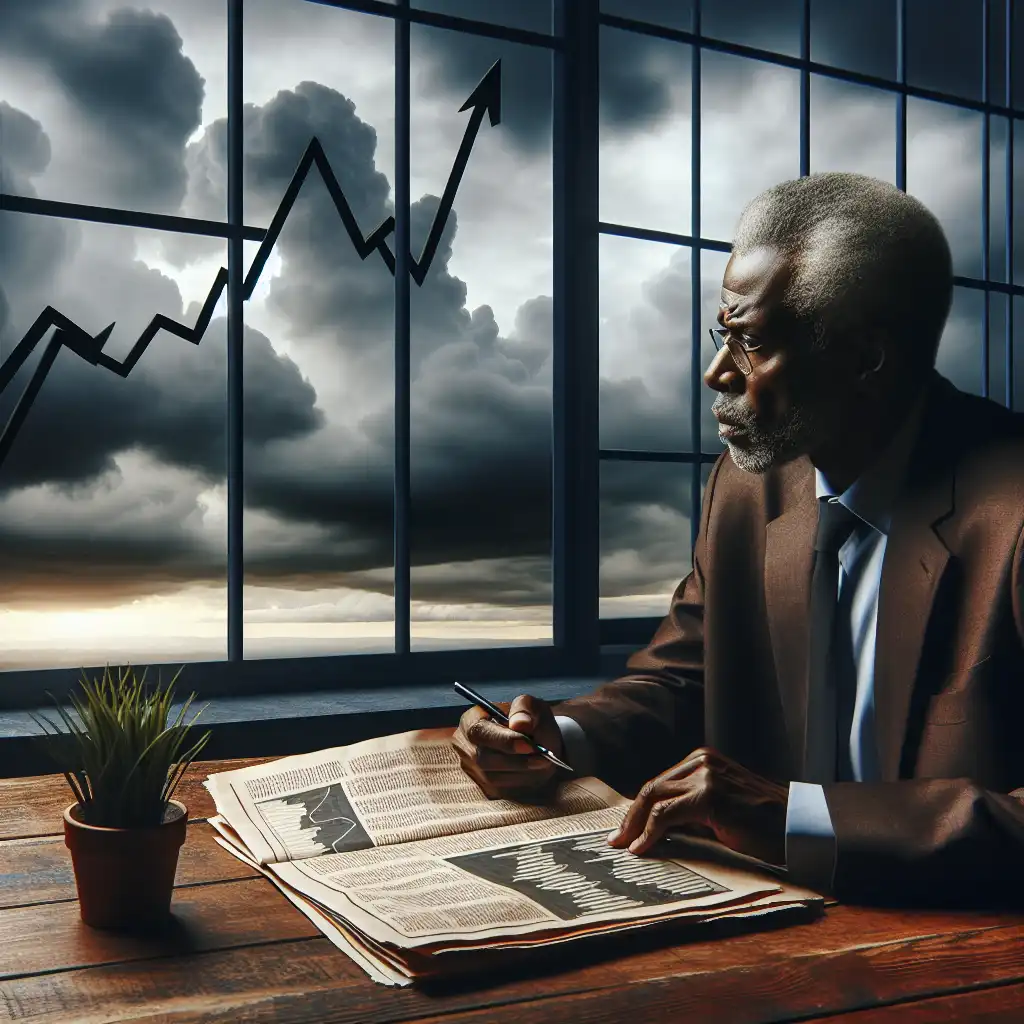
A person who always expects bad things to happen or thinks things will turn out for the worst.
Despite the promising economic forecast, he remained a pessimist and sold his stocks.
pessimist
ˈpesɪmɪst
加载中…
ˈpesɪmɪst
A person who always expects bad things to happen or thinks things will turn out for the worst.
Despite the promising economic forecast, he remained a pessimist and sold his stocks.
音频无法加载,请稍后再试。
A pessimist is someone who always thinks that bad things will happen and doesn't have hope or confidence about the future. You can use this word when describing someone's attitude towards a situation or a general outlook on life. For example, you might say "My friend is a pessimist, she always thinks the worst will happen," or "Don't be a pessimist, try to see the positive side of things."
A cynic is someone who tends to believe that people are primarily motivated by self-interest instead of acting for the greater good.
A cynic is skeptical about people's motivations, while a pessimist is skeptical about the outcome of events.
打开单词: Cynic →Defeatist refers to a person who gives up easily and believes that they will inevitably fail. Pessimist refers to a person who has a negative outlook on life and expects the worst outcome in any situation.
Defeatist is applicable in situations where a person lacks motivation and determination to achieve their goals. For example, if a student gives up studying for an exam because they think they will fail regardless of their efforts, they are being defeatist.
A defeatist lacks the will to try whereas a pessimist has a negative outlook on life.
打开单词: Defeatist →Despair and pessimism are closely related but have slightly different meanings.
Despair is a feeling of complete hopelessness and the absence of any possibility of a positive future outcome, while pessimism is a belief that negative outcomes are more likely than positive ones.
Despair is applicable when something terrible has happened, and there is little or no hope for improvement. For example, if someone loses a loved one, they may feel extreme despair, as they cannot see a way to recover or make things better.
Despair is a feeling of complete hopelessness, while pessimism is a negative belief about the future.
打开单词: Despair →Dishearten means to discourage or make someone lose hope or enthusiasm.
To summarize, dishearten describes an action, whereas pessimist describes a person's attitude or outlook on life.
打开单词: Dishearten →Both fatalistic and pessimist are words that are associated with negative thinking.
Fatalistic means that a person believes that they have no control over events in their life and that everything is predetermined.
It suggests that everything that happens is already planned and cannot be changed. Fatalistic thinking can sometimes lead to a feeling of hopelessness.
To summarize, fatalistic thinking suggests that the future is predetermined and cannot be changed, while pessimism suggests a negative outlook on life and future outcomes.
打开单词: Fatalistic →Gloomy refers to something that is dark or dull in a way that makes one feel sad or unhappy. For example, a dark and rainy day can be described as gloomy.
Gloomy describes a situation or atmosphere, while pessimist describes a person's attitude or outlook.
Gloomy describes a condition or situation, while pessimist describes the personality of an individual.
Gloomy is used when describing a situation or atmosphere that is unpleasant, while pessimist is used when describing an individual who has a negative and pessimistic outlook on life.
打开单词: Gloomy →Morbid refers to something that is related to death or disease and is often associated with thoughts or feelings that are unhealthy or gloomy.
For example, someone who constantly thinks about death and is fascinated with it can be described as having a morbid fascination with death.
Morbid refers to a fascination or interest in death or disease, while pessimist describes a negative outlook or attitude towards things in general.
打开单词: Morbid →Negative describes something that is not positive or good, while the word pessimist describes a person who always thinks things will turn out badly.
For example, if someone says "I don't think I can do it," that is a negative statement because it focuses on what they can't do.
Negative can be applicable to situations or things, while pessimist is applicable to a person's perspective or attitude.
打开单词: Negative →and the world does still have plenty of problems. But the pessimists and doomsayers who say that the world can't get better are simply wrong. So how did we achieve this success? Well a lot of it was because of economic growth.
在 YouTube 上观看 ↗An optimist is a person who sees a green light everywhere, while a pessimist sees only the red stoplight... the truly wise person is colorblind.
flat happiness curve my field the field of psychology you know hasn't done a whole lot to help us move forward and understanding human happiness in part we have the legacy of Freud was a pessimist who said it for suit of
在 YouTube 上观看 ↗To a profound pessimist about life, being in danger is not depressing.
neither am I a pessimist. I'm a very serious "possibilist." It's a new category where we take emotion apart, and we just work analytically with the world. It can be done. We can have a much more just world.
在 YouTube 上观看 ↗A pessimist is a man who tells the truth prematurely.
views like that things today are better than ever for humanity things are still quite bad and things can get much much worse so i'm not an optimist because i think that yes things are bad and they can get much worse but i'm not a pessimist either because i think that things are
在 YouTube 上观看 ↗I'm a pessimist. But I'm a pessimist with a sense of responsibility.
For example these two show great growth in income, absolutely flat happiness curves. My field the field of psychology, hasn't done a whole lot to help us move forward in understanding human happiness. In part we have the legacy of Freud who was a pessimist,
在 YouTube 上观看 ↗The optimist thinks this is the best of all possible worlds. The pessimist fears it is true.
alluding to the Voltaire character who declared, "All is for the best in the best of all possible worlds." Well Professor Pangloss as it happens was a pessimist. A true optimist believes there can be much better worlds than the one we have today. But all of this is irrelevant, because the question of whether progress has taken place
在 YouTube 上观看 ↗I have always been - I think any student of history almost inevitably is - a cheerful pessimist.
and doesn't know how to use the internet? Trust me I've heard them all. So when you think about an idea like this you have to beware of pessimists because they are known to have a problem for every solution. So I want to invite you to think about the bigger ideas.
在 YouTube 上观看 ↗The optimist proclaims that we live in the best of all possible worlds, and the pessimist fears this is true.
and in my recent work I've been a bit of a pessimist. So I thought this morning I would try to be the optimist, and give reason to hope for the future of the Internet by drawing upon its present.
在 YouTube 上观看 ↗I guess I am an optimist in a pessimist brain, if that makes any sense. I believe in the innate goodness of most people in this world, and yet I'm a damaged soul like many other people and have my own demons and things I struggle with.
At the break I was asked by several people about my comments about the aging debate. And this will be my only comment on it. And that is I understand that optimists greatly outlive pessimists.
在 YouTube 上观看 ↗People have always painted me like a pessimist, like somebody who sees the glass half-empty. But I think the fact that I keep showing up and saying, 'No, there must be a way for me to live in this world,' that shows I'm an eternal optimist.
Good morning. I think as a grumpy Eastern European, I was brought in to play the pessimist this morning. So bear with me.
在 YouTube 上观看 ↗I'm one of life's pessimists. I'm ready for everything to go wrong at any moment.