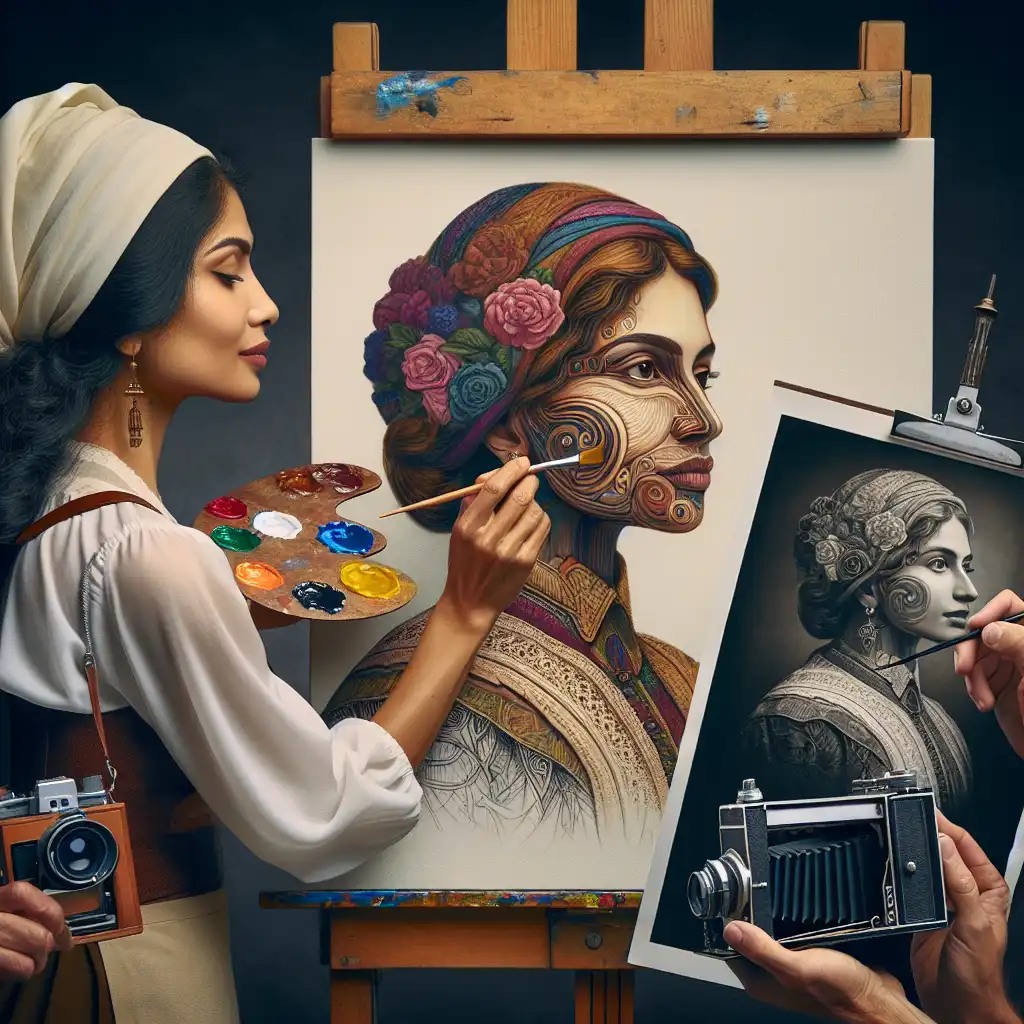
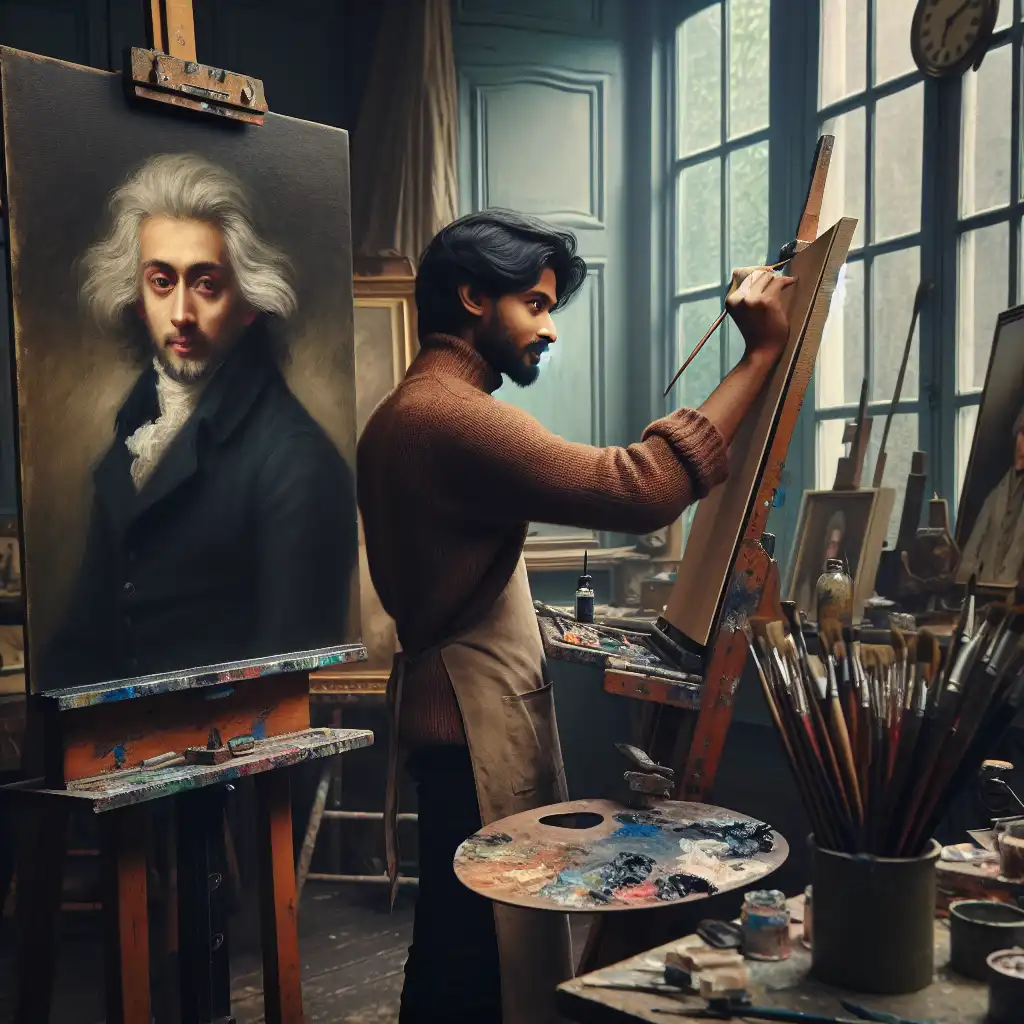
Portraiture refers to the art of creating a portrait, which is a painting, drawing, or photograph of a person's face or body. You can use the word portraiture when talking about famous artists who specialized in creating portraits. For example, "Leonardo da Vinci was known for his skill in portraiture." Additionally, you can use the word portraiture when describing a type of photography that focuses on capturing a person's essence and personality. For example, "The photographer specializes in portraiture and has captured some stunning headshots."
Characterization refers to the process of creating and developing a character, including their personality, traits, and behavior.
Characterization is used in storytelling to develop a character's personality, while portraiture is used in the visual arts to create a representation of a person's appearance.
Impersonate means to imitate or mimic someone else's behavior, speech or appearance.
For example, if someone pretends to be a police officer or a celebrity, that is impersonation.
In essence, impersonate is about pretending to be someone else, while portraiture is about capturing the essence of someone through a visual representation.
The photographer, even in fashion and portraiture, has to have a standpoint. It's important to know what you stand for, no? Most people just take pictures, but they stand for nothing. They follow trends and don't know why.
Portraiture keeps me humble. It's simple and straightforward. There is nothing more interesting I can make up than the figure sitting right in front of me.
One can, in principle, outline sort of a set of neural circuits that are critically involved and even identify disorders that affect different components of that neural circuit and see what happens if you knock out, for example, inability to recognize faces, how it affects your response to portraiture.
I still find doing portraits a terrific challenge, but even though I've done hundreds of them, I've never stopped questioning the very nature of portraiture because it deals exclusively with appearances. I've never believed people are what they look like and think it's impossible to really know what people are.