forgery
noun forgery
ˈfɔːrdʒəri
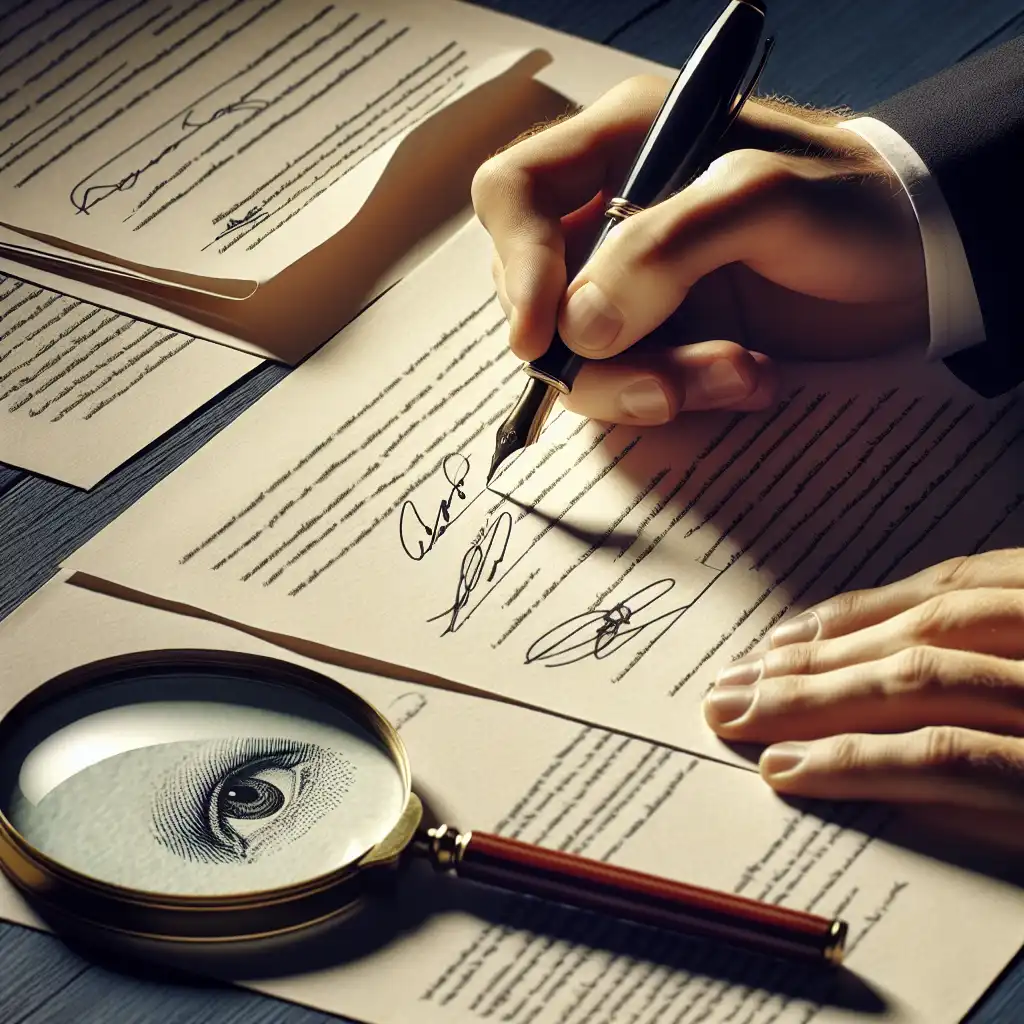
The act of making false copies to deceive or cheat people.
The signatures on the document were discovered to be a forgery.
forgery
ˈfɔːrdʒəri
読み込み中…
ˈfɔːrdʒəri
The act of making false copies to deceive or cheat people.
The signatures on the document were discovered to be a forgery.
ˈfɔːrdʒəri
A fake object made to look like an original.
The painting was valued at millions until it was revealed to be a forgery.
音声を読み込めませんでした。しばらくしてからもう一度お試しください。
Forgery is a word that refers to creating or copying something like a document, signature, or artwork in order to deceive someone. It means making a fake or fraudulent version of something with the intention of pretending that it is real. This word is often used in legal contexts when referring to the crime of creating and using fake documents or objects. For example, if someone is caught forging a cheque or a passport, they could be charged with a forgery.
Both “counterfeit” and “forgery” refer to something that is not genuine or real, but they have slightly different meanings.
A counterfeit is a copy of something that is made to look like the original, often with the intention of deceiving someone.
For example, counterfeit money is fake money that is made to look like real currency.
Both words have legal implications as they involve deception and dishonesty. Counterfeiting is a broader term that encompasses many types of fraudulent reproductions, while forgery is specifically used to indicate falsifying documents or signatures.
単語を開く: Counterfeit →Deception means misleading someone by saying or doing something that is not true or not revealing the whole truth.
Deception is more about misleading through words or actions, while forgery is about producing something that is fake or counterfeit.
単語を開く: Deception →Fabricate means to create or invent something that is not real or true. It could refer to making up a story or falsely creating evidence.
So, while fabricate is broader and can refer to making up anything, forgery has a more specific meaning related to creating fake or false documents or objects.
単語を開く: Fabricate →Falsification is the act of making something untrue, either by changing or distorting the facts.
Falsification refers to making something false, while forgery specifically refers to creating a false item with the intent to deceive.
単語を開く: Falsification →Fraud is a more general term that refers to any act of deception or dishonesty that is done for personal gain or to cause harm to others.
Forgery is more specific and refers to a particular type of fraudulent activity that involves creating fake documents or items.
Fraud can refer to a wider range of deceptive activities that are done for personal gain.
単語を開く: Fraud →Imitation represents the process of replicating something that already exists in order to learn from it, improve on it, or simply enjoy it.
Unlike with forgery, there is no intention to deceive or defraud people with imitation.
So in short, forgery is the act of making something fake with the intention to deceive, while imitation is the act of copying something for other reasons such as learning or enjoyment.
単語を開く: Imitation →On the other hand, impersonation involves pretending to be someone else, usually to deceive or mislead others. This can be done in person, over the phone, or online.
For example, if someone pretends to be a police officer to gain access to someone's home, they are impersonating a police officer.
Forgery involves the creation or alteration of documents or objects while impersonation involves pretending to be someone else.
単語を開く: Impersonate →Pretence refers to the act of pretending to be or to have something that one is not, in order to deceive others.
Both words involve deception, but forgery is specifically related to the creation or alteration of false documents or objects, whilst pretence refers to the act of pretending to be something or someone that you're not.
Pretence may be more applicable in cases where an individual is pretending to be someone else to deceive another person, such as faking an identity or pretending to have a certain job or status that is not true.
単語を開く: Pretence →It can help us determine when a work was written, whether an ancient text is a forgery, whether a student has committed plagiarism, or if that email you just received is of a high priority or spam.
YouTube で見る ↗Imitation, if it is not forgery, is a fine thing. It stems from a generous impulse, and a realistic sense of what can and cannot be done.
And there we are I can give them to you. With this kind of imaging -- this kind of infrared ultraviolet invisible light imaging -- we were never going to image through the gold ground forgeries. How were we going to do that? Well we took the manuscript,
YouTube で見る ↗From lies to forgeries the step is not so long, and I have written technical essays on the logic of forgeries and on the influence of forgeries on history.
or a forgery americans were known to have a lot of money and a lot less experience with paintings than europeans and so they were seen as something of an easy mark and what forbes decided to do was be able to test the pigments that were being used and see if they were available during the artist's lifetime
YouTube で見る ↗The handwriting on the wall may be a forgery.
so much so that they were later forged in turn by his own son. The same canvases went from revered classics to despised forgeries to works of art respected for the skill and notoriety of the forger.
YouTube で見る ↗In the future the way that Whittaker Chambers was able to carry out forgery by typewriter will be disclosed.
which was viewed as Vermeer's finest masterpiece his best work -- people would come all over the world to see it -- was actually a forgery. It was not that painting but that painting. And when that was discovered, it lost all its value and was taken away from the museum.
YouTube で見る ↗If my forgeries looked as bad as the CBS documents, it would have been 'Catch Me In Two Days'.
European rulers were thrilled. While the letter’s actual author remains unknown, its stereotypes about the East and alignment with European goals indicate it was a Western forgery.
YouTube で見る ↗While claiming advocacy, what hoaxers really exhibit is self-interest. Often, this is because there is only the self to support their false claims; any revelations merely provide further opportunities for details and forgery.
There are thousands of books on that. Now compare that with real price increments. Where are real price increments? Well these other lines include some real price increments and some forgery which I did.
YouTube で見る ↗Criminals look at identity theft and say only 1 in 700 criminals gets convicted of it. And they look at check forgery and they know that for every 1,400 forgers arrested, only about 123 get convicted and about 26 go to jail. So the rewards are great, but the risks are very slim. So that's one of the reasons that make it very popular.
Instead become someone else, your true self, your authentic self. Now this isn't about a return to the past. It's about using a forgery of the past
YouTube で見る ↗until she is sentenced for her forgery conviction and that could take months I want to be no jail time no jail time I go to school for nursing I can't be in jail she's five weeks from starting her last year of nursing school
YouTube で見る ↗fast about it so the top traveling's of books on that now compare that with the real price increments and when a real price increments well these other lines includes some real price increments and some forgeries chart data so the idea
YouTube で見る ↗