
skin
noun skin
skɪn
The thin layer that protects the body of a person or animal.
She has very sensitive skin that gets sunburned easily.
skin
skɪn
Cargando…
skɪn
The thin layer that protects the body of a person or animal.
She has very sensitive skin that gets sunburned easily.
skɪn
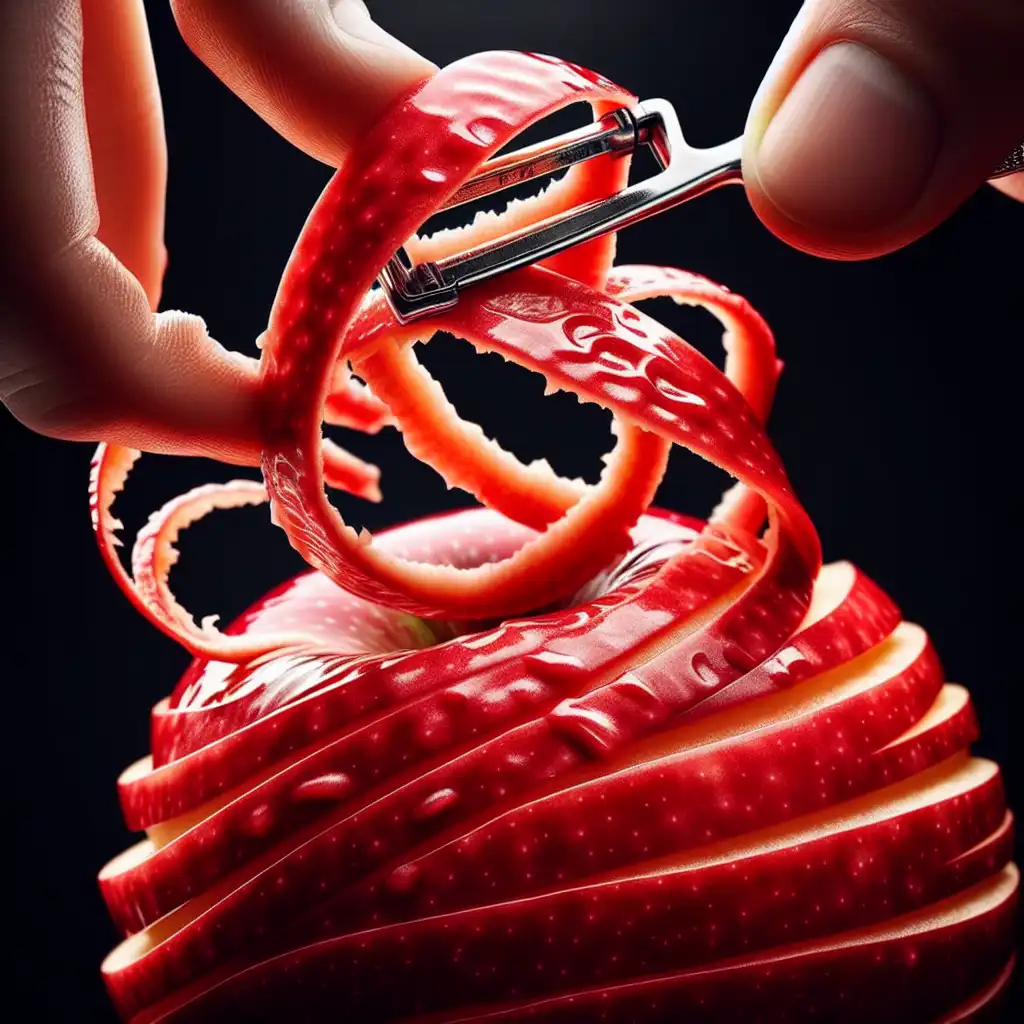
The outer layer of a fruit, vegetable, or other food.
Peel the skin off the apple before you eat it.

skɪn
To remove the outer layer or covering from something, especially a fruit, vegetable, or animal.
She skinned the chicken before she cooked it.

skɪn
To injure the skin by rubbing it against something rough.
He skinned his knee when he fell off his bike.

skɪn
A design or picture that you can put on the outside of something, like a computer or mobile phone to change its appearance.
He downloaded a new skin for his gaming console.
No se pudo cargar el audio. Inténtalo de nuevo más tarde.
The word 'skin' refers to the outer covering of the body that protects its internal parts. You can use it to talk about your own skin, such as its color, texture, or any changes on it. For example, if you get a cut or a burn, you might say "My skin is injured." You can also use it to talk about animal skin, such as leather or fur. Additionally, the word 'skin' can be used informally to refer to someone's appearance or likeness, such as saying "He looks just like his father, they have the same skin tone."
Skin and dermis are two different layers of tissue that make up the human skin. The skin is the visible outer layer that covers our entire body, while the dermis is the layer of tissue found beneath the skin.
The dermis contains important structures like blood vessels, hair follicles, and nerve endings. It also provides support to the skin and helps to maintain its structure.
Skin is the outermost layer of tissue that covers our body, while the dermis is the layer of tissue beneath the skin that contains important structures and provides support.
Abrir palabra: Dermis →The skin is the outer covering of the body, including both the epidermis and dermis layers, while the epidermis is the topmost layer of the skin.
In simpler terms, skin is the entire outer covering of the body that includes layers of cells, hair, nails, and glands, while the epidermis is just the top layer of skin that is responsible for protecting the body from the environment and regulating body temperature.
To put it simply, think of the skin as a blanket covering the entire body, while the epidermis is the top layer of that blanket that is in direct contact with the outside world.
Typically, the word skin is used in everyday conversation, while epidermis is more often used in scientific or medical contexts when referring specifically to the topmost layer of the skin.
Abrir palabra: Epidermis →Hide refers to the outer layer of an animal's skin that is removed and treated to make leather. It is also used to mean to conceal something or someone from view.
Hide is used for the skin that has been processed to make leather, while skin is the natural covering on animals and humans.
Hide is applicable in the leather industry while skin is applicable in biology and anatomy.
Abrir palabra: Hide →Both leather and skin refer to a type of material that comes from animals. Skin refers to the natural covering that animals have on their bodies, while leather is made by treating and processing animal skin to make it more durable and flexible.
Leather is often used to make clothing, shoes, and furniture, while skin can be used for things like animal hides, fur, and even certain types of food.
The term leather is more commonly used to refer to processed animal skin, while skin describes unprocessed or untreated animal hides.
Abrir palabra: Leather →A membrane is a thin layer of material that can separate different substances or parts of a structure.
It is often used in scientific or medical contexts, such as the cell membrane that surrounds cells in living organisms, or the membranes used in filtration systems.
In short, membranes are thin, separative layers used in more scientific or technical settings, while skin is the protective layer on the outside of living organisms.
Abrir palabra: Membrane →Pelt is usually used to refer to the fur or hair of an animal. It implies that the fur has been removed from the animal's body, often through hunting or trapping.
It can be used to refer to an animal that has been hunted or raised for its meat or hide. In simpler terms, a pelt is just the fur while a skin refers to the whole outer layer of an animal.
Abrir palabra: Pelt →Skin refers to the outer layer that covers our body, while the word surface refers to the uppermost layer of something.
Skin is mostly applicable to living things like animals and humans, while surface can be used in a wider range of contexts, including non-living things.
For example, we could say "I scratched my skin" but we couldn't say "I scratched the surface of a rock."
However, we could say "I painted the surface of the wall."
Skin is used when referring to the outer layer of a living being, while surface is used when referring to the top layer of something, whether it's living or not.
Abrir palabra: Surface →Veneer refers to a thin layer of material that is applied to an object's surface to improve its appearance.
It is often made of wood, but can also be made of other materials such as plastic or metal. Veneer is commonly used to cover furniture, flooring, and walls to give them a more attractive or refined look.
Skin is a natural covering found on living things, while veneer is an artificial covering applied to objects to make them look better.
Abrir palabra: Veneer →The key to survival lay in their own personal sunscreen manufactured beneath the melanin. The type and amount of melanin in your skin determines whether you'll be more or less protected from the sun.
Ver en YouTube ↗Beauty is only skin deep. I think what's really important is finding a balance of mind, body and spirit.
and the whiskers spring back again the mouse doesn't have a chance. Far thicker and longer than normal hairs whiskers also sit three times deeper in the skin where they attach to nerve endings,
Ver en YouTube ↗It's important to protect your skin in the sun.
take off your hood when the sun goes down. My parents raised me and my siblings in an armor of advice, an ocean of alarm bells so someone wouldn't steal the breath from our lungs, so that they wouldn't make a memory of this skin. So that we could be kids not casket or concrete. And it's not because they thought it would make us better than anyone else
Ver en YouTube ↗Wear your heart on your skin in this life.
its old skin just isn't good enough it's after a baby green iguana the iguana is fast twitchy highly mobile and impulsive the centipede is slower persistent hungry and strategic the centipede advances on
Ver en YouTube ↗Beauty is only skin deep.
trauma and humiliation and subordination did to people of color and to people who are white some of them were taught that they're better than other people because of their skin color and we haven't helped them recover from that abuse and that lie is we have to change the narrative around these issues
Ver en YouTube ↗I am comfortable in my character's skin. I am uncomfortable being in my own skin.
Though different areas of the skin have different characteristics, much of this surface performs similar functions, such as sweating feeling heat and cold and growing hair. But after a deep cut or wound, the newly healed skin will look different from the surrounding area,
Ver en YouTube ↗My skin care is really important.
or trendy youth fads. But while tattoo styles come and go, and their meaning has differed greatly across cultures, the practice is as old as civilization itself. Decorative skin markings have been discovered in human remains all over the world,
Ver en YouTube ↗I've struggled with skin issues my whole life.
to carve a little hole in your skin, allowing it to probe around with its proboscis, searching for a blood vessel. When it hits one the lucky parasite can suck two to three times its weight in blood. Turns out we don't really like that too much. In fact humans hate mosquitos so much that we spend billions of dollars worldwide to keep them away from us -- from citronella candles
Ver en YouTube ↗Being 30, I think it's very important to look after your skin.
so it's important to remove lingering tentacles stuck to the skin. Rinsing with vinegar will usually render undischarged nematocysts inactive. Seawater can also help remove residual nematocysts. But don't use fresh water because any change in salt balance alters the osmotic pressure outside of the cnidocyte
Ver en YouTube ↗Skin is really important; after all, it's my business.
But is there actually an evolutionary purpose to the itch, or is it simply there to annoy us? The leading theory is that our skin has evolved to be acutely aware of touch so that we're equipped to deal with risks from the outside world. Think about it.
Ver en YouTube ↗If we're afraid to stand in our own skin with those we work with, then how do we lead those who have no voice at all?