
canto
noun canto
ˈkæntəʊ
A section or part of a long poem
Each canto of the Divine Comedy is consisted of a different scenario.
canto
ˈkæntəʊ
Chargement…
ˈkæntəʊ
A section or part of a long poem
Each canto of the Divine Comedy is consisted of a different scenario.
ˈkæntəʊ
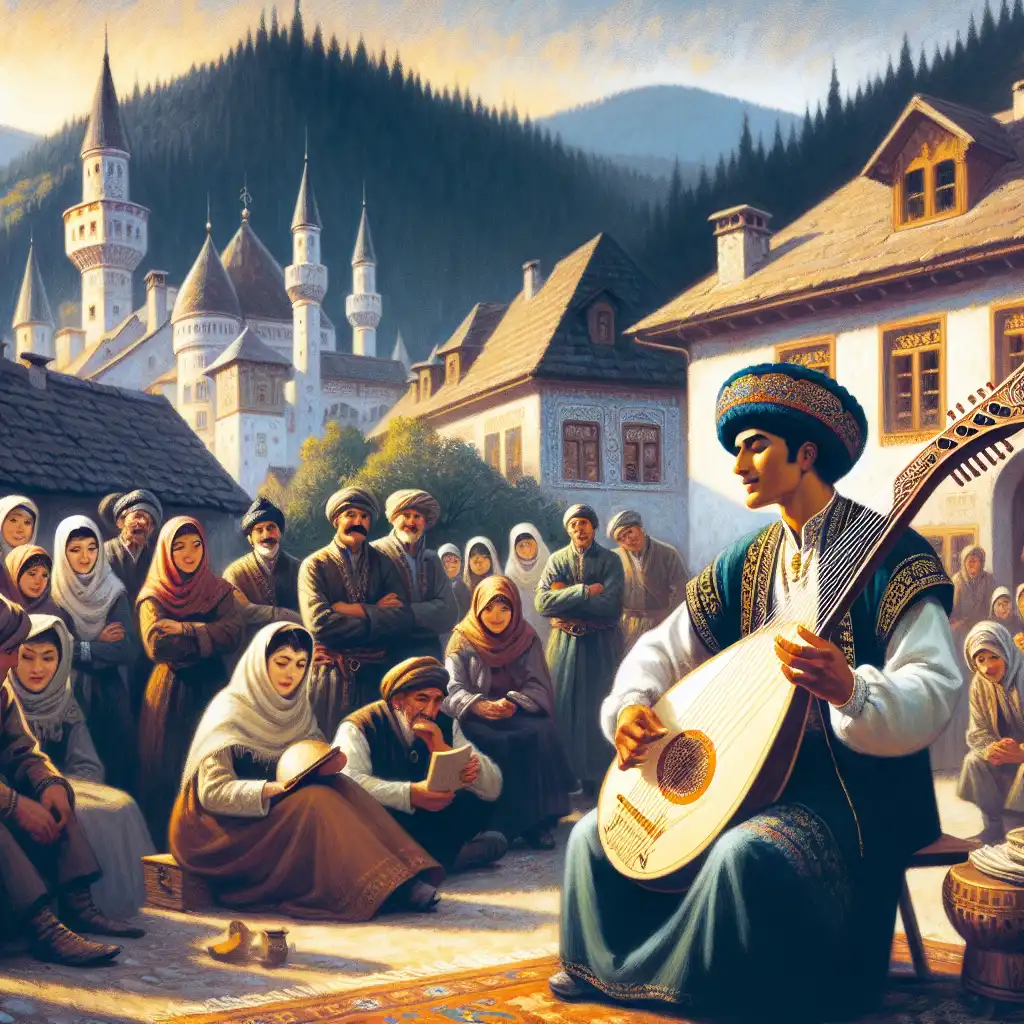
A song, especially in the tradition of narrative epic
The folk artist presented a canto that detailed the history of his tribe.
Impossible de charger l’audio. Réessayez plus tard.
'Canto' is a word that comes from Italian and Spanish, and it means 'song' or 'verse'. It is commonly used in literature and music to refer to sections of a long poem or a song. For example, a long poem may be divided into several cantos, and each canto may contain several verses. Similarly, in music, a canto may refer to a section of a song that has a distinct melody or rhythm. If you are an English learner, you may come across the word 'canto' while reading or listening to literature or music, and it can help you understand the structure and meaning of the work.
Canto and chapter are both used to divide a long piece of writing into smaller parts.
However, canto is usually used to divide poetry or epic poems like Dante's "The Divine Comedy" into smaller parts. Whereas, a chapter is more commonly used in books, novels and other types of literature like a memoir, biography, etc.
In simple language, a canto is a division of poetry, particularly epic poetry like "The Iliad" or "Beowulf", while a chapter is a division of prose writing, such as a novel or nonfiction book.
Ouvrir le mot: Chapter →Canto and division are both words used in music to refer to different parts of a composition. Canto refers to a specific section of a song or aria that is sung by one voice or instrument, while division typically refers to a technique in instrumental music where a single melody line is divided into multiple parts and played simultaneously or sequentially by different instruments.
Essentially, canto refers to a specific part of a piece of music that is sung or played by one performer, while division refers to a way of dividing up a melody among multiple performers or instruments.
Ouvrir le mot: Division →It is a way of organizing the work into smaller parts for easier reading and understanding.
Part is a more general term that can be used in a variety of contexts, such as music, theater, or literature.
Canto is a specific term used in poetry and literature to refer to a section of a larger work, while part is a more general term that can be used in various contexts to refer to a section of a work or a specific role or character.
Ouvrir le mot: Part →Canto is a term used in poetry and music to refer to a large division or section of a long work, such as an epic poem or a symphony.
Section is a more general term that can refer to any smaller division or part of a larger work, regardless of its structure.
For example, a newspaper article might have different sections like "news," "sports," and "entertainment."
The term canto is more specific and tends to be used in certain types of artistic works, while section is a more general term that can be applied to many different types of works.
Ouvrir le mot: Section →Canto and stanza are both terms that refer to specific sections of a longer poem.
A stanza is a group of lines within a poem, similar to a paragraph in prose writing.
A stanza is typically four to six lines long and has a specific rhyme scheme or meter.
Stanzas are often used to divide a poem into distinct sections, to create pauses or shifts in tone or emphasis, or simply to give the poem a specific structure.
A canto refers to a major division within a long poem, while a stanza is a smaller section of lines within a poem.
Ouvrir le mot: Stanza →Canto and verse are both terms used in poetry, but they have different meanings.
Each canto may contain multiple verses or stanzas, and often tells a distinct part of the story.
A verse refers to a single line of poetry. Verses are the building blocks of a poem, and are often grouped together into stanzas.
The number of verses in a stanza can vary depending on the poem's form and structure.
A canto is a large section of a long poem, while a verse is a single line of poetry. Cantos are used in epic poems, while verses are used in all types of poetry.
Ouvrir le mot: Verse →Jorge Drexler: Poetry,...
Voir sur YouTube ↗I prefer it when the conductor follows me. It is more difficult to work with a conductor who does not listen - even if I understand that sometimes it makes sense when one person is ruling everything. But for bel canto, I have to have a conductor who listens and supports me.
What’s a squillo and...
Voir sur YouTube ↗I wouldn't be me if my repertoire wasn't bel canto.
Geographic Bee 2010 - CO...
Voir sur YouTube ↗For me, bel canto is medicine for the voice.
My vocal style is called bel canto, which is an old Italian vocal style going back hundreds of years.
They both changed the way we hear the sound of the piano, both of them inventors of sonority: Chopin took bel canto singing lines and reproduced them on the keyboard above richly upholstered counterpoint; Debussy somehow preserved vibrations in the air, blending their ephemeral magic into music that reaches far back into deep memory.
When you do a 'messa di voce,' that means you start soft, you crescendo into loud - and then you go back to soft again. Some people call it circus tricks, but in bel canto, it's really written into the music.
Singing bel canto is like walking on a tightrope - especially with a larger voice like mine.
When I'm doing sports, I always think of how it's related to singing, and when I watch tennis, I learn a lot for my singing: how the players are focused, how they use their technique, and, in the case of Roger Federer, how effortless it is and how beautiful it is to watch - like bel canto, in a way. That's how singing should be.