
macrocosm
noun macrocosm
ˈmækrəʊkɑːzəm
The whole universe or world as an organized and perfect system.
In the astrology, each individual is a microcosm that reflects the macrocosm of the universe.
macrocosm
ˈmækrəʊkɑːzəm
加载中…
ˈmækrəʊkɑːzəm
The whole universe or world as an organized and perfect system.
In the astrology, each individual is a microcosm that reflects the macrocosm of the universe.
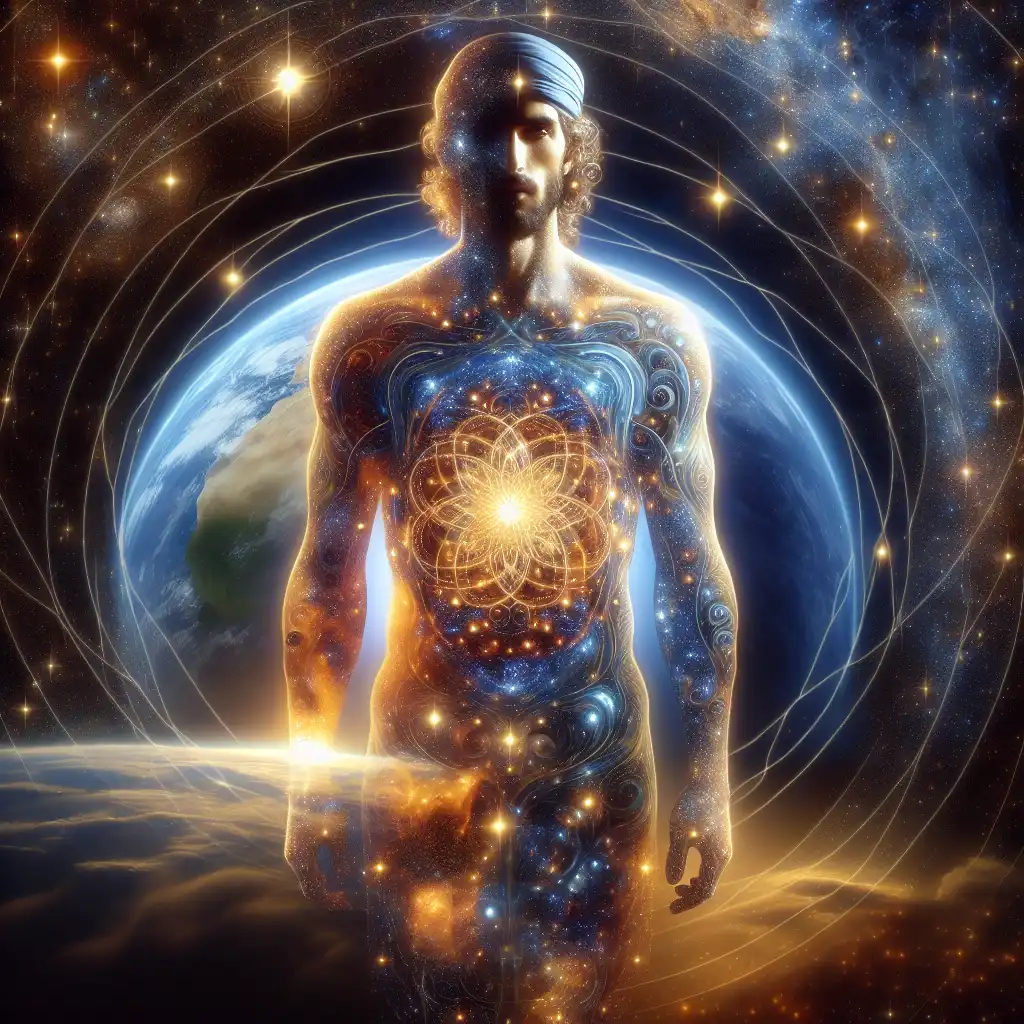
ˈmækrəʊkɑːzəm
A larger system that is represented in a smaller, similar system.
The human body, is often referred to as the microcosm because it is said to represent the macrocosm of the universe.
音频无法加载,请稍后再试。
The word 'macrocosm' refers to the whole universe or the entire world, including everything that exists. It implies large scale or greater perspective of things. We use this word to describe something that encompasses everything we know or perceive, like a worldview or a grand scheme of things. For example, when discussing the mysteries of the universe or the interrelationships between different life forms on the planet, we often refer to the macrocosm as the vantage point of our understanding.
Cosmos refers to the universe as a whole, including all matter and energy.
In simpler terms, cosmos refers to the physical universe, whereas macrocosm refers to the more abstract concepts of the universe as a whole, including its spiritual and philosophical dimensions.
打开单词: Cosmos →Creation typically refers to the act of bringing something into existence.
It can describe a wide range of things, from the creation of art or music to the creation of the universe itself.
Essentially, creation refers to the process of bringing something new into being.
So, while creation refers to the act of bringing something into existence, macrocosm refers to the vast, complex, and interconnected system of the universe itself.
In brief, creation refers to the act of making something new, while macrocosm refers to the entirety of the universe.
打开单词: Creation →Both galaxy and macrocosm refer to large-scale objects in the universe.
A galaxy usually refers to a system of stars, planets, gas, and dust that are bound together by gravity. Our own galaxy, the Milky Way, contains billions of stars and is about 100,000 light-years across.
Macrocosm, on the other hand, refers to the entire universe or cosmos. It is everything that exists beyond our galaxy, including other galaxies, planets, stars, and even things we may not be aware of yet.
Galaxy is more specific and refers to a particular group of objects within the larger universe, while macrocosm is a broader term that encompasses everything in the universe.
打开单词: Galaxy →Both macrocosm and universe refer to the entirety of everything that exists.
However, macrocosm generally refers to the world on a larger scale or the larger system of everything that exists, while universe usually refers specifically to the vast expanse of space that contains all matter and energy.
For example, the known universe includes all galaxies, stars, planets, and other celestial bodies, while the macrocosm could refer to the interconnected systems and processes within and beyond the universe, including the laws of physics, the workings of nature, and the complex interactions between all living things.
In summary, while both words refer to the entirety of existence, macrocosm is a broader term that encompasses the universe and other interconnected systems, while universe specifically refers to the vast expanse of space that contains all matter and energy.
打开单词: Universe →The term world refers to the planet Earth and all living things on it.
In simpler terms, world is a term used to describe the Earth and its people, while macrocosm is a concept used to talk about the entire universe.
打开单词: World →Eve Ensler: Embrace your...
在 YouTube 上观看 ↗I probably don't make as much money as people think I make. I make more than the usual medium household. I'm one of the few middle class actors out there. The microcosm of Hollywood reflects the macrocosm of international finance.