coterminous
adjective coterminous
kəʊˈtɜːrmɪnəs
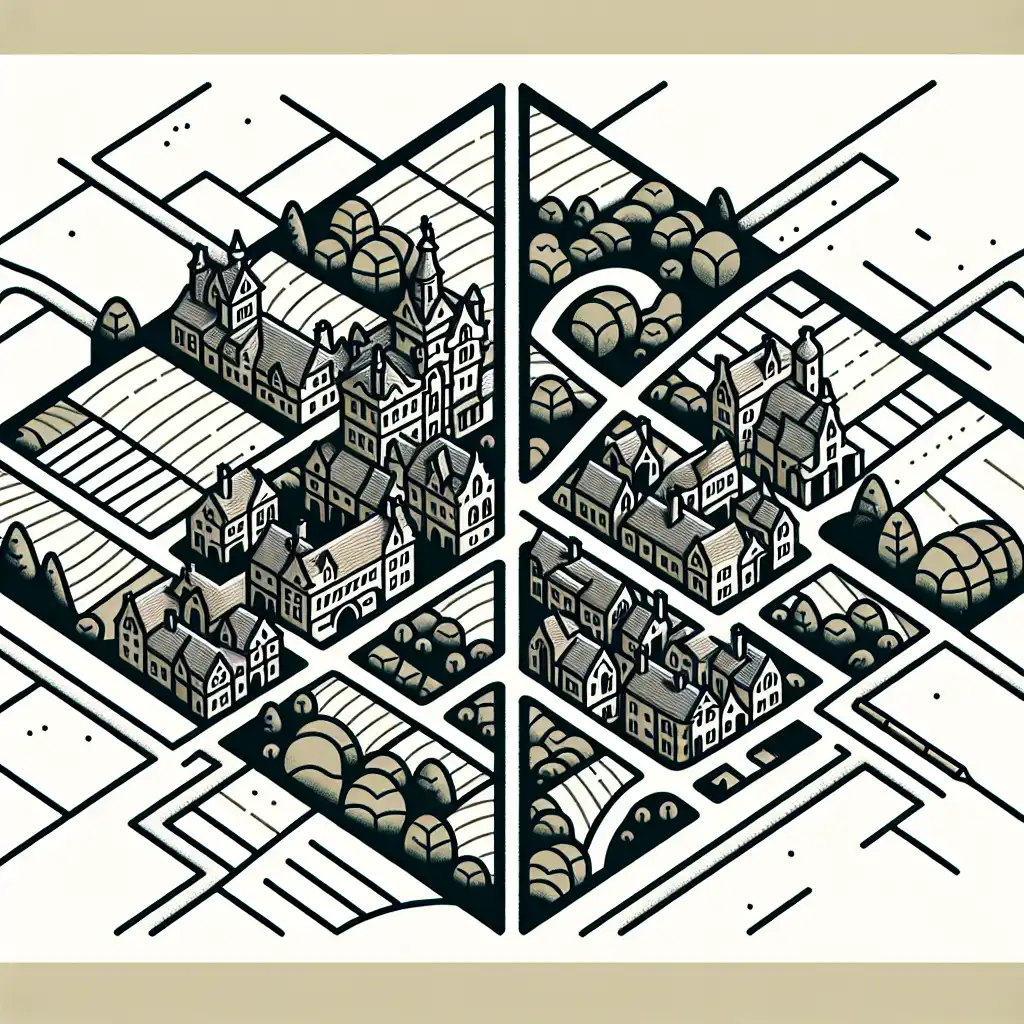
Having the same boundaries or limits.
The town and school district are coterminous.
coterminous
kəʊˈtɜːrmɪnəs
Cargando…
kəʊˈtɜːrmɪnəs
Having the same boundaries or limits.
The town and school district are coterminous.

kəʊˈtɜːrmɪnəs
Existing or happening at the same time.
His term of office is not coterminous with the president's.
No se pudo cargar el audio. Inténtalo de nuevo más tarde.
'Coterminous' is an adjective that is used to describe two or more things that share exact same boundaries or limits. It means that they both begin and end at the same point. For example, if two countries share the same border, they are said to be coterminous. Another example could be a city and its surrounding suburbs that have the same legal or political jurisdiction. In simple terms, 'coterminous' means that two things have the same start and end point.
Abut means to be next to or touching something, such as two houses that share a common wall.
Abut describes physical connections or things that are physically touching, while coterminous describes a shared endpoint or boundary.
Abrir palabra: Abut →Adjacent means two things that are next to each other or in close proximity. For example, two buildings might be adjacent to one another if they share a common wall.
In simpler terms, adjacent means things that are just next to each other, while coterminous means things that share a boundary or are essentially the same thing.
Abrir palabra: Adjacent →A border is a line or an area that separates two countries, cities, or territories. It is a physical or geographical boundary that marks the end of one place and the beginning of another.
For example, the border between the United States and Mexico.
Coterminous means sharing a common boundary or border.
It describes two or more areas or regions that share a common boundary. For example, if two states in the US share a common border, they can be said to be coterminous.
A border is a physical or geographical line that separates two places, while coterminous refers to two or more areas that share a common boundary.
Abrir palabra: Border →Coincide means two or more things happening at the same time or in the same place. For example, if your birthday coincides with your friend's birthday, it means you were both born on the same day.
So, in simple terms, coincide refers to things happening at the same time or in the same place, while coterminous refers to things having the same boundary or extent.
Abrir palabra: Coincide →Contiguous refers to two or more things that are touching or in close proximity.
It is often used to describe geographic areas that share a border or are adjacent to one another. For example, the contiguous United States refers to the 48 states that share a land border with each other.
Contiguous emphasizes physical proximity while coterminous emphasizes exact alignment along a common boundary.
Abrir palabra: Contiguous →Coterminous refers to two things that have the same boundaries or borders. Neighbouring refers to two things that are located close to each other but they may not share the same boundaries or borders.
For example, two countries that share a border are coterminous while two countries that are close to each other but separated by another country are neighbouring.
Also, two towns that share a common boundary are coterminous while two towns that are close to each other but separated by some distance are neighbouring.
Abrir palabra: Neighbouring →Coterminous refers to two things that share the exact same boundaries or borders, whereas touch means the two things come into contact with each other.
For example, two countries that share the same border would be considered coterminous, while two adjacent houses that are next to each other would be considered touching.
Abrir palabra: Touch →The age of the rock star was coterminous with rock n' roll, which, in spite of all the promises made in some memorable songs, proved to be as finite as the era of ragtime or big bands. The rock era is over. We now live in a hip-hop world.