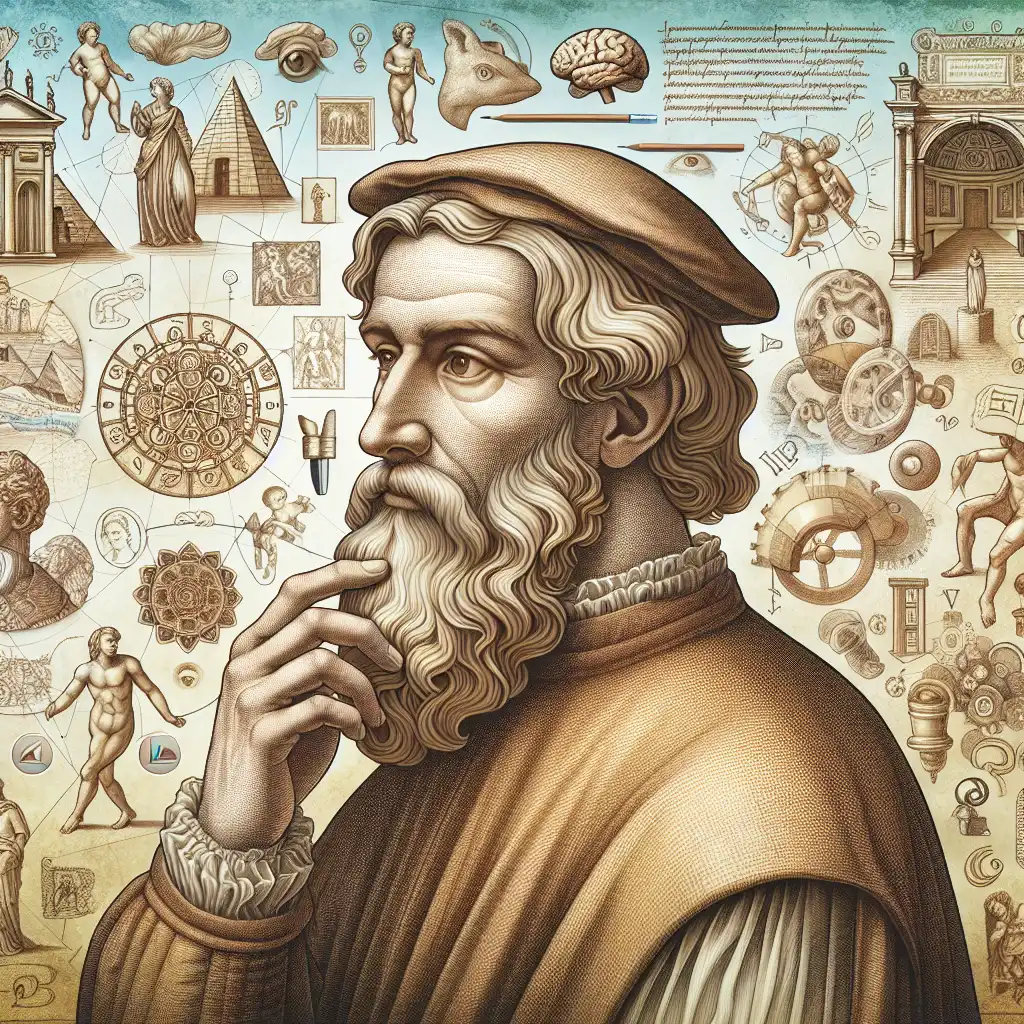
The word 'humanist' can be used to describe someone who believes in the value and potential of all people. This can be used in different contexts, such as in discussions about education, politics, or philosophy. For example, a humanist approach to education means focusing on the needs and abilities of each individual student, rather than following a strict curriculum. In general, using the word 'humanist' means recognizing and celebrating the diversity and worth of human beings.
Eclectic means selecting or choosing from various sources or styles. For example, if someone has an eclectic taste in music, it means they enjoy different genres like hip hop, rock, and country.
Eclectic can describe someone's personal taste in music, art, fashion, or cuisine.
A freethinker is someone who forms their beliefs based on rational and logical reasoning, rather than accepting beliefs that are dictated by religion or tradition.
A freethinker is someone who questions authority and values critical thinking, while a humanist is someone who emphasizes the importance of human values and ethics.
Both terms can be applicable to individuals who do not believe in traditional religious dogma, but a freethinker may focus more on rejecting societal norms and a humanist may focus more on promoting ethical behavior towards fellow humans.
This term is often used to refer to people who have an interest in the arts, literature, philosophy, and culture. Humanitarian refers to someone who is actively involved in promoting the welfare and well-being of others, often through charitable or social activism.
Humanitarians work towards reducing suffering and promoting human dignity, particularly in times of war, natural disasters, and other crises.
In short, humanists focus on developing the individual human being, while humanitarians focus on improving the lives of groups of people.
A philanthropist is someone who actively promotes the welfare of others through generous donations or aid.
A humanist focuses on the worth of every individual and the need for justice and fairness, while a philanthropist focuses on supporting the welfare of others through financial aid.
Meanwhile, the word rational refers to someone who uses reason and logical thinking to make decisions and solve problems.
Rationality is useful when dealing with science, mathematics, and engineering, as it emphasizes the importance of logical analysis and objective evidence.
Humanist and secularist are similar but have distinct differences.
A secularist is someone who advocates for a separation between religion and government. They believe that decisions should be based on reason and evidence, and not on religious beliefs.
A secularist might advocate for policies that are neutral toward religion or that don't give one religious group an advantage over others.
A humanist is someone who values human ideals, while a secularist is someone who prioritizes separation between religion and government.
Universal refers to something that applies to everyone, regardless of their cultural, social or personal differences.
Both words are applicable in various fields of study such as philosophy, literature, and art. Humanist describes individuals who believe in putting human values at the center of their thinking while universal describes applicable ideas that can be applied to everyone, at all times.
I had grown up in a humanist atmosphere, and war to me was never anything but horror, mutilation and senseless destruction, and I knew that many great and wise people felt the same way about it.
If you're living with a scientist, you see the world differently than you do with a humanist. It's in some ways very subtle, the differences in perceiving reality.
Secular humanists suspect there is something more gloriously human about resisting the religious impulse; about accepting the cold truth, even if that truth is only that the universe is as indifferent to us as we are to it.
I was genuinely lucky to have the professors I did, many of whom took a very humanist approach in teaching history that went beyond memorizing dates and battles and all of that - basically, looking at the life of individuals throughout history, aided by fascinating primary sources.
Songs, a while ago, became the medium through which I process most of the information that I receive and feel. But I go back and forth about whether this is all of life or whether you're missing something important in living and whether or not, as a humanist, you're abnegating a certain responsibility if this - this art - is just where you are.