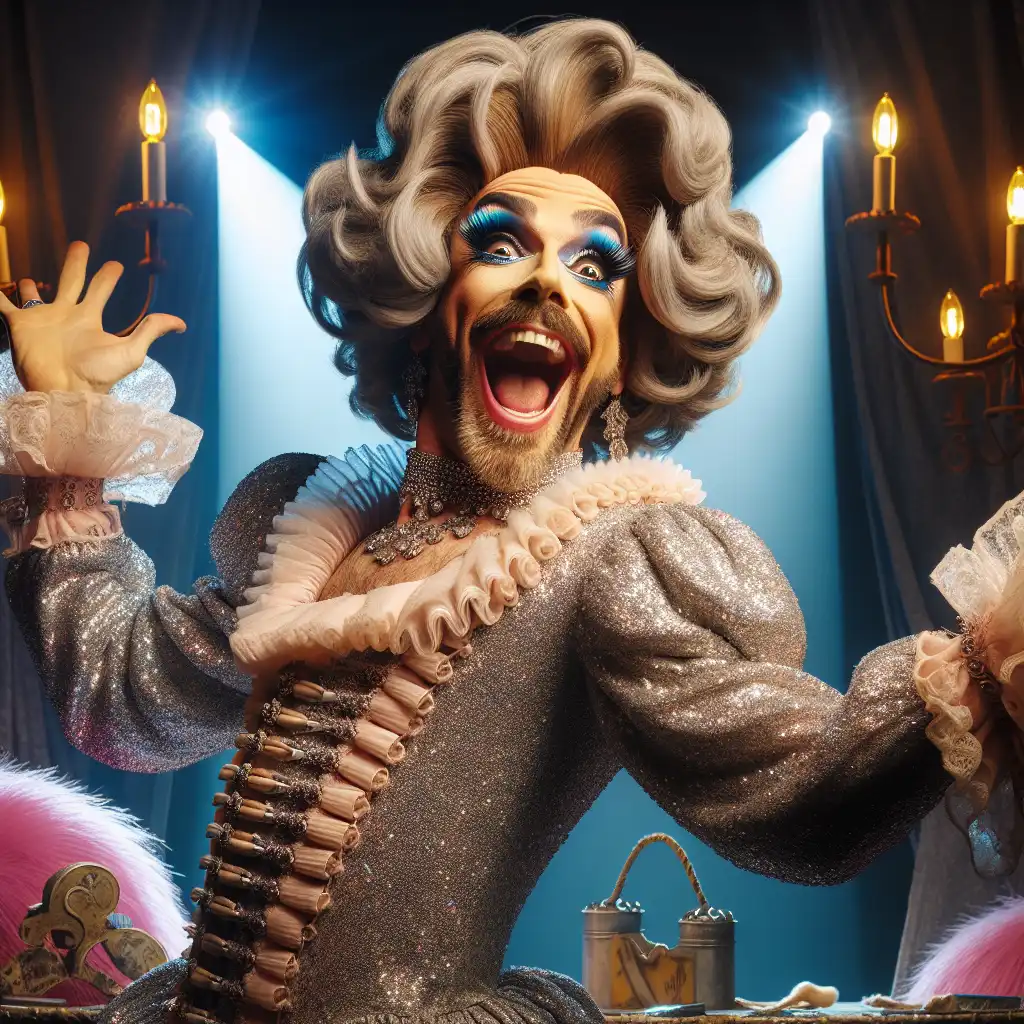
campy
adjective campy
ˈkæmpi
Purposely exaggerated and theatrical in style, typically for humorous effect.
The movie was very campy, with its over-the-top performances and dramatic lighting.
campy
ˈkæmpi
読み込み中…
ˈkæmpi
Purposely exaggerated and theatrical in style, typically for humorous effect.
The movie was very campy, with its over-the-top performances and dramatic lighting.
音声を読み込めませんでした。しばらくしてからもう一度お試しください。
The word 'campy' is used to describe something that is intentionally exaggerated or theatrical for humorous effect. It is often used to describe movies, plays, or other forms of entertainment that are intentionally cheesy, over-the-top, or melodramatic. For example, a movie that has over-the-top acting, cheesy special effects, and a ridiculous plot might be described as "campy." It can also be used to describe someone or something that is seen as trying too hard to be cool or fashionable in an exaggerated or insincere way.
Both campy and cheesy are used to describe something that is cheap, cheesy, or over-the-top.
Cheesy, on the other hand, describes something that is poorly made or lacking in taste. For example, a low-budget horror movie with bad acting and predictable jump scares might be described as "cheesy.".
単語を開く: Cheesy →Corny refers to something that is overly sentimental, cheesy, or clichéd. It is applicable to things like jokes, music, or stories that are considered to be overly sentimental or lacking in originality.
Campy is intentionally exaggerated for comedic effect, while corny is seen as overly sentimental or lacking in originality.
単語を開く: Corny →Exaggerate means to make something seem bigger, more important, or more dramatic than it really is.
It can be used in a negative way, when someone is lying or trying to deceive others, or in a positive way, when someone is using exaggeration to create a more exciting story or emphasize a point.
So, while both words involve things being exaggerated in some way, campy specifically refers to something that is intentionally silly, while exaggerate can have both positive and negative connotations and is used more generally to describe any kind of exaggeration.
単語を開く: Exaggerate →Kitsch refers to something that is considered to be in poor taste or low quality, often mass-produced and lacking in aesthetic value.
Both words describe things that are inauthentic and often have a sense of irony. Campy things are intentionally ridiculous, while kitschy things are usually unintentionally so.
Campy is more applicable to things that are intentionally humorous, while kitsch is more applicable to things that are unintentionally funny or lacking in taste.
単語を開く: Kitsch →Melodramatic refers to a situation or performance that is over-the-top or exaggerated in an emotional way.
Campy refers to something exaggerated for comedic effect, while melodramatic refers to something exaggerated for emotional effect.
単語を開く: Melodramatic →Ostentatious refers to something that is characterized by a vulgar display of wealth or pretentiousness. It suggests an overbearing effort to impress or show off, often by flaunting luxurious possessions or excessive extravagance.
Examples of ostentatious things could be a flashy sports car, an extravagant mansion, or a flashy designer outfit.
In summary, while both words suggest a certain degree of exaggeration, campy describes something that is intentionally over-the-top in a humorous way, whereas ostentatious implies a gaudy display of wealth or status.
単語を開く: Ostentatious →Tacky refers to something that is cheap, low-quality, and lacking in style or taste. It often describes something that is garish or vulgar.
In brief, campy describes something that is intentionally exaggerated for humor, while tacky describes something that is tasteless or cheap.
単語を開く: Tacky →Theatrical usually means something is exaggerated for dramatic effect. This can be applied to both serious and comedic situations, and often refers to an artistic performance or production put on for an audience, such as a play or musical.
The goal of something being theatrical is to create emotion, draw attention to specific moments or characters, and engage the audience in a heightened experience.
Campy usually has a negative connotation, while theatrical is often positive and associated with artistic expression.
単語を開く: Theatrical →Why should you read...
YouTube で見る ↗Campy films almost create real-life cartoons.
Well, I feel like the campy, plush spectacle of the Bridgerton' world is only going to get more pronounced in the best way possible.
I'm a very funny man, so funny comes natural. And if you want to create horror, you need to be funny or campy.
The special thing about 'Lost Girl' is it can be campy at times, but the show doesn't take itself too seriously, which is what separates it from other sci-fi TV shows. I love that.
I don't look at my work as being violent. 'Officer Downe' is more campy than anything. It's a comic book, so it's funny to me.
This film is what it is. It's a campy thriller horror movie where you go and have fun. With these types of films, you can't take it too seriously. They are what they are.
You could go so wrong with a 'Planet of the Apes' reboot; you could make it melodramatic, you could make it campy, you could fall into so many traps with it.
It's just a campy blast. I just want to do as little as I can and make it good, and try not to sell out. I'm sure I will, but I'm just trying to postpone it.
Sweet Valley High' is fantastic, fabulous, a little bit campy, and - dare I say it - cinematic.
I hate it when people talk about Buffy as being campy... I hate camp, I don't enjoy dumb TV. I believe Aaron Spelling has single-handedly lowered SAT scores.