wafer
noun wafer
ˈweɪfər
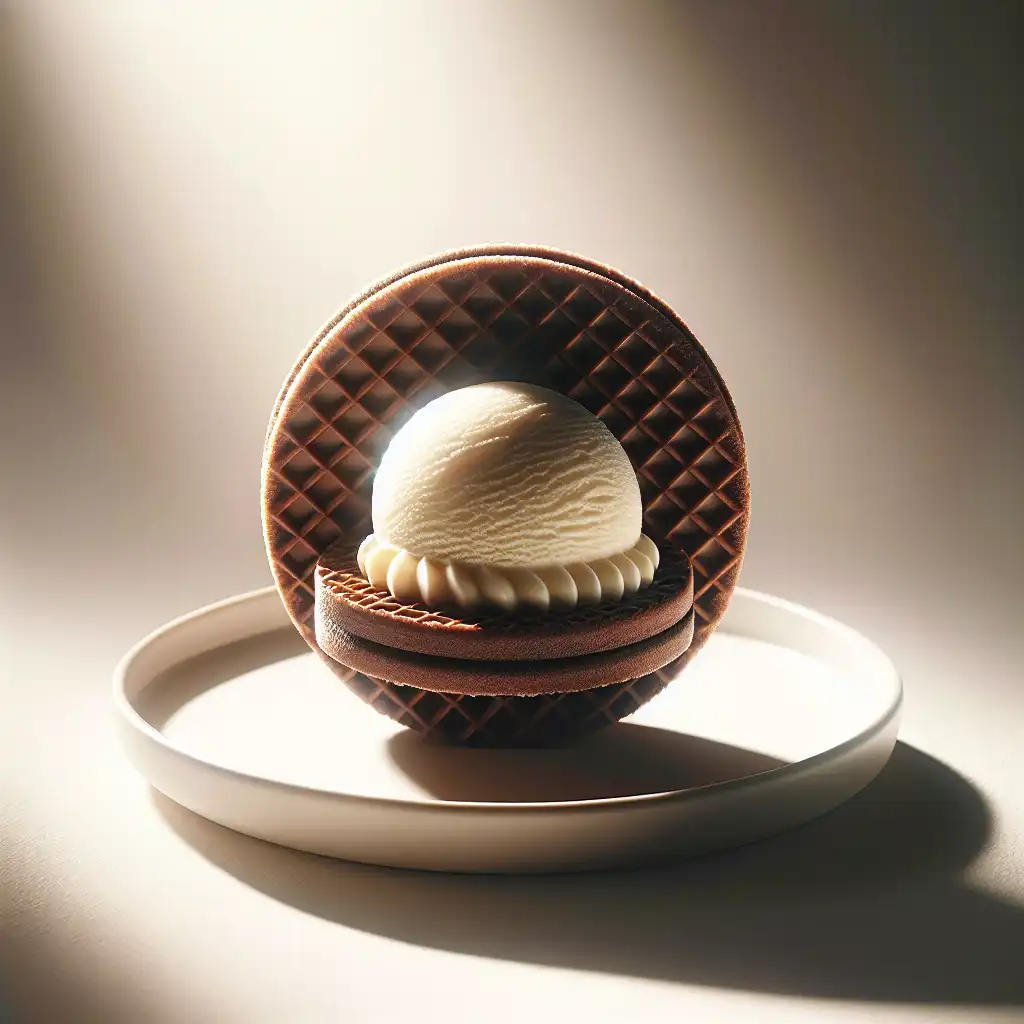
A thin, flat, round cake which is crisp, sweet and often used with ice cream.
She put a scoop of vanilla ice cream between two chocolate wafers to make a delicious dessert.
wafer
ˈweɪfər
Cargando…
ˈweɪfər
A thin, flat, round cake which is crisp, sweet and often used with ice cream.
She put a scoop of vanilla ice cream between two chocolate wafers to make a delicious dessert.
ˈweɪfər
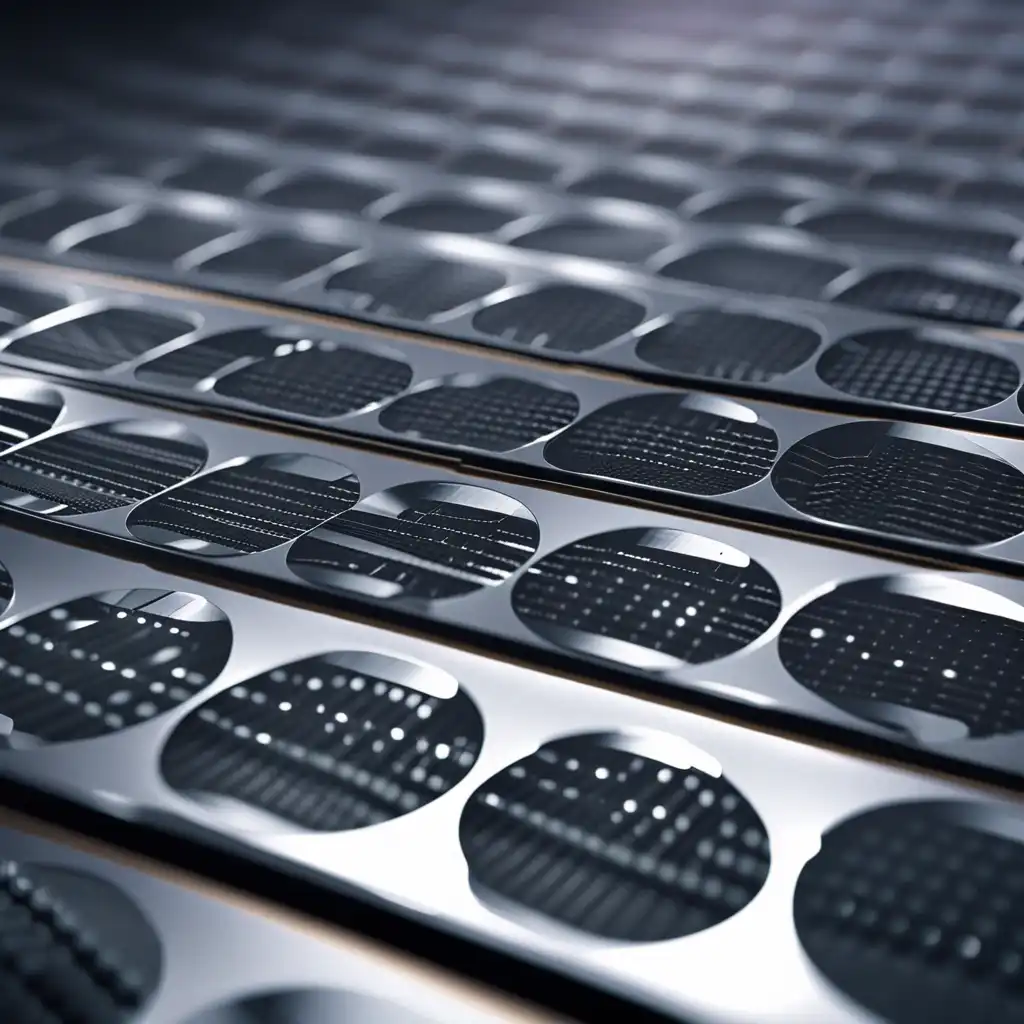
A thin slice of semiconductor, such as silicon, used for the fabrication of integrated circuits and other micro devices.
The semiconductor industry uses silicon wafers as a base for building microchips.

ˈweɪfər
A thin piece of bread, typically round and unleavened, used in the Christian Church for Holy Communion.
During the service, the priest shared the communion wafers with the congregation.
No se pudo cargar el audio. Inténtalo de nuevo más tarde.
The word 'wafer' typically refers to a thin, crispy, flat and sweet food that is usually circular in shape. This could include common items like vanilla or chocolate wafers, as well as more specialized varieties like communion wafers, which are used in religious ceremonies. The word can also be used to describe the shape or texture of other objects that are similarly thin and flat, such as computer chips or thin sheets of metal. Overall, 'wafer' is a versatile term that can apply to many different things, but usually involves something that is thin, flat, and often edible.
Biscuits and wafers are both types of snacks, but they have some differences.
Biscuits are baked goods that are typically made with flour, sugar, and butter or other fats. They can be soft or crisp and come in various shapes and flavors.
Biscuits are often eaten as a snack or as a dessert and are commonly paired with tea, coffee, or milk.
The main difference is that biscuits are generally thicker and have a different texture compared to wafers, which are usually thinner and crispy.
They also have different applications, with biscuits commonly eaten as a snack or dessert, while wafers are usually used as a part of other desserts.
Abrir palabra: Biscuit →A cookie is a baked sweet treat that is usually flat and round.
Cookies can come in various flavors and sizes, and they are often enjoyed as snacks or desserts.
Cookies are often enjoyed as standalone treats, while wafers are commonly used as ingredients in other desserts such as ice cream sandwiches.
In summary, cookies and wafers are both sweet snacks, but cookies are typically thicker, softer, and more versatile while wafers are thinner, crispier, and often used as ingredients in other desserts.
Abrir palabra: Cookie →Both cracker and wafer refer to types of baked snacks, but they differ in texture and thickness.
A cracker is a thin, crispy, and savory snack made from flour, water, and sometimes other ingredients such as salt, herbs, or cheese.
Crackers are commonly eaten with cheese, dips, or various spreads, and come in a variety of shapes and sizes like round, square or rectangular.
In summary, crackers are usually savory and served as a snack or appetizer, while wafers are sweet, often have a filling, and are usually eaten as a dessert.
Abrir palabra: Cracker →Disc usually refers to a flat, circular object with a hole in the center, like a CD or a DVD.
A disc is a type of object with a specific shape and function, while a wafer is a thin slice or piece of something.
Abrir palabra: Disc →A disk refers to a flat circular object made of a hard material like metal or plastic, and it's typically used for storing data or files.
It's mostly used in computer storage systems like hard drives, CD's, DVD's, or floppy disks.
Disk is a term used for data storage technologies, while wafer is typically used for food or electronics industry, refering to thin flat objects or slices.
Abrir palabra: Disk →A patty is a small flat disc-shaped portion of food, typically a ground meat or vegetable mixture, that is cooked by frying, grilling, or baking.
A patty is a small flat disc of food that is typically a part of a larger meal, while a wafer is a thin, flat and crisp biscuit-like snack that is usually eaten as a standalone snack or used as an ingredient in desserts.
Abrir palabra: Patty →Rusk and wafer are both types of baked goods, but they are different from each other.
Rusk is a type of crisp, hard, dry biscuit made from bread dough that is baked twice.
Rusk is often used as a teething biscuit for babies or as a snack for adults.
In summary, rusks are hard and dry biscuits made from bread dough, while wafers are thin, crispy snacks made from flour and water that are often sweet or savory.
Rusks are often used as a teething biscuit, while wafers are often used as a base for toppings or in desserts.
Abrir palabra: Rusk →Waif refers to a person, especially a child, who is thin, shy, and often alone or homeless.
Wafer is a thin, flat edible material, while waif is a person who is thin, alone and in need of help.
Abrir palabra: Waif →wafer and then I just cranked away at all the big machines for about a hundred hours for the last step I had to build my own machine to make this swimming pool shaped hole underneath the device this device has the ability to be in a quantum superposition but it needs a little help to do it here let me give you an analogy you know uncomfortable it
Ver en YouTube ↗There's pros and cons of a big church. Cons is I don't get to know everybody, I don't get to go to their ballgame, I don't get to marry everybody, but the pros are you get all this community, 800 ushers come in to serve, getting there at 7 in the morning on their day off and coming in on Saturday to make all those wafers.
and you can see I got to my winch in the back I'm here to start using my wafer and of course it has gotten a bit dark and of course that means over translates for us having gone to infrared well I haven't given up in the bush you never
Ver en YouTube ↗A Big Mac - the communion wafer of consumption.
following her maternal instinct she and all the other females are making steady progress on their journey home but in places the ice is wafer thin below a predator tracks their every move
Ver en YouTube ↗I needed a way to have the platter continuously spinning while I'm moving the record back and forth. I went to a fabric store. When I touched this hairy stuff - felt - I found it. I rubbed spray starch on both sides and ironed it until it became a stiff wafer. After that, I was able to stop time.
the mesoscale. And subtractive techniques from the silicon industry can't do that very well. They can't etch wafers that well. But this process is so gentle, we can grow these objects up from the bottom using additive manufacturing
Ver en YouTube ↗Once, Naseeruddin Shah told me that the wafer shop was the best acting school that I could have attended. And I completely agree. I observed every customer very minutely and picked up some quirk or the other. Later, I used those experiences while playing different characters.
And then here's a really really big close-up of the little piece of metal. So what we're looking at is a little chunk of metal, and it's shaped like a diving board and it's sticking out over a ledge. And so I made this thing in nearly the same way as you make a computer chip. I went into a clean room with a fresh silicon wafer,
Ver en YouTube ↗My old modus operandi was, if you're going to have a grilled cheese and bacon sandwich, don't have one, have two. If you're going to have vanilla wafers, you have the whole box.
So another strategy we're following is actually to create wafers that we stack together like an accordion if you will. So we stack these wafers together using the kidney cells. And then you can see these miniature kidneys that we've engineered. They are actually making urine.
Ver en YouTube ↗we were able to come up with this flexible electronic patch that was manufactured using the same processes that they use to build computer chips, except the electronics are transferred from a semiconductor wafer
Ver en YouTube ↗is due to the ever-increasing complexity of the manufacturing process. The transistor used to be a big bulky device, until the invent of the integrated circuit based on pure crystalline silicon wafers.
Ver en YouTube ↗The idea is that by shooting a laser at the different solar cells, you can choose which leg you want to move and make the robot walk around. Now of course we don't build those one at a time either. We build them massively in parallel as well. We can build something like one million robots on a single four-inch wafer. So for example this image on the left this is a chip,
Ver en YouTube ↗that's the solar cell that's the actual part that generates electricity. Those things have to be manufactured on the substrate. The substrate is the holder for them. The substrate typically is glass or silicon wafer or stainless steel. The solar cell part is only a couple microns,
Ver en YouTube ↗