
washout
noun washout
ˈwɑːʃaʊt
An event, typically a sports event, that is cancelled because of rain.
The match was a washout because of the heavy rain.
washout
ˈwɑːʃaʊt
लोड हो रहा है…
ˈwɑːʃaʊt
An event, typically a sports event, that is cancelled because of rain.
The match was a washout because of the heavy rain.

ˈwɑːʃaʊt
A person or thing that is not successful or effective.
His first movie was a big hit, but his second was a washout.
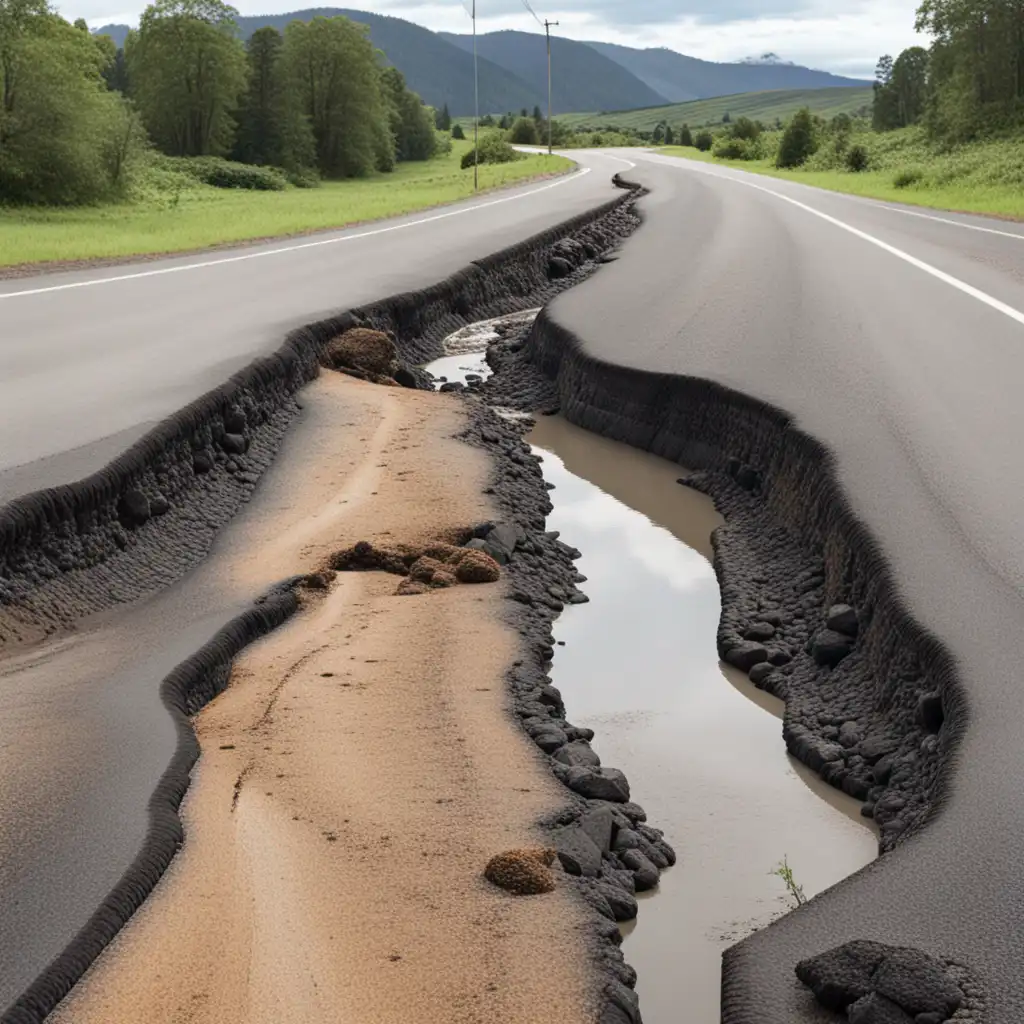
ˈwɑːʃaʊt
A place where the surface of a road, an embankment, etc. has been swept away by moving water.
The recent floods caused a washout of the main road.

ˈwɑːʃaʊt
In medicine, process of cleaning something with water or another liquid to remove infectious agents or toxins.
The doctor recommended a sinus washout to treat his sinusitis.
ऑडियो लोड नहीं हो सका। कृपया बाद में फिर कोशिश करें।
The word "washout" means something that fails or is ruined due to circumstances beyond our control. It can be used to describe a situation where an event or project has been completely unsuccessful or cancelled due to bad weather or other unforeseeable problems. For example, if a baseball game was cancelled due to heavy rain, it could be described as a "washout." This word can also be used to describe a person who is considered a failure or someone who has given up in life.
Bust typically refers to something that fails or doesn't succeed as expected, often resulting in disappointment or financial loss.
It can be used in various contexts, such as a business venture or an event that didn't meet its expectations. For example, "The company went bust due to poor sales.".
In simpler terms, bust is related to disappointment or failure, while washout is related to cancellation due to bad weather or unfavorable conditions.
शब्द खोलें: Bust →Collapse refers to a complete or partial breakdown or failure of a structure or system. This could include a building, a bridge, or even a person's health.
Washout refers to when something such as a road, bridge or railway is washed away or eroded by water. It's applicable where there has been heavy rainfall or flooding and the soil or other material underneath a structure gets washed away, causing the structure to lose its support and collapse as a result.
Collapse is a broader term that can refer to various types of failures, while washout specifically refers to erosion caused by water.
शब्द खोलें: Collapse →Debacle describes a disastrous or humiliating failure, while washout describes a complete failure or disappointment.
So debacle is used when something goes very wrong and is a big mess, causing embarrassment or shame. For example, a company might experience a debacle if they launch a new product that doesn't work as intended and causes harm to customers.
Overall, both words describe failure, but debacle leans more towards a catastrophic failure, while washout is more general and can refer to any kind of disappointment.
शब्द खोलें: Debacle →Defeat means to lose in a competition or battle.
It can be a single loss or a series of losses. For example, a team may be defeated in a sports game or an army may be defeated in a war.
Defeat refers to losing in a competition or battle, while washout refers to a situation or event being ruined or canceled due to external factors like bad weather.
शब्द खोलें: Defeat →Disaster refers to a sudden and catastrophic event that causes great harm or damage. For example, a tornado or earthquake can be a disaster because they cause a lot of damage and destruction quickly.
A disaster is a sudden and significant event that causes harm or damage, while a washout refers to a planned activity that has been cancelled due to unforeseen circumstances.
शब्द खोलें: Disaster →Failure generally means not succeeding in achieving a goal or objective.
It's a term used when something doesn't work out as planned. For example, getting a bad grade in an exam or losing a match can be considered a failure.
Failure describes not achieving a specific goal, while washout describes something being ruined or destroyed due to a force of nature or an uncontrollable factor.
शब्द खोलें: Failure →Both fiasco and washout refer to situations that didn't go as planned or ended in failure.
A fiasco is a complete and utter disaster. It is a situation that is marked by incompetence, mismanagement, or failure.
For example, a company that finances a large project that ends up being a complete disaster can be described as a fiasco.
In summary, while both words describe situations that didn't go as planned, fiasco implies a more severe level of failure and incompetence, while washout describes situations that didn't necessarily meet expectations or were a letdown.
शब्द खोलें: Fiasco →Flop usually refers to something that did not succeed or was not very good. For example, a movie that had bad reviews and did not make a lot of money at the box office could be called a flop.
Flop refers to failure or lack of success, while washout refers to destruction or ruin caused by water.
शब्द खोलें: Flop →Rising Seas Are...
YouTube पर देखें ↗I wasn't a washout before, and I'm not a phenomenon now. I'm a player who, when he's called upon, is almost always there.
Learning from a barefoot...
YouTube पर देखें ↗I'm tired of playing people who are complete washouts and bums. I don't mind waiting for the good ones to come along. It's like age. It's never bothered me. I've even forgot my birthday. Many times I've wondered if I should tell my real age, but now I think it's an honor, to be doing what I'm doing now at my age.
I don't know whether it was my fault or someone else's fault, but I was extremely disappointed that my first film was a total washout.
If the sensitive washout has no taste for extreme gestures, total self-destruction, then his hope for singularity rests in his voice. Tone is everything.
On one trip to the south of France, when I was just pregnant with Isaac, I got a horrendous stomach upset and the whole holiday was a washout. I had to go and have blood tests and my poor other half had to look after Lola because I was so ill.