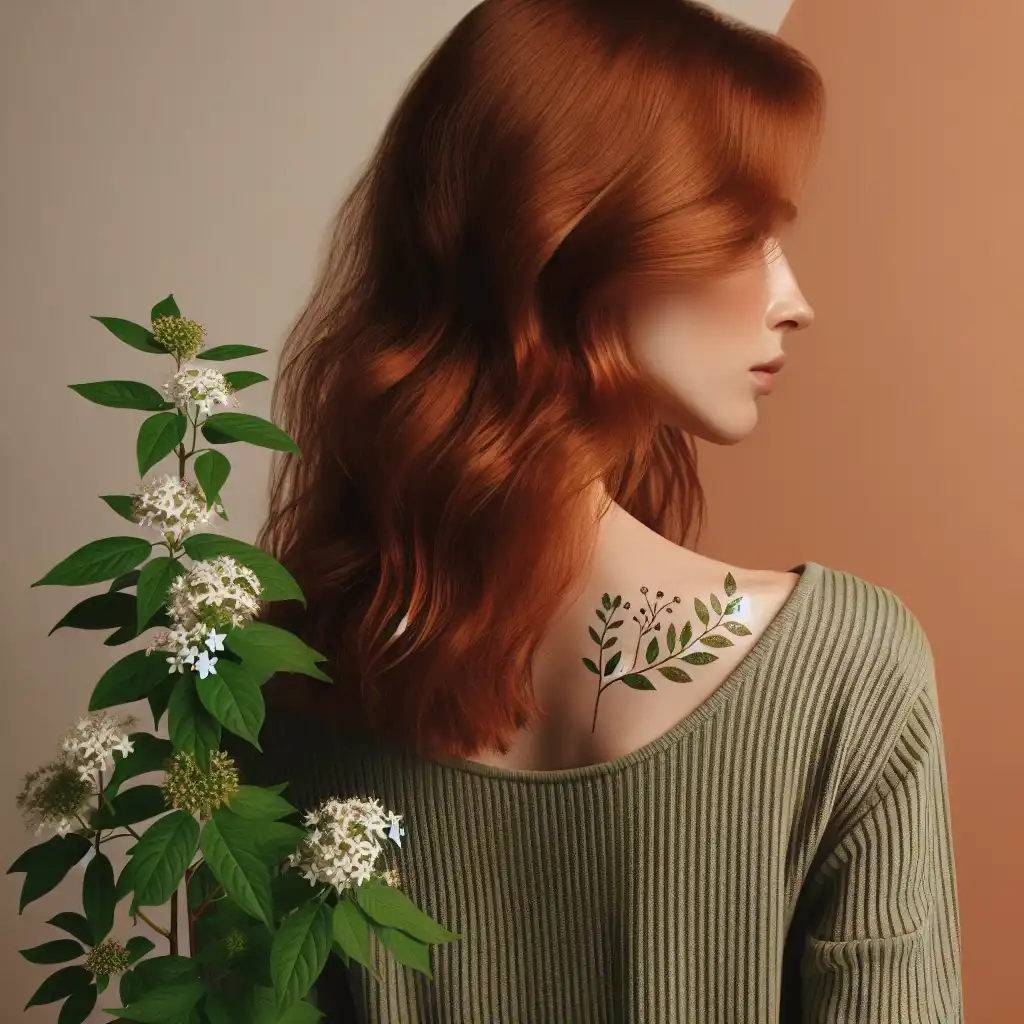
A kind of plant that is used to make a dye, or the dye obtained from the plant, often used for coloring hair and making temporary skin tattoos in some cultures.
She had a beautiful henna tattoo on her hand from her trip to Morocco.
ऑडियो लोड नहीं हो सका। कृपया बाद में फिर कोशिश करें।
उपयोग कैसे करें
Henna is a plant that is used to make a natural dye. People often use it to create intricate designs on their skin, especially on their hands and feet. This art form is called mehndi and is popular in many cultures, especially in India, Pakistan, and the Middle East. Henna can also be used to dye hair or fabric.
Color refers to any dye or pigment used to change the natural color of something.
It is known for its reddish-brown color and is often used for body art or as a hair dye. Henna is a healthier and more natural alternative to chemical hair dyes but its color range is limited to shades of red-brown.
Henna and paste are related to each other. Henna is a plant-based dye that has been used for thousands of years to color hair, skin, and nails.
It is usually applied in the form of a paste, which is made by mixing henna powder with water or another liquid. The paste is then applied to the area that is to be dyed, allowed to dry, and then washed off.
Paste is a generic term that refers to any thick, viscous substance that can be spread onto a surface.
Paste can be made from a variety of materials, including flour, water, glue, and other chemicals.
Paste can be used for a variety of purposes, such as gluing paper, fabric, or wood together, or as a coating for food items.
Henna paste is a specific type of paste that is made by mixing henna powder with a liquid and is used to dye hair, skin, and nails.
Paste, in general, refers to any thick, viscous substance that can be used for a variety of purposes.
Tattooing involves using a needle to inject ink into the skin, creating a permanent design or image.
Tattoos can be applied anywhere on the body and are often used as a form of self-expression or personal symbolism.
Henna is a temporary form of body art that creates a reddish-brown design on the skin while tattooing is a permanent form of body art created by injecting ink into the skin with a needle.
There are still some terrible cliches in the presentation of Indian fiction. The lotus flower. The hennaed hands. In mainland Europe, people still slap these images on my books and I go bananas.
I was very sure I did not want to be the stereotype of what Indian people are seen as, which is Bollywood and henna. That's all great! It's what we are, and I love it. I love saris; I love music. I love henna; I love dancing, but that's not all we are.
I go to the hamam and put henna on my skin and hair. Even when I go to New York, I let the shower run hot to create a steam hamam at my hotel. But when I finish with the bath, I put on expensive French creams.
I'm not even Indian-American: I'm Indian-Indian. Everybody expected me to have henna and a nose pin and talk in an accent like Apu from 'The Simpsons.' I was nervous because I wasn't sure if America was ready for a lead that looked like me.