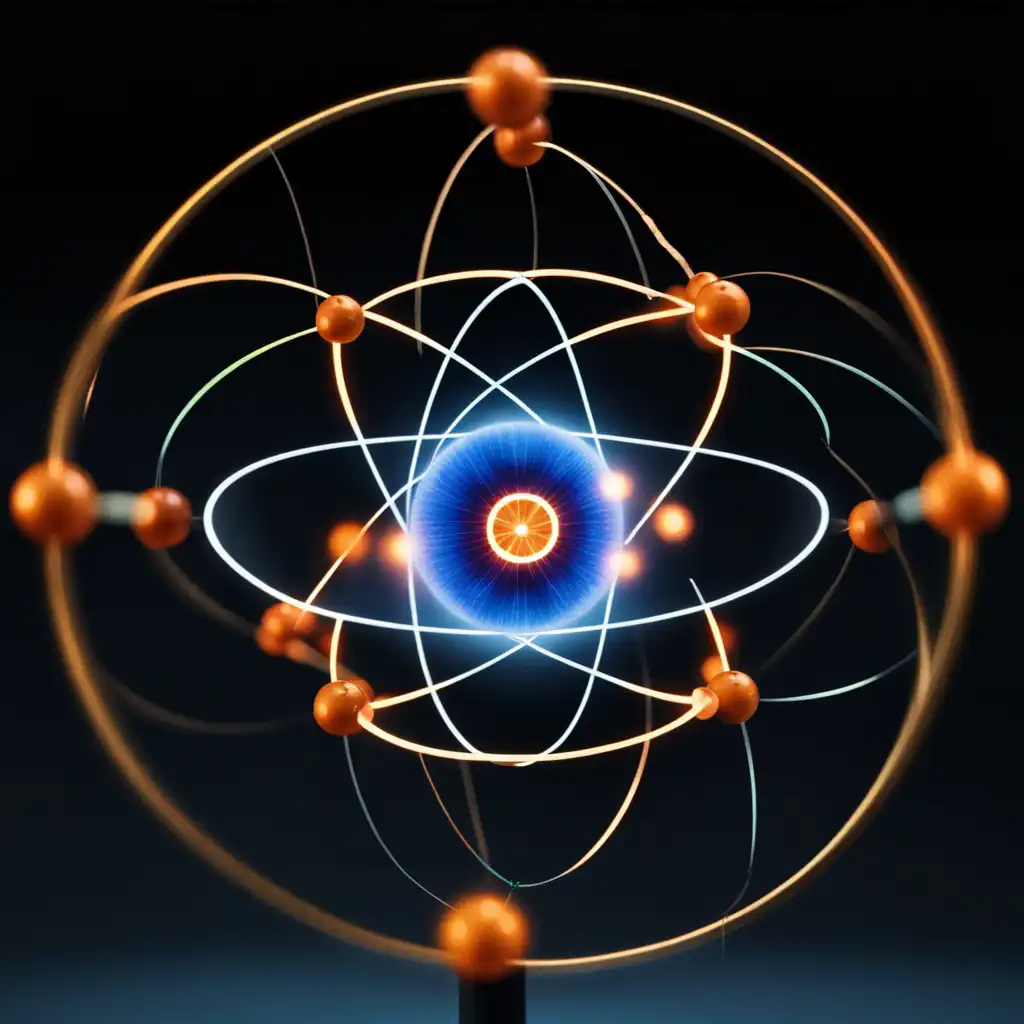
Ionization refers to the process where an atom or molecule loses or gains an electron, resulting in the formation of an ion (an atom or molecule with a positive or negative charge). This process can occur naturally in certain environments, such as in the atmosphere where high-energy particles from the sun collide with gases, resulting in the ionization of the gases and the formation of the Earth's ionosphere. Ionization is also artificially induced in various industrial and scientific processes, such as in welding, plasma cutting, mass spectrometry, and ion implantation. Basically, ionization is a fundamental process that plays a crucial role in many natural and man-made phenomena.
The removal of an electron from the surface of an atom - that is, the ionization of the atom - means a fundamental structural change in its surface layer.
Measurements of the specific ionization of both the positive and negative particles, by counting the number of droplets per unit length along the tracks, showed the great majority of both the positive and negative particles to possess unit electric charge.
Simultaneous recording with superimposed ionization chambers and Wilson chambers, ionization chambers and sets of counting tubes, has not yet been carried out.
My first project was to build an ionization gauge control circuit for Professor Edgar Everhart's Cockcroft-Walton accelerator. In those days, vacuum tubes were the active components in electronic circuits. I can still recall the warm orange glow of the vacuum tube filaments and the cool blue glow of the thyratron tubes.