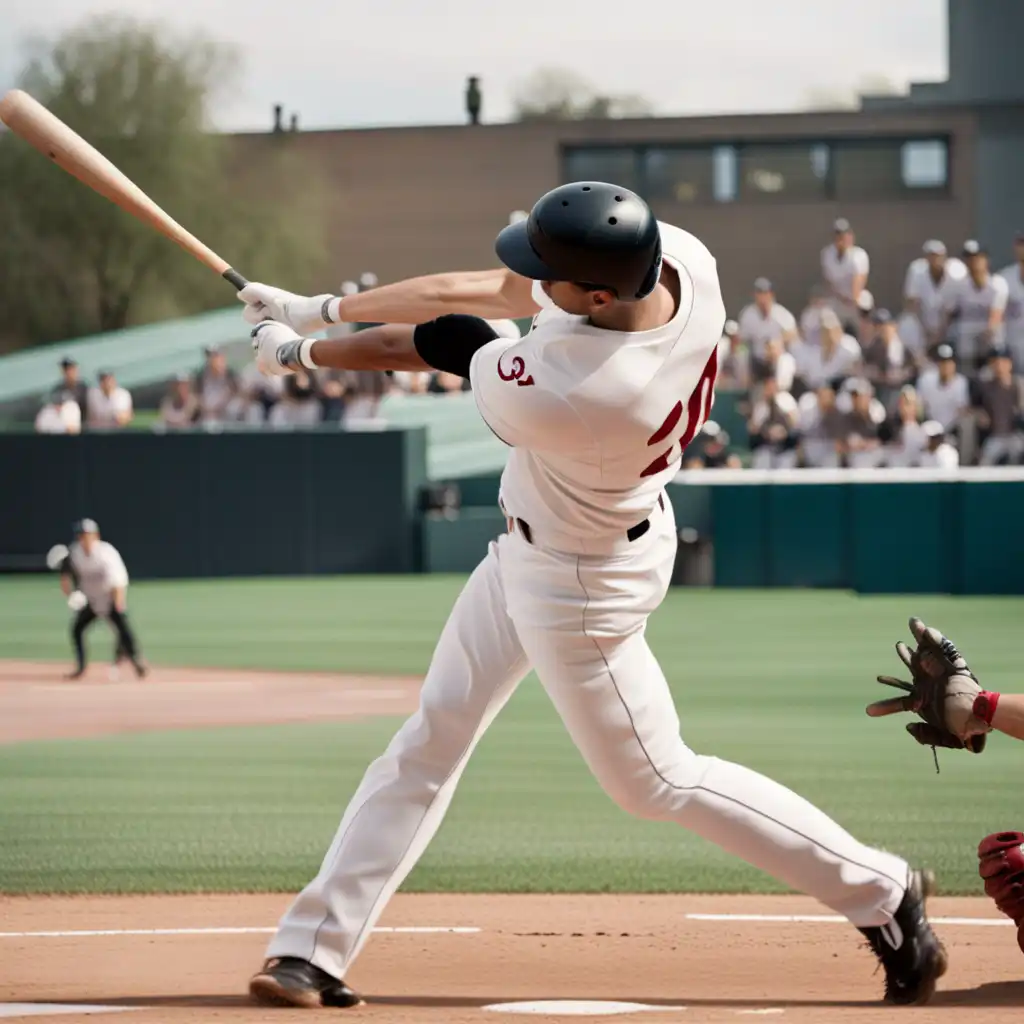
wallop
verb wallop
ˈwɑːləp
To hit something or someone very hard
He walloped the baseball out of the park.
wallop
ˈwɑːləp
Chargement…
ˈwɑːləp
To hit something or someone very hard
He walloped the baseball out of the park.

ˈwɑːləp
A strong or hard hit
The boxer delivered a powerful wallop.
ˈwɑːləp
To defeat (someone or something) very easily or thoroughly
Our team walloped the opponents in yesterday's game.

ˈwɑːləp
A good deal of impact or impression
His speech certainly packed a wallop.
Impossible de charger l’audio. Réessayez plus tard.
The word "wallop" means to hit someone or something very hard. It can also mean to defeat someone easily in a competition or argument. This word is typically used in informal settings, such as with friends teasing each other or in sports games. For example, "He walloped the ball out of the park" means he hit the ball really far. It's important to use this word with caution, as it can also have negative connotations when used aggressively.
Both beat and wallop refer to the act of hitting but they differ in intensity.
Beat generally implies hitting repeatedly at regular intervals, often with the intention of causing pain or damage, such as in a fight or a beating.
So, while both words are interchangeable in some contexts where hitting is involved, beat is more appropriate for a repeated action, while wallop describes a stronger, single hit.
Ouvrir le mot: Beat →Buffet means to hit repeatedly or to knock someone off balance.
This word is applicable in situations where there is a violent storm or strong wind that buffets houses or trees.
Buffet is used for something that is continuously hitting, and wallop means to hit something hard.
Ouvrir le mot: Buffet →Both hit and wallop mean to strike or hit something, but wallop implies a stronger and more forceful blow.
For example, you might say "I hit a tennis ball," but you would say "I walloped a punching bag."
Hit is a more general term and can be used in a wider variety of contexts, whereas wallop is more commonly used to describe a powerful or significant impact, like a heavyweight boxer landing a punch or a speeding car crashing into a wall.
Ouvrir le mot: Hit →Both words, pound and wallop, are verbs that express the idea of hitting something very hard.
However, pound is generally used to describe hitting with repeated and heavy blows, like a hammer pounding a nail into wood.
Pound suggests a more sustained action, while wallop emphasizes a single, impactful blow.
Ouvrir le mot: Pound →Both pummel and wallop mean to hit or strike someone or something forcefully.
However, pummel typically suggests repeated blows, while wallop suggests a single powerful blow.
For example, if a boxer repeatedly hits his opponent with quick, strong punches, he is said to be pummeling his opponent.
In everyday language, pummel might be used to describe someone being repeatedly hit or beaten, while wallop might be used to describe a single, strong hit.
Ouvrir le mot: Pummel →Both smack and wallop are verbs that describe hitting someone or something.
Smack generally refers to a quick, sharp hit with an open hand, or sometimes with a flat object like a ruler. For example, a parent might smack a child's hand to prevent them from touching something dangerous.
So while both words describe hitting, smack is generally used to describe a lighter, less forceful hit, while wallop suggests a more powerful impact.
Ouvrir le mot: Smack →Both strike and wallop can mean to hit, but there are some differences in their usage.
Strike is often used in formal or serious contexts. For example: a boxer strikes their opponent with a punch, a worker may strike to demand better working conditions or wages, or lightning may strike a tree during a storm.
Strike tends to be used more seriously or formally, while wallop is more casual and often used in a playful or humorous tone.
Ouvrir le mot: Strike →Thrash means to hit someone or something with repeated heavy blows, usually with a stick or a whip. Wallop means to hit someone or something very hard with a lot of force or power.
While both words refer to striking something with force, thrash implies a repetitive action, while wallop implies a single, powerful strike.
Thrash can describe the action of beating someone or something repeatedly, while wallop describes a single forceful blow.
Ouvrir le mot: Thrash →But then in my 40s I was just walloped by life. First I got cancer as a new dad of identical twin daughters. Then I almost went bankrupt. Then my dad had that suicide spree.
Voir sur YouTube ↗I have this exercise where I force myself to look out from the flower's point of view at these great walloping humans coming down the path, and try, just try and feel it from their point of view because it's a different world to them, a fascinating hard one.
selig knew now that might be it for the evening that might be enough of a scare that there might not cross the zebras seem to have decided that they're not going to cross there's the clock that nearly got walloped by of all the beasts
Voir sur YouTube ↗Sometimes in politics, you get a wallop in the electoral process.
Bang! Smack! Wallop Bing Bong Boom! Digest-digests digest-digest-digests. Politics? One column two sentences a headline! Then in mid-air all vanishes!" In this barren world Montag learns how difficult it is to resist when
Voir sur YouTube ↗Youre not exactly going to do a prank on the hardest player at your football club, when you know hes going to give you a wallop.
I come from a broken home. My parents split up when I was nine. Everyone gave me a good wallop. But I come from a time when you just put up with that, you got on with things rather than sitting moaning about them.
Big things, a real crisis, I think I'm pretty good, but this little thing will just wallop me. I think I'm managing depression better now: when the mood comes, I just try and sit it out.
I think '300 Arguments' is a real tiny wallop of a book. It looks very slim, and at first, each little two-sentence or one-sentence thing kind of stands on its own, but again, as you read it, you get sucked into the momentum of it, and the whole of it is much larger than the sum of its parts in a really beautiful way.
I've been bitten by a python. Not a very big one. I was being silly, saying: 'Oh, it's not poisonous...' Then, wallop! But you have fear around animals.
Dad was a strict disciplinarian and would give us a wallop with a wooden spoon if we were out of order. But we really respected him - he didn't try to be our best friend.
I like an eyeshadow stick because I can just wallop it on, smudge it in and you're done!