altarpiece
noun altarpiece
ˈɔːltərpiːs
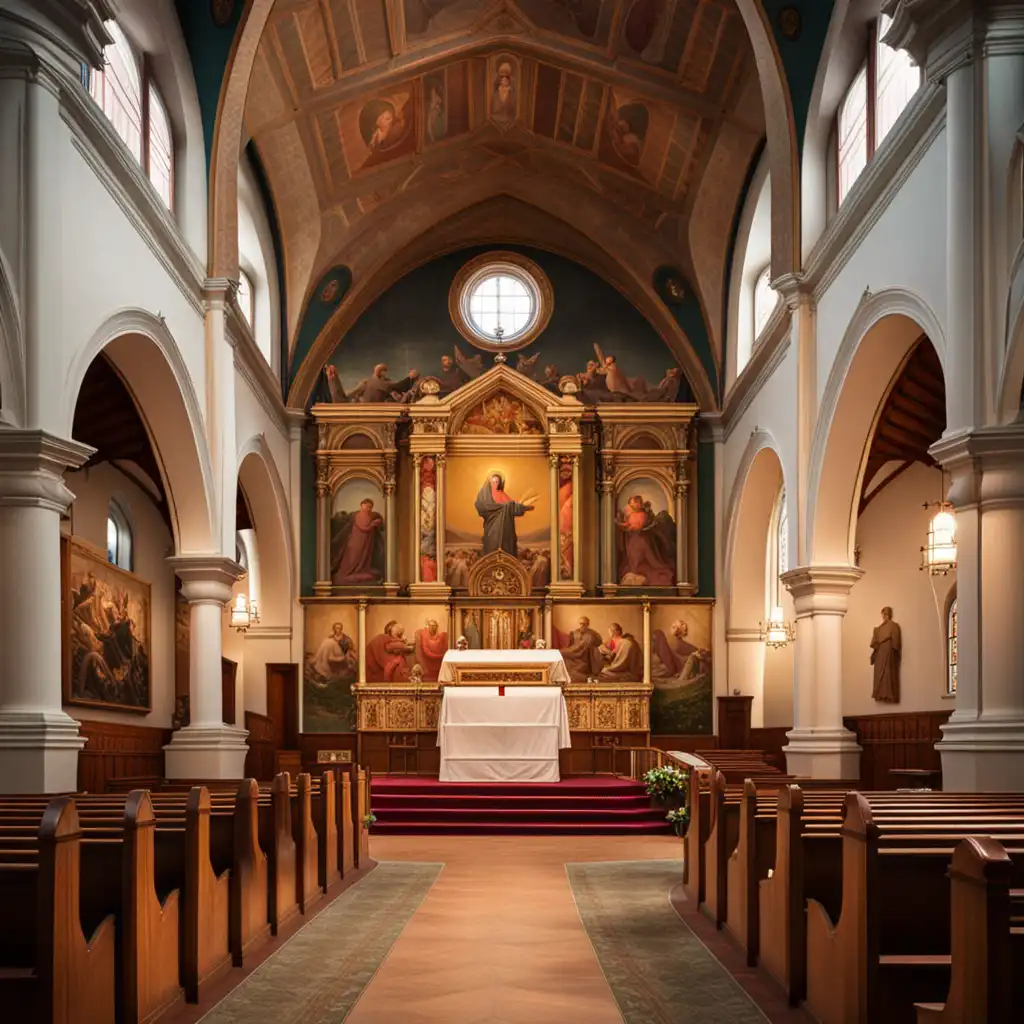
A piece of artwork, often a painting, that is placed above and behind an altar in a Christian church
The altarpiece in the chapel was created during the Renaissance period.
altarpiece
ˈɔːltərpiːs
読み込み中…
ˈɔːltərpiːs
A piece of artwork, often a painting, that is placed above and behind an altar in a Christian church
The altarpiece in the chapel was created during the Renaissance period.
音声を読み込めませんでした。しばらくしてからもう一度お試しください。
An altarpiece is a piece of art, usually a painting or sculpture, that is displayed above an altar in a church or religious building. It often depicts religious figures or scenes and is used to help people focus on their religious beliefs during prayer or worship. Altarpieces have been used for centuries in various religions and can be found in churches, chapels, and cathedrals around the world.
A screen is a decorative partition or divider often used to separate areas of a room or to provide privacy.
Screens can be made from a variety of materials, such as wood, fabric, or metal, and can be plain or decorated with images or patterns.
Screens are used in many different settings, including homes, offices, and hotels.
In summary, altarpieces are religious works of art placed in churches, while screens are decorative dividers used in a variety of settings.
単語を開く: Screen →A triptych is a specific form of altarpiece that consists of three panels. The panels are hinged together and can be closed like a book.
When open, the triptych displays a larger image or scene that continues from panel to panel.
Both altarpieces and triptychs are used as decorative and religious elements in churches and chapels, but a triptych is a specific type of altarpiece that has three panels.
単語を開く: Triptych →Once typecast as the indispensable altarpiece of a well-appointed living room, TVs have infected every human environment. The average American household has more television sets than people.