
insular
adjective insular
ˈɪnsələr
Interested only in one's own affairs and not open to new ideas or cultures.
Her insular upbringing made it difficult for her to appreciate other cultures.
insular
ˈɪnsələr
Chargement…
ˈɪnsələr
Interested only in one's own affairs and not open to new ideas or cultures.
Her insular upbringing made it difficult for her to appreciate other cultures.
ˈɪnsələr
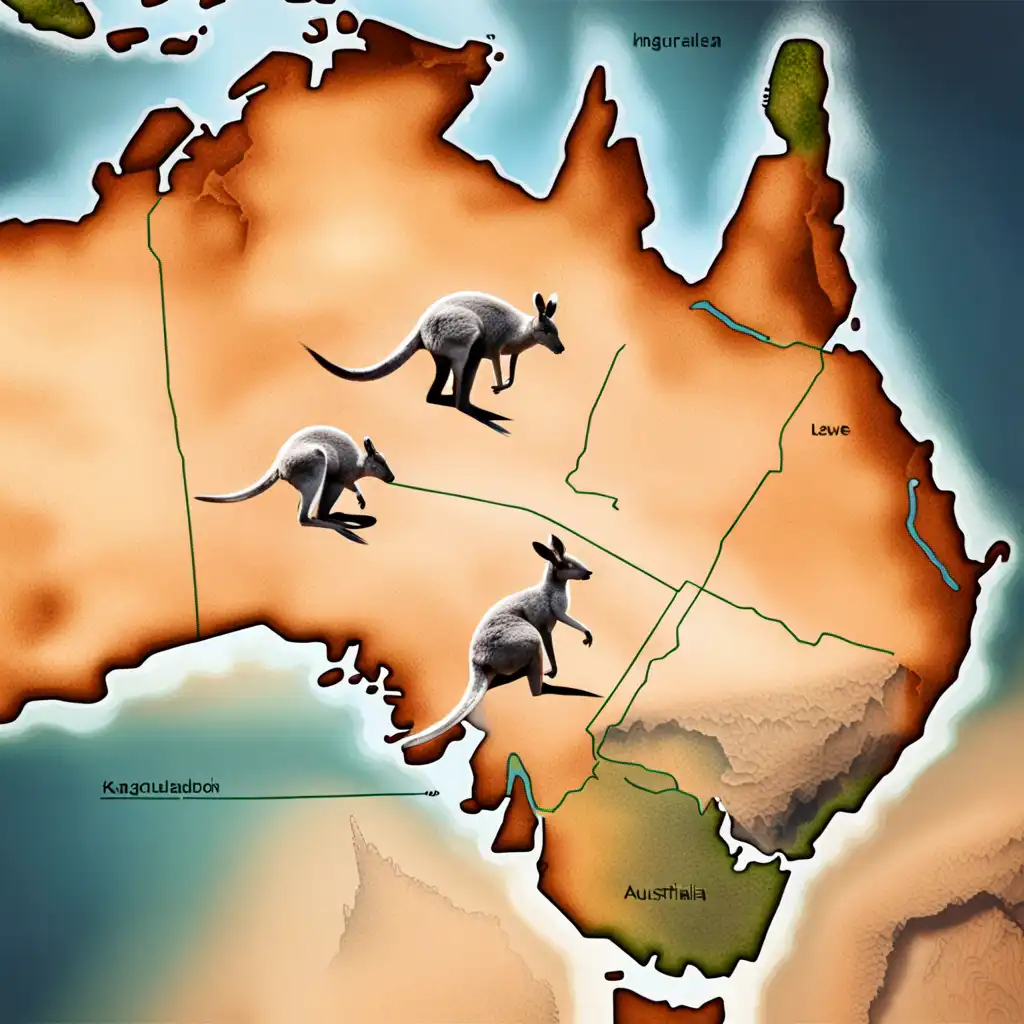
Living on an island or relating to islands.
Kangaroos are an insular species found only in Australia.

ˈɪnsələr
Detached or standing alone, often indicating isolation.
Their insular position in the market makes it difficult for new competitors to enter.
Impossible de charger l’audio. Réessayez plus tard.
The word 'insular' means being closed off or isolated from the rest of society. It can be used to describe someone who doesn't like to interact with others from different cultures or backgrounds, or a community or country that is not very open to new ideas or people from outside. For example, if someone says "She has an insular mindset," it means that person tends to only consider their own opinions and doesn't take into account other perspectives. It's important to use this word carefully and in the right context, as it can come across as negative or judgmental.
Insular refers to a person or group of people who are isolated or cut off from the rest of the world, usually because they don't interact with people who are different from them.
Isolate means to be physically or emotionally cut off from others. This can happen because of various reasons, such as quarantine, social distancing, or living in a remote location.
The main difference between the two words is that insular refers to a social and cultural isolation, while isolate refers to physical isolation.
Ouvrir le mot: Isolate →Parochial means to be narrow-minded and limited in outlook, as if you only have knowledge of the area around your own neighborhood or parish.
Both words describe people who have limited perspectives or are closed off to new ideas, but insular implies a complete lack of awareness beyond one's own world, while parochial implies a limited awareness of broader issues.
Ouvrir le mot: Parochial →Insular and provincial are both words that describe someone or something that is narrow-minded or closed off from the wider world, but they have slightly different meanings.
Provincial refers to someone or something that is focused on a narrow or local perspective.
For example, someone who only cares about their hometown sports team and doesn't follow national or international competitions might be described as provincial.
Provincial might be used to describe a person who is unwilling to consider different perspectives or ideas, such as a small-town mayor who rejects new policies or technologies.
Ouvrir le mot: Provincial →Remote refers to something far away, physically or metaphorically. It is applicable in a geographical context where a place or thing is situated far from other places, or in a social context where someone is emotionally distant or unapproachable.
Insular relates to a closed-off and narrow-minded attitude, while remote pertains to distance or detachment.
Ouvrir le mot: Remote →Separatist refers to someone who wants to break away from a larger group or society and form a separate identity or community.
For example, a group of people who want to create their own country or state because they feel unfairly treated or oppressed by the government might be considered separatist.
Insular refers to being cut off or isolated, while separatist refers to wanting to break away and form a separate identity.
Ouvrir le mot: Separatist →Insular refers to a narrow-minded or isolated perspective, while sequester refers to being isolated or kept apart from others.
Sequester is applicable to situations where people or things need to be separated, kept apart, or isolated for various reasons, such as quarantine, protection, or legal matters.
It can also refer to the process of keeping something hidden or secret, as in sequestering information during a trial.
Ouvrir le mot: Sequester →Solitary refers to being alone or having a preference to be alone. It suggests a person enjoys, or at least is content with, being by themselves.
Insular might describe a community that is closed off from other groups and cultures, while solitary might describe a person enjoying a quiet walk alone in the forest.
Ouvrir le mot: Solitary →Where on Earth Will...
Voir sur YouTube ↗I lived abroad most of my life in insular international communities.
Venturing into the Heart...
Voir sur YouTube ↗The insular arrogance of the English character is a commonplace joke.
With high fashion, it's a performance. You're trying to interpret a fantasy in a very physical way, and you really are playing a character. I've played men, dead people, famous people, historical icons, and it's no mean feat. It's quite an insular experience even though the crowd is in front of you and there's an expectation.
I think it's important for whatever you are doing, even if it's a collection, to seek outside advice. If your world becomes too insular, it limits your creativity.
The art world has become so insular. The rules have become so autodidactic that, in a sense, they lose track of what people have any interest in thinking about, talking about, or even looking at.
By itself, just to draw crazy creatures has limited appeal - if I had to give up one thing, it would be the wild imagination. When the work becomes too detached from ordinary life, it starts to fall apart. Fantasy needs to have some connection with reality, or it becomes of its own interest only, insular.
We have got so caught up in an insular world that swings between our phones, our computers and our heads that we have forgotten to look out of the window, and say, 'Hey! It's raining.
It is nice to be out there, amongst contemporaries on a global scale. You meet different people, see different things, meet different producers, eventually grow to collaborate in different ways. The world is getting smaller. It's nice not to be insular.
I live in a sort of insular world. It's mostly my family, my house, staying home and working.
As the U.S., much of Europe, and the U.K. shift toward the political right, the rhetoric grows more insular, defensive, and protective.