bequeath
verb bequeath
bɪˈkwiːð
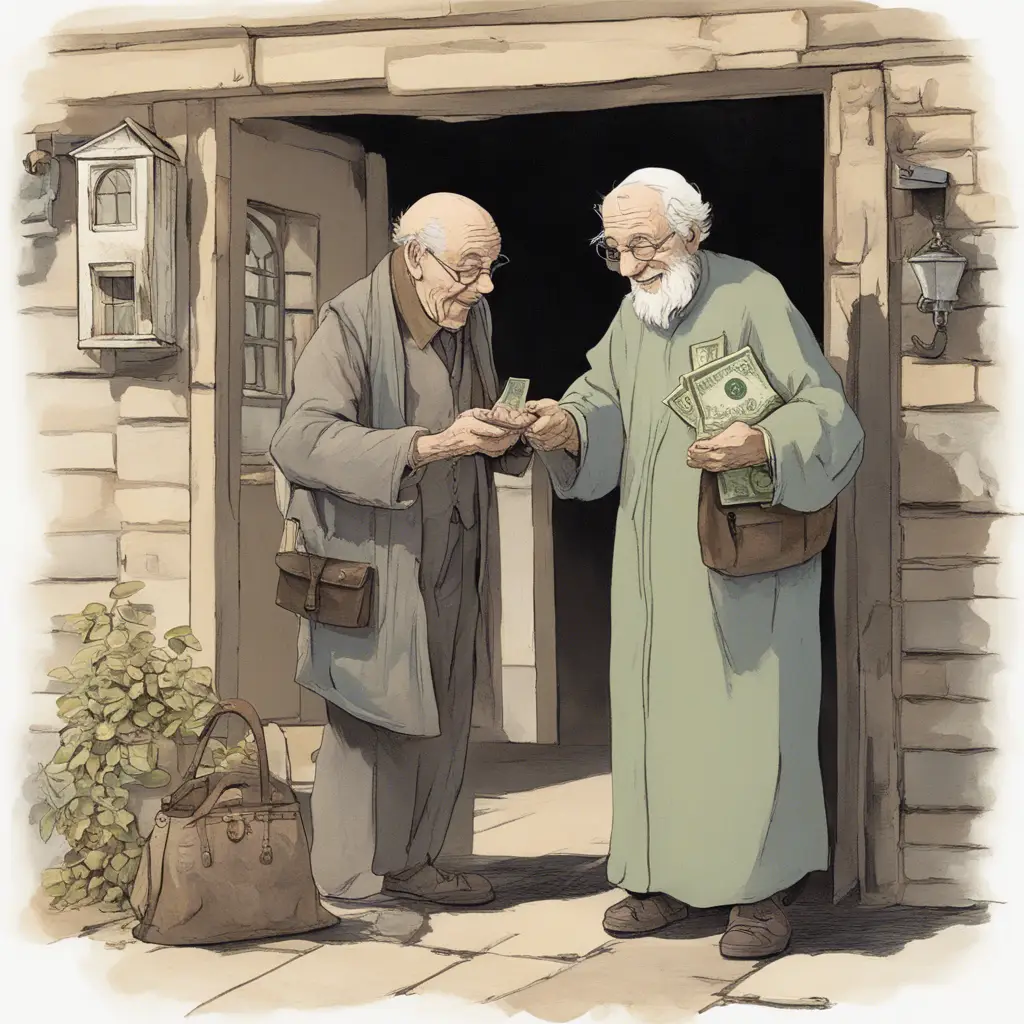
To give or leave something, like property or money, to someone after you die
In his will, he bequeathed his house to his daughter.
bequeath
bɪˈkwiːð
加载中…
bɪˈkwiːð
To give or leave something, like property or money, to someone after you die
In his will, he bequeathed his house to his daughter.

bɪˈkwiːð
To pass on or leave something to others, like a tradition or way of doing things
The skills of these ancient craftsmen have been bequeathed from one generation to the next.
音频无法加载,请稍后再试。
The word 'bequeath' is often used in a legal context when someone passes away and wants to leave their belongings, property, or money to someone else. It means to give something to someone in your will or by passing it down to them after you die. For example, a grandfather might bequeath his house to his grandson in his will.
Bequeath typically means to give something as an inheritance in a will or after death, while bestow means to give something as a gift or honor during life.
Bequeath is often used in legal or formal contexts, and bestow is usually used in more casual situations. For example, a grandfather may choose to bequeath his antique watch to his grandson, while a king may bestow a title or knighthood upon a loyal subject.
打开单词: Bestow →Convey means to transport or transfer something from one place to another.
It can be used in various contexts, such as conveying a message, conveying goods from one location to another, or conveying an idea or emotion through art or language.
Bequeath is applicable in a legal context and refers to leaving property or money as an inheritance. Convey is applicable in various contexts and refers to the transportation or transfer of something.
打开单词: Convey →Both bequeath and devolve mean to transfer or pass on something to another person, but they have slightly different implications.
Devolve, on the other hand, is more often used in a political or governmental context, where responsibilities or powers are transferred from one entity to another.
For example, if a state decides to transfer authority over a certain issue to a city government, we might say that the responsibility has devolved to the city.
So while both words involve the idea of transferring something from one party to another, bequeath tends to be used in personal or family settings, while devolve tends to be used in more formal or impersonal situations.
打开单词: Devolve →Entrust means to give someone the responsibility of taking care of something or someone.
It is used when we give someone our trust and confidence that they will take care of something important. For example, "I entrusted my car keys to my friend while I was out of town.".
Bequeath is used when we want to give something after our death, and entrust is used when we want someone to take care of something important in our life.
打开单词: Entrust →It refers to passing down property, assets, or possessions onto others, often as a form of legacy.
The phrase hand down refers to passing something down from one generation to the next, but it doesn't necessarily have to involve a person's death or a legal agreement.
Bequeath is more specific to the passing down of material possessions after death, while hand down is a broader term that includes cultural and generational transmission.
打开单词: Hand down →Bequeath refers to leaving something in a will after death, typically property or possessions, to someone specific. This means that the person intentionally chose to leave that object or property to that particular person.
Leave has a broader definition and can refer to leaving something behind in general, without necessarily implying that it was left deliberately.
For example, someone might say "I left my phone at home today" or "I'm leaving work early today."
Bequeath specifically refers to leaving property or possessions to someone after death through a will, while leave has a broader meaning and can refer to leaving anything behind intentionally or unintentionally.
打开单词: Leave →Bequeath refers specifically to leaving something to someone in a will.
It is typically used in legal or formal contexts. For example, someone might bequeath their house or car to a family member in their will.
Pass on is a more general term that can refer to anything that is given or transferred from one person to another.
It can be used in a wide variety of contexts, such as passing on a story, passing on a family recipe, or passing on a skill or talent to a younger generation.
Bequeath is used when referring specifically to leaving something to someone in a will, while pass on is a more general term that can refer to any type of giving or transferring from one person to another.
打开单词: Pass on →Transfer refers to moving something from one person or place to another while one is alive. It is applicable when one wants to move their assets or possessions to someone or somewhere else while they are still alive.
打开单词: Transfer →but at the age of eight, I was bequeathed a guitar. It was a battered old thing with five rusty strings and was out of tune, but quickly I learned to play it and realized that I'd found a friend for life,
在 YouTube 上观看 ↗I think there really are a lot of people in the world who probably feel like they've done so much in life, made so much of their talents and ambitions that they feel the need to bequeath it to someone.
human enter the story you benefit from a fabulous four billion year old legacy bequeathed by the earth
在 YouTube 上观看 ↗I will give away at least half my wealth during my lifetime and after my death. In the meantime, I'll continue to grow my wealth as much as possible so that the amount I bequeath to charities and worthy causes can be as substantial as possible.
We bequeath to you, the next generation, our knowledge but also our problems. While we still live, let us join hands, hearts and minds to work together for their solution so that your world will be better than ours and the world of your children even better.
We owe it to ourselves and to the next generation to conserve the environment so that we can bequeath our children a sustainable world that benefits all.
The conservative vision regards politics more as a matter of gratitude than entitlement - duty over rights. We have inherited so much: a wonderful country, a culture of freedom and abundance, even our life itself, earned through no effort of our own but bequeathed as a gift from our forefathers.
Let parents bequeath to their children not riches, but the spirit of reverence.
The white man's blood and bones have begotten this bronze race, and bequeathed to it in some degree qualities, tendencies, capabilities, such as are the inheritance of the highest order of human animals.
We feel unsatisfied until we know ourselves akin even with that greatness which made the spots on which it rested hallowed; and until, by our own lives, and by converse with the thoughts they have bequeathed us, we feel that union and relationship of the spirit which we seek.
Each generation takes the earth as trustees. We ought to bequeath to posterity as many forests and orchards as we have exhausted and consumed.
If Iran becomes a nuclear weapon state it is the end of non-proliferation as we know it. If Iran gets a nuclear weapon you are likely to see Saudi, Egypt and other countries follow suit and we will bequeath to the next generation a nuclear arms race in the world's most unstable region.