haughty
adjective haughty
ˈhɔːti
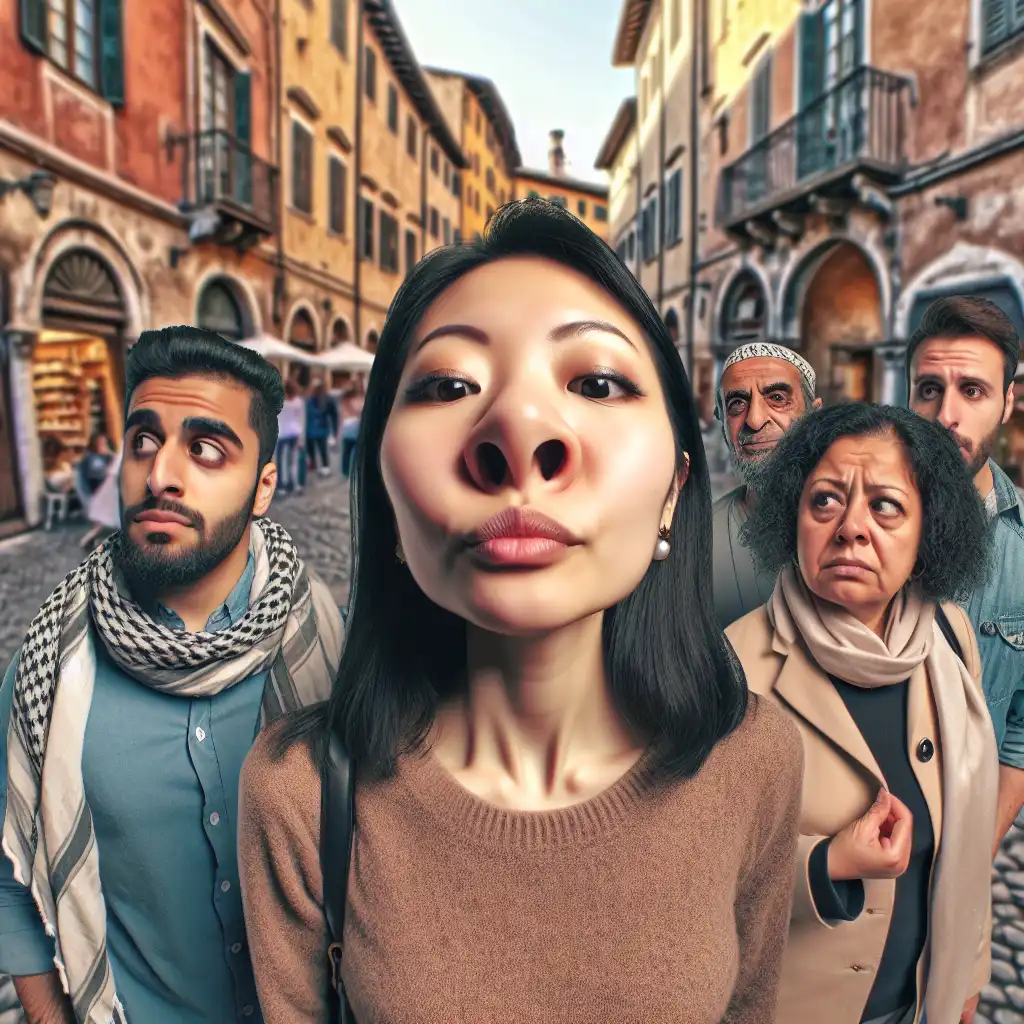
Someone acting superior or too proud
Her haughty demeanor made it hard for others to approach her.
haughty
ˈhɔːti
लोड हो रहा है…
ˈhɔːti
Someone acting superior or too proud
Her haughty demeanor made it hard for others to approach her.
ऑडियो लोड नहीं हो सका। कृपया बाद में फिर कोशिश करें।
The word "haughty" is used to describe someone who is arrogant or proud. It can be used in situations where someone is acting superior or looking down on others. For example, if someone talks down to others or acts like they are better than everyone else, they could be described as haughty. It is important to use this word carefully and only when it is appropriate, as it can be seen as insulting in some situations.
Arrogant and haughty are similar in meaning, but there are slight differences in their usage. Arrogant refers to people who are overly confident, believing they are better than others and often showing off their superiority.
Arrogance is best used to describe someone who has an inflated sense of their own importance, while haughtiness is better used to describe someone who is snobbish and contemptuous towards others.
शब्द खोलें: Arrogant →Conceit refers to an excessive and unreasonable sense of self-importance or superiority, often accompanied by an overestimation of one's abilities or accomplishments.
Both words describe negative qualities related to a sense of superiority, but conceit emphasizes a person's self-centeredness and overestimation of their own abilities, while haughty emphasizes their attitude towards others.
शब्द खोलें: Conceit →Contemptuous means showing disrespect and disdain towards someone or something, while haughty means showing arrogant superiority and a sense of being better than others.
Contemptuous would apply in situations where someone looks down on or belittles someone or something that they consider to be inferior or unworthy.
Contemptuous is about disrespecting others while haughty is about feeling superior to others.
शब्द खोलें: Contemptuous →The words disdainful and haughty both describe attitudes of superiority, but they have slightly different connotations.
Disdainful suggests a feeling of contempt or disgust towards someone or something that is considered unworthy or beneath one's level of importance.
For example, a teacher might be disdainful towards a student who is consistently disruptive in class.
Disdainful is more focused on the object of the attitude (i.e. the thing or person being looked down upon), while haughty is more focused on the subject of the attitude (i.e.
शब्द खोलें: Disdainful →Haughty and proud are similar in meaning but have slight differences.
Proud refers to a feeling of accomplishment or self-respect. It means having a positive or sincere sense of one's worth or achievements.
A person might feel proud of their accomplishments, their family, or their heritage.
Proud can have a positive or neutral connotation and is typically applied when someone is feeling good about themselves or something they have done.
शब्द खोलें: Proud →Smug refers to a person who is overly self-satisfied and takes pleasure in their achievements or abilities.
Haughty is applicable when describing someone who is snobbish or overbearing, while smug is applicable when describing someone who is overly complacent or self-assured.
In essence, haughty refers to a negative attitude towards others, whereas smug refers to a positive attitude towards oneself.
शब्द खोलें: Smug →Snobbish describes someone who is snobby or pretentious and thinks they are better than others because of their social status, wealth or education.
Haughty describes someone who thinks they are better than everyone else while snobbish describes someone who thinks they are better than others because of their social status or wealth.
शब्द खोलें: Snobbish →Both haughty and supercilious are words used to describe someone who is excessively proud and arrogant.
Supercilious is similar to haughty but suggests a more disdainful attitude towards others. It implies looking down on others with a sneer or contemptuous expression.
For example, a supercilious person might roll their eyes or scoff at something someone says.
Both words can be used in a similar way, but supercilious is often more extreme in tone and suggests an attitude of contempt towards others that is even more pronounced than haughtiness.
शब्द खोलें: Supercilious →Haughty and superior are both words used to describe a feeling of being better than others.
However, haughty suggests being arrogant, snobbish, or disdainful towards others, while superior suggests having a higher status or quality than others.
Haughty is applicable when describing someone who acts as if they are above others or belittles them, while superior is more applicable when describing a thing or person that is of higher quality or rank.
For example, a haughty person might look down on others and think they are better than everyone else, while a superior product might be of higher quality than its competitors.
शब्द खोलें: Superior →Danny Hillis: Back to...
YouTube पर देखें ↗Alarm bells ring when a politician stands haughty upon his honour.
Never be haughty to the humble or humble to the haughty.
Journalists like to give themselves credit for being on the hunt for 'the truth.' But if we embrace this undoubtedly noble but somewhat haughty interpretation of a calling, we inevitably become susceptible to slam dunk answers.
I get accused of having a haughty smugness. I have a lopsided mouth. I can't help it. I was born with it. It looks as if I am smirking. I have had my publicist tell me, 'Don't do that smile on the red carpet.' I'm, like, 'That's my smile.
Old age, calm, expanded, broad with the haughty breadth of the universe, old age flowing free with the delicious near-by freedom of death.
I've been misconstrued because I speak in a certain way. I find it obnoxious how it defines you, somehow limits your ability to understand the human condition. You can't be allowed near emotions; you play these curling-lipped, haughty characters. This awful label - 'the posh Toby Stephens' - I'm not posh!
Waitresses, soldiers, rickshaw drivers, old ladies selling vegetables - my father would schmooze anybody. He was Clintonesque before the word existed. And, of course, it paid dividends. Ill-tempered guards at the most notorious border crossings waved him through with cheery smiles. Haughty maitre d's fawned over him.
No architecture is so haughty as that which is simple.
Edinburgh used to be a haughty city.
We Americans can be haughty. We can be delusional.