cortical
adjective cortical
ˈkɔːrtɪkl
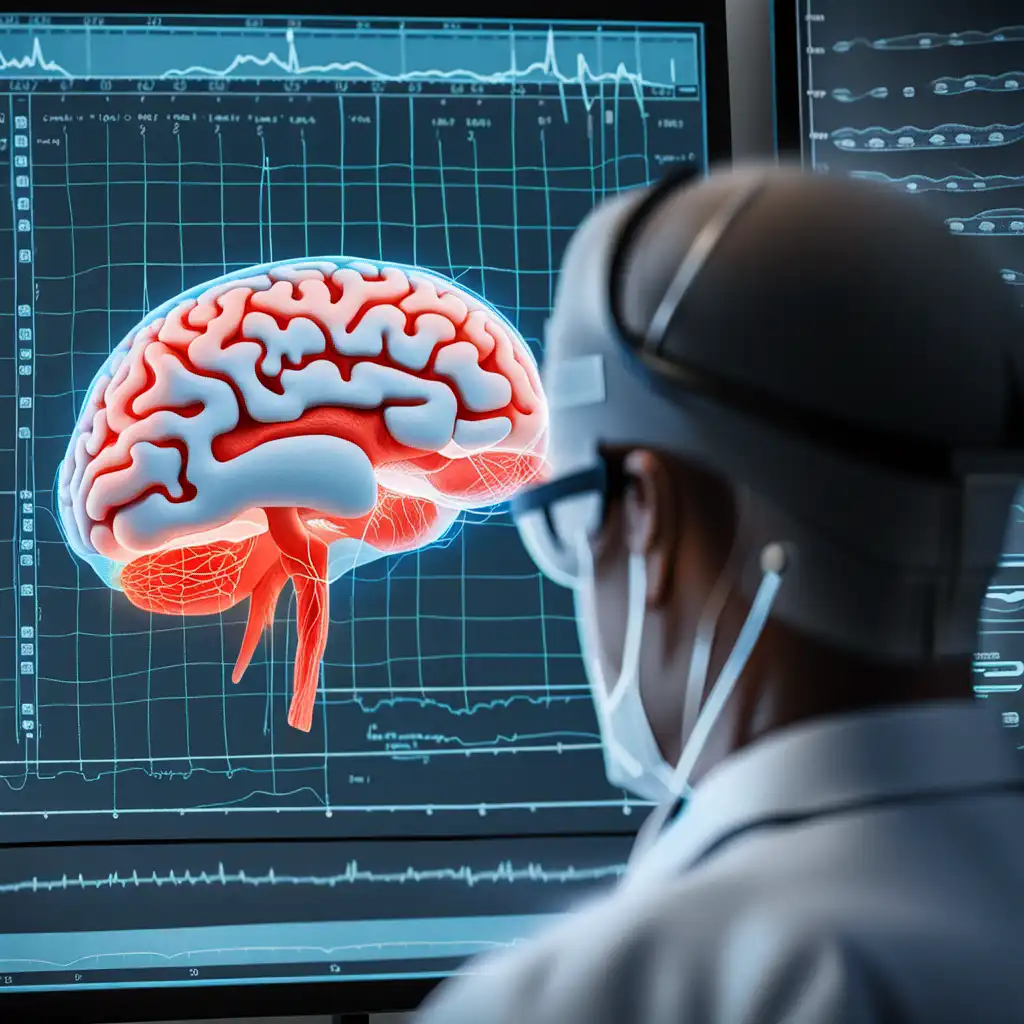
Related to the outer layer of the brain or another organ.
The doctors are studying the patient's cortical activity during the test.
cortical
ˈkɔːrtɪkl
Chargement…
ˈkɔːrtɪkl
Related to the outer layer of the brain or another organ.
The doctors are studying the patient's cortical activity during the test.

ˈkɔːrtɪkl
Involving or affecting the cortex or outer layer of an organ or tissue.
The development of cortical tissue in plants is an important area of study in botany.
Impossible de charger l’audio. Réessayez plus tard.
The word 'cortical' typically refers to the outer layer of the brain, called the cortex, where many important functions such as thinking, processing, and interpreting sensory information occur. It can also refer to the outer layer of other organs, such as the adrenal glands. The word 'cortical' is commonly used in medical and scientific contexts to describe features or processes that are associated with this outer layer.
The brain is the main organ of the nervous system that controls all body functions including thoughts, feelings, and movements.
The cortex is the outermost layer of the brain, made up of folded tissues called the cerebral cortex. It is responsible for higher brain functions like consciousness, memory, and language.
The brain refers to the entire organ, while cortical refers to a specific part of the brain's outer surface.
Ouvrir le mot: Brain →Cerebral refers to the brain as a whole, while cortical refers specifically to the outer layer of the brain called the cortex.
Cerebral is applicable when discussing general brain function or disorders affecting the brain as a whole, while cortical is more specific to the cortex and its functions, such as sensory perception and motor control.
Think of it like this: Cerebral = whole brain, cortical = outer layer of the brain.
Ouvrir le mot: Cerebral →Cognitive refers to mental processes related to thought, perception, attention, and memory. It involves the mental activities that help us to process information and learn new things.
Cortical refers to the part of the brain that is responsible for higher cognitive functions such as perception, consciousness, thought, and memory.
Cognitive is a general term related to mental processes whereas cortical refers to a specific brain structure responsible for higher cognitive functions.
Cognitive can be used in any context related to mental processes, whereas cortical is more specific to discussions about brain structure and specific functions of the brain.
Ouvrir le mot: Cognitive →Intellectual refers to a person's ability to think, reason, and understand abstract concepts.
To sum up, cortical describes the physical structure of the brain, while intellectual describes a person's mental abilities.
Cortical is mainly used in scientific and medical contexts, while intellectual can be used in everyday conversation.
Ouvrir le mot: Intellectual →Mentally refers to one's mental state, emotions, and thoughts.
If someone is mentally stressed, it means that they are experiencing emotional or mental distress.
Cortical is used in a more scientific or medical context, while mentally is used in everyday language to describe one's emotional or mental state.
Ouvrir le mot: Mentally →Neural is a more general term that can refer to any part of the nervous system, including the brain, spinal cord, and peripheral nerves.
Cortical is applicable when referring specifically to the brain's outer layer, while neural can refer to any part of the nervous system.
Ouvrir le mot: Neural →Neurological refers to anything related to the nervous system, which includes the brain, spinal cord, and nerves throughout the body.
So, while cortical specifically refers to a particular area of the brain, neurological encompasses a broader range of topics related to the nervous system as a whole.
For example, if a doctor were studying the part of the brain responsible for processing visual information, they may use the term 'cortical.' However, if a doctor were studying a disorder that affects the nervous system as a whole, such as Parkinson's disease or multiple sclerosis, they would use the term 'neurological.'
Ouvrir le mot: Neurological →Perceptual refers to our ability to interpret and understand sensory information that we receive from the environment through our senses such as sight, hearing, touch, taste, and smell.
In simpler terms, cortical is about the brain and its functions, while perceptual is about our senses and how we interpret the world.
Ouvrir le mot: Perceptual →The benefits of a good...
Voir sur YouTube ↗The type of Alzheimer's Dad has is rare - posterior cortical atrophy or PCA - and it affects his spatial awareness and the way he judges distance. His first symptoms were erratic typing and spelling, but to talk to him, you'd never know there was a problem.
The brain may be able to...
Voir sur YouTube ↗I regarded finding I had a form of Alzheimer's as an insult and decided to do my best to marshal any kind of forces I could against this wretched disease. I have posterior cortical atrophy or PCA. They say, rather ingenuously, that if you have Alzheimer's it's the best form of Alzheimer's to have.
Grave Secrets of...
Voir sur YouTube ↗In the early Sixties, having begun to describe the physiology of cells in the adult cat visual cortex, David Hubel and I decided to investigate how the highly specific response properties of cortical cells emerged during postnatal development.
What happens when you...
Voir sur YouTube ↗How does income affect...
Voir sur YouTube ↗Thomas Insel: Toward a...
Voir sur YouTube ↗Michael Merzenich:...
Voir sur YouTube ↗Stuart Brown: Play is...
Voir sur YouTube ↗Grégoire Courtine: The...
Voir sur YouTube ↗Toward a new understandin...
Voir sur YouTube ↗