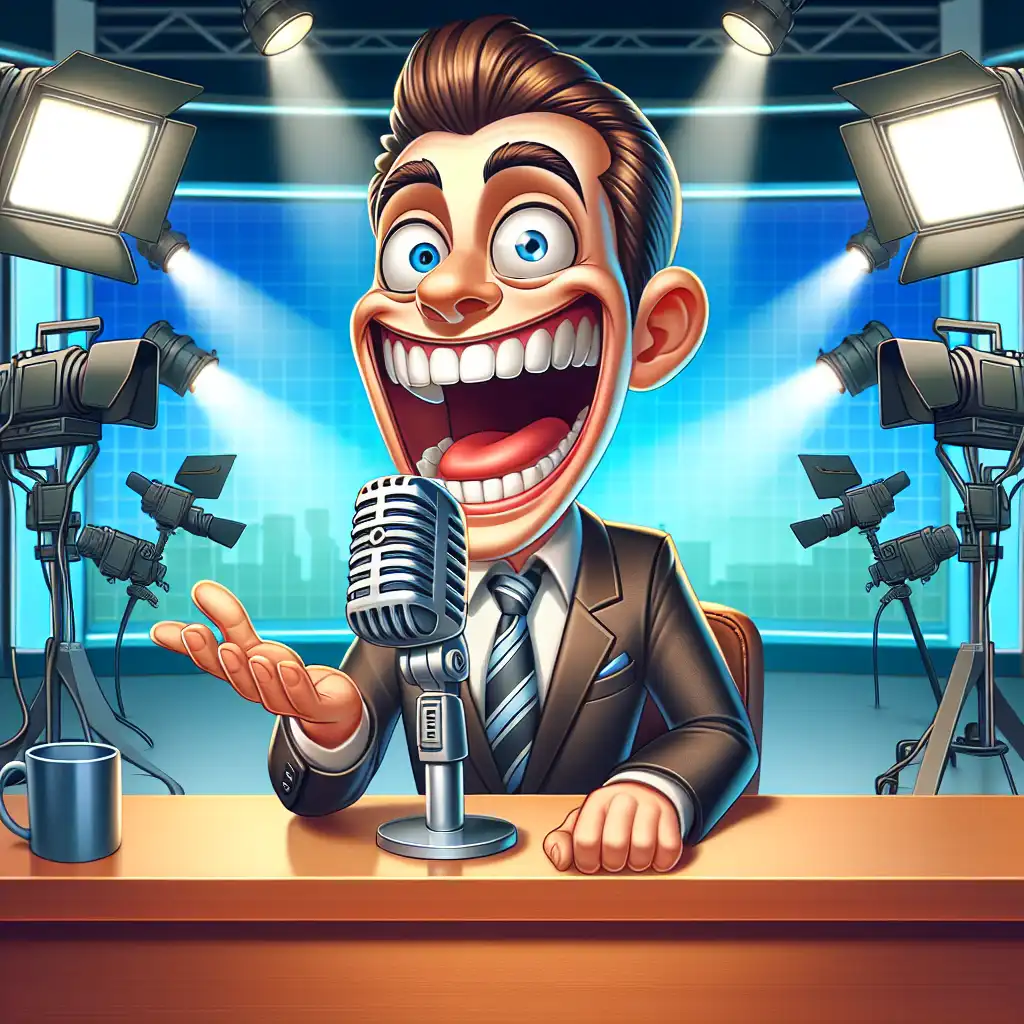
lampoon
verb lampoon
læmˈpuːn
To make fun of someone or something publicly, often in a humorous or sarcastic way.
The late-night talk show host decided to lampoon the president's speech.
lampoon
læmˈpuːn
読み込み中…
læmˈpuːn
To make fun of someone or something publicly, often in a humorous or sarcastic way.
The late-night talk show host decided to lampoon the president's speech.
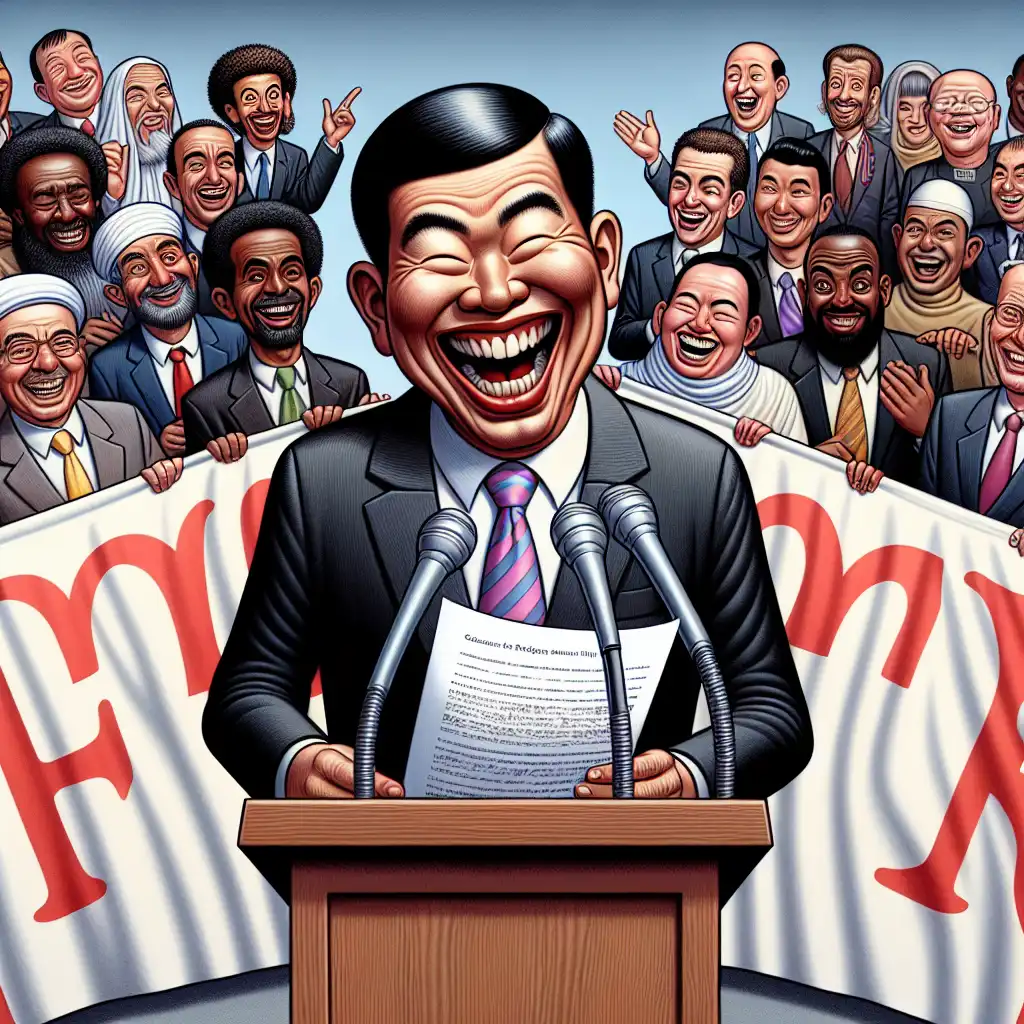
læmˈpuːn
A piece of writing, a cartoon, etc., that publicly makes fun of someone or something, often in a humorous or sarcastic way.
His speech was a hilarious lampoon of the administration's policy.
音声を読み込めませんでした。しばらくしてからもう一度お試しください。
The word "lampoon" is used to describe a type of humor that makes fun of a person, group or situation. It is usually used in a written form, like in a story, or in a speech. You can use the word "lampoon" to describe something that is meant to be funny, but is also intended to criticize or mock someone or something. For example, a political cartoon that makes fun of a politician could be considered a lampoon. It's important to remember that lampooning should not be mean-spirited, and it should not be used to intentionally hurt or offend someone.
Burlesque and lampoon are both types of satire, but they have slightly different meanings.
Burlesque is a type of entertainment that uses humor, exaggeration, and often sexual elements to make fun of serious topics or events.
Burlesque is often used as a form of commentary and critique on social or political issues, and is typically performed on stage.
So, in short: burlesque is a type of comedic performance that pokes fun at serious things, while a lampoon is a type of satirical writing that specifically targets individuals or groups.
単語を開く: Burlesque →A caricature is a humorous or exaggerated portrait that emphasizes the distinctive features of a person or thing. This can be in the form of a drawing, sculpture or any other art form.
Caricatures are created to express a person's unique qualities in an exaggerated yet humorous manner, often done for entertainment purposes.
A lampoon is a form of satire that mocks and ridicules individuals or situations in a harsh or insulting way. Lampoons are generally more direct and critical in tone than caricatures, and aim to expose the flaws or faults of the subject matter.
A caricature is an exaggerated representation of a person or thing for humorous purposes, while a lampoon is a direct satirical attack on an individual or situation.
Caricatures are used for entertainment value, while lampoons are more critical and serve as a form of criticism or commentary.
単語を開く: Caricature →Irony refers to a situation in which the outcome is different from what is expected or intended.
Irony describes unexpected outcomes or situations, while a lampoon is a satirical attack on a person or idea.
単語を開く: Irony →Mockery, on the other hand, is a more general term that refers to making fun of something or someone.
Mockery is often aimed at individuals rather than ideas or institutions.
Lampoon is a specific type of satire that uses humor to criticize, while mockery is a broader term that refers to any form of making fun of something or someone.
単語を開く: Mockery →Lampoon and parody are both types of humorous writing or performance, but they differ slightly in their approach.
A parody is a humorous imitation of a piece of literature, art, or music that exaggerates or alters its features for comedic effect.
Parodies usually poke fun at the original work in a lighthearted way and are meant to be enjoyed by the audience.
In simpler terms, a lampoon is like making fun of someone in a mean way, while a parody is like poking fun at something in a fun way.
単語を開く: Parody →Lampoon refers to a written or verbal attack on someone or something using humor or satire, while ridicule is a form of mockery or derision aimed at someone or something.
Lampoon is usually meant to criticize or make fun of a public figure or institution, whereas ridicule can be targeted towards an individual, group or idea.
The difference between the two terms is that a lampoon is usually more creative and satirical, whereas ridicule is more straightforward and sometimes mean-spirited.
Lampoon is a more sophisticated form of mocking, while ridicule is simpler and more direct.
単語を開く: Ridicule →Sarcasm is a use of words that are intended to mock or insult someone with humor. It often involves saying something that is the opposite of what is actually meant.
Sarcasm can be used in various situations, such as in a group of friends, at work, or in a social media post.
Lampoon is a form of criticism that is exaggerated and often seen in written or visual forms, while sarcasm is a type of humor that mocks and makes fun of something or someone using words.
単語を開く: Sarcasm →It is often meant to be humorous or mocking, and may use exaggeration or ridicule to make a point. Lampoons are generally more light-hearted and playful than satire.
Satire is a more general term that refers to any form of criticism that uses humor, irony, or exaggeration to expose and criticize societal or individual flaws and follies.
It can take many forms, including literature, music, film, and art. Unlike lampoon, satire is not necessarily meant to be humorous - it can be serious or even biting.
Both lampoon and satire can be used in similar situations and can aim at the same targets.
However, lampoons are generally more focused on a single person or entity, while satire often looks at larger societal issues.
Additionally, lampoons are generally more playful and mild compared to the more biting nature of satire.
単語を開く: Satire →A spoof is a type of parody that imitates or mimics a specific work or genre for comedic effect. Spoofs are often used to poke fun at popular movies, TV shows, books, or cultural trends.
For example, a movie that makes fun of the James Bond series by exaggerating its tropes and stereotypes would be considered a spoof.
A lampoon is more focused on criticizing and ridiculing a specific person or group, while a spoof is more focused on making fun of a specific work or genre.
単語を開く: Spoof →Lampoon and taunt are both words used to describe making fun of someone or something, but they are used in different ways.
A taunt is a direct insult or teasing remark intended to provoke a negative emotional reaction.
Lampoon is a form of humor with a critical edge, while taunt is an attack meant to provoke a negative reaction.
単語を開く: Taunt →Jonathan Zittrain: The...
YouTube で見る ↗There is no way I would ever want to be president for a second. It's much easier to make fun of them on the stage and get paid for it. With all the years of me lampooning the presidents in my act, I know I could never ever want that job.
How photography connects...
YouTube で見る ↗Now, I'm not onboard with the argument that jokes are destructive to humanity. There are bigger issues, and I do not necessarily subscribe to the belief that jokes perpetuate violence and racism. They lampoon those things most of the time. But I could be wrong about that. I'm not a sociologist or an expert.
Humor is a powerful tool, and some of these politicians are so far out and easy to lampoon. They just provide such delicious opportunity.
Everything needs to be lampooned. I believe that there's not any sacred ground.
MADtv' was a network show, so we would come across the people that we were lampooning - a lot.
The best thing about writing speculative fiction is the opportunity to satirize the whole wide world. The America in 'A Better World' isn't ours, but it's pretty close, so I could lampoon everything from partisan politics to the cult of celebrity to our general disaffection. To me, all that is the point.
Lampooning racism by reproducing brazenly racist imagery is a pretty dubious satirical tactic.
The male domination and chauvinism of the comics form is either being wittily lampooned in 'Watchmen' or handily perpetuated, depending on whom you ask.
I realised that a television show on political lampoon was one genre that was missing.
It was just us lampooning our own peer group, saying, well hey, where did this stuff come from? And where does British guys get to be so good at it suddenly?