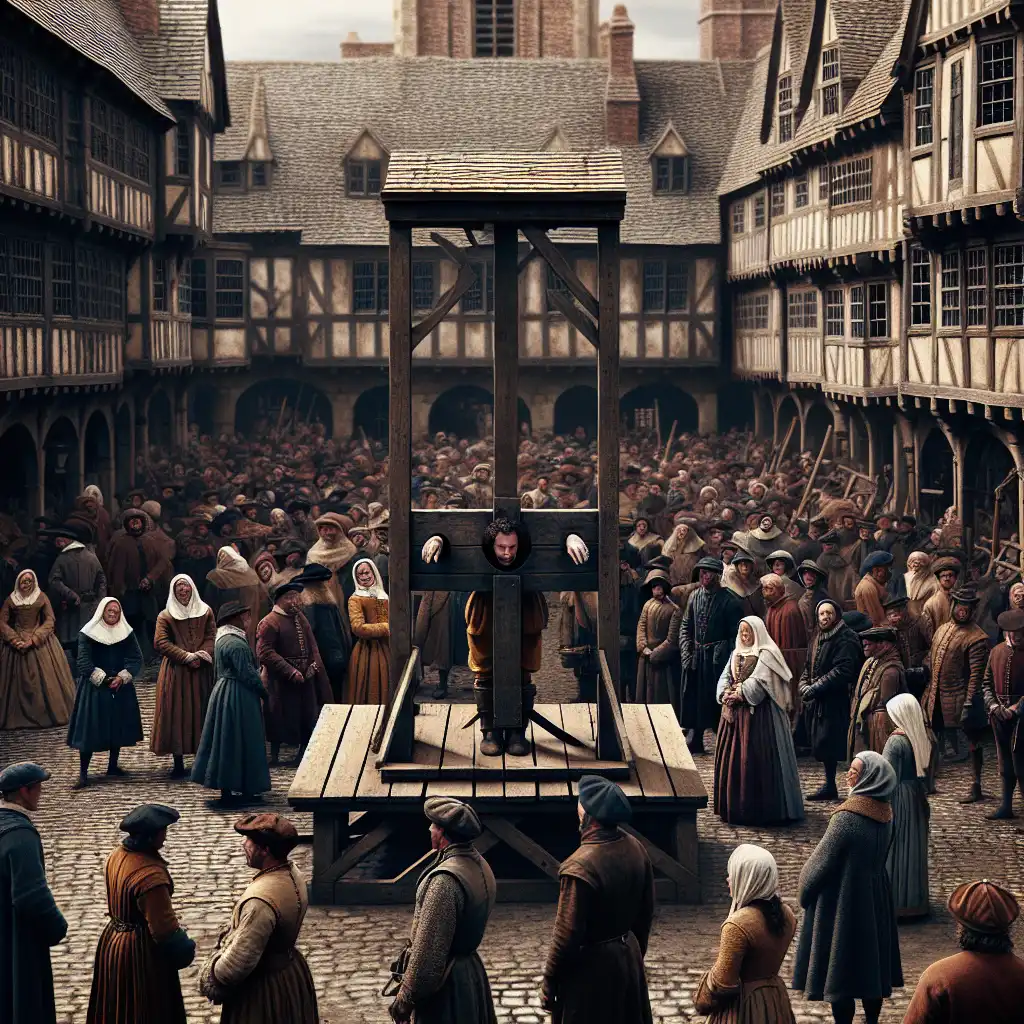
pillory
noun pillory
ˈpɪləri
An open frame device where people were locked and publicly shamed in the past
People who committed minor crimes were often punished in the pillory.
pillory
ˈpɪləri
Đang tải…
ˈpɪləri
An open frame device where people were locked and publicly shamed in the past
People who committed minor crimes were often punished in the pillory.

ˈpɪləri
To forcefully criticize someone, especially in public
The government was pilloried by the press for its response to the crisis.
Không tải được âm thanh. Vui lòng thử lại sau.
The word 'pillory' means to publicly shun or shame someone for something they have done wrong. This includes putting a person in a device that holds their head and arms still while people mock and ridicule them. Nowadays, the word is used figuratively to describe situations where someone is openly criticized or shamed. In modern times, it is considered unethical and cruel to pillory someone.
Condemnation means to express strong disapproval or to criticize something or someone. It is applicable when something is regarded as wrong or improper and it needs to be expressed or communicated through disapproval or criticism.
Condemnation is a verbal expression of disapproval while pillory involves a physical punishment where someone is publicly humiliated.
Mở từ: Condemnation →Degradation refers to the act of reducing someone's status, dignity or respect in society.
It can be caused by a person's own actions or by external factors. Degradation is applicable in situations where someone has done something wrong and their reputation is damaged as a result.
Mở từ: Degradation →Disgrace refers to a loss of honor or respect, often due to wrongful or shameful behavior. For example, a politician who gets caught stealing public funds would be a disgrace to the community.
Disgrace describes a person or action that is considered to be shameful or dishonorable.
Disgrace refers to a loss of honor or respect, while pillory refers to a physical punishment aimed at shaming and humiliating.
Disgrace can be applied to any situation where someone's reputation is damaged, while pillory is a specific punishment that is no longer used in modern times.
Mở từ: Disgrace →A gibbet generally refers to a structure where a person is hanged by the neck until they are dead. It was commonly used as a form of punishment for crimes such as murder or piracy.
Essentially, a gibbet is used for hanging and a pillory is used for public shaming. Both were used in medieval times and are now considered cruel and uncommon forms of punishment.
Mở từ: Gibbet →Both humiliate and pillory refer to situations where someone is publicly embarrassed or shamed, but they differ in their severity and context.
Humiliate means to embarrass or shame someone, often in front of others, to make them feel inferior or inadequate. This can be done intentionally or unintentionally and can happen in various situations, such as at school, work, or in a social setting.
Pillory is a more extreme form of public humiliation where someone is physically restrained, often in a wooden framework, and exposed to ridicule and abuse by people passing by.
Humiliate is a general term for embarrassing or shaming someone, while pillory refers specifically to a historical form of physical punishment that involved public humiliation.
Mở từ: Humiliate →The pillory and the scaffold are both types of punishments that were used in the past, but they differ in their application.
The scaffold was a raised platform with a trapdoor and a noose that was used for execution by hanging. It was a more severe form of punishment that was reserved for the most serious crimes like murder, treason, and rebellion.
The pillory was a device used for public humiliation, while the scaffold was used for execution by hanging.
Mở từ: Scaffold →Pillory and shame are both related to punishment and humiliation, but they differ in how they are carried out.
Shame is an emotion that arises from a sense of wrongdoing or disapproval from society.
Shame can be experienced privately, but it can also be imposed by others, through public criticism, ostracism, or rejection.
Pillory is a physical punishment that aims to publicly humiliate and punish a person, while shame is an emotional response to a sense of wrongdoing or social disapproval that can be imposed by others or felt privately.
Mở từ: Shame →Both pillory and stock were instruments of punishment used in the past.
Stock is also a wooden framework, but it was used to confine the offender's hands, neck, and sometimes, ankles. Stock was usually placed outside of the prison or in marketplaces.
The difference between pillory and stock is that pillory was used to humiliate offenders and expose them to public ridicule, while stock was used to physically confine them.
Mở từ: Stock →Well, a general danger of punditry is that there's very little incentive to change your position or admit error. If you reverse your position, the people who backed you before will be unhappy, but a lot of the people who now agree with you will still pillory you.
Did Google know much about media? Or Amazon about commerce? Tesla about cars? SpaceX about rockets? EBay about classifieds? What did I know about computing when I started Sun Microsystems? We should celebrate these entrepreneurs, not pillory them for fighting entrenched incumbent industries that have political influence and money.
So many books that have Christian characters but are written by atheists mercilessly pillory and mock and question the motives of people with faith. I'm past all that.
You can't just pillory the teachers unions and sound the free market trumpet. We must visit the failing schools. We must talk to the mother who desperately wants more for her child and offer a constructive way out. We can't simply lambaste... food stamps or decry dependency.
The pillory and stocks, the gibbet, and even the whipping-post, have seen many a noble victim, many a martyr. But I cannot think any save the most ignoble criminals ever sat in a ducking-stool.