virus
noun virus
ˈvaɪrəs
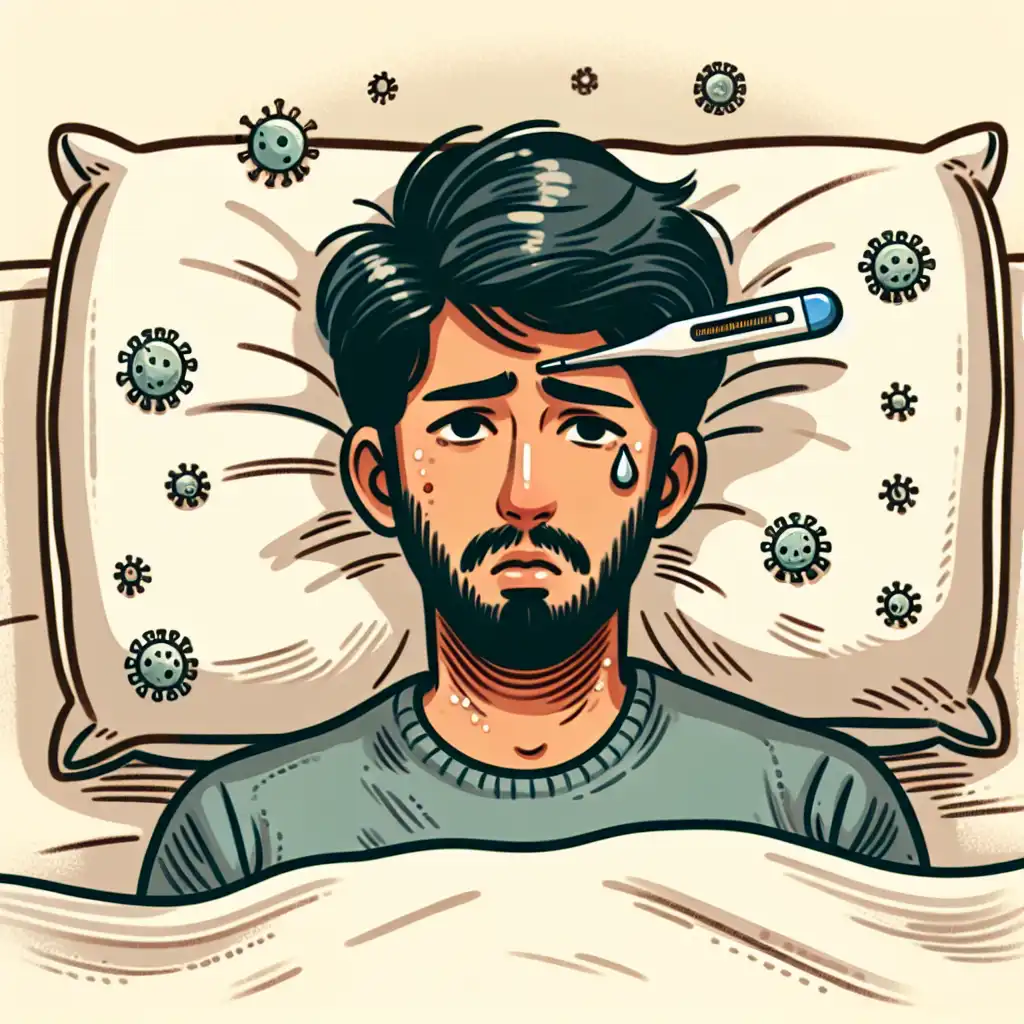
A type of microorganism that causes diseases in humans and animals.
He caught a virus and had to stay home from school.
virus
ˈvaɪrəs
Loading…
ˈvaɪrəs
A type of microorganism that causes diseases in humans and animals.
He caught a virus and had to stay home from school.

ˈvaɪrəs
A program or piece of code that is loaded onto your computer without your knowledge and runs against your wishes.
Her computer got a virus that deleted all of her files.

ˈvaɪrəs
Something that spoils or negatively affects something else.
His negativity is a virus that spreads to the whole team.
Audio could not be loaded. Please try again later.
A virus is a small living thing that can make you sick. It can enter your body and cause infections or diseases like the flu or COVID-19. You can catch a virus from someone else who is infected with it, such as by shaking hands or breathing in their sneeze or cough. You may also get a virus from contaminated surfaces like doorknobs or countertops. It is important to wash your hands and practice good hygiene to prevent the spread of viruses. Vaccines are also available to protect against certain types of viruses.
Bacteria and viruses are both types of microbes that can cause infections in humans, but they differ in several important ways.
Bacteria are single-celled organisms that can survive on their own outside of a host organism. They are larger and more complex than viruses, and they can reproduce on their own.
Many types of bacteria are harmless or even beneficial, but some can cause infections like strep throat or pneumonia. Bacterial infections can typically be treated with antibiotics, which target the bacteria directly.
Viruses cause a wide range of infections, including the flu, cold, and HIV. Unlike bacterial infections, there are no antibiotics that can directly kill viruses.
Bacteria are independent single-celled organisms that can cause infections, while viruses are tiny particles that require a host organism to survive and reproduce.
Open word: Bacteria →Contagion refers to the spread of a disease or illness from one person to another through touch, airborne droplets, or other means of transmission.
Contagion refers to the spread of a disease, while a virus is a specific type of infectious agent that can cause disease.
Contagion can result from a variety of pathogens, including viruses.
Open word: Contagion →A virus is a microorganism that can cause a disease.
A disease is a medical condition that causes harm to the body, either by impairing normal functioning or causing damage to tissues or organs.
In other words, a virus is a tiny thing that can get inside your body and cause a disease. Not all diseases are caused by viruses though - some are caused by bacteria, parasites, or other factors.
For example, the flu is a disease that's caused by a virus. But cancer is a disease that's not caused by a virus - it's caused by uncontrolled growth of cells in the body.
- A virus is a tiny organism that can cause a disease
- A disease is a medical condition that causes harm to the body
Open word: Disease →Germ is a broad term that refers to any microorganism that can cause disease, including bacteria, viruses, and fungi.
A virus is a specific type of germ that is smaller than bacteria and cannot survive outside of a living host.
Germs can be found on surfaces, in soil, and in the air. They are everywhere and some can make us sick. Bacteria, for example, can cause infections like strep throat or pneumonia.
Overall, germs are a general term used to describe any organism that can cause illness, while viruses are a specific type of germ that requires a host to survive.
Open word: Germ →Infection refers to the invasion and multiplication of disease-causing microorganisms inside a living host's body. This microorganism could be a virus, bacteria, or fungi.
Infection is a more general term that can be caused by any pathogen.
A virus is a type of microorganism that requires a living host to multiply and cause an infection.
A virus cannot replicate or survive outside a host cell. The virus is a specific type of microorganism that can cause an infection.
In simpler terms, an infection is a condition where harmful microorganisms invade and multiply inside a host body, while a virus is a type of microorganism that can cause an infection.
Open word: Infection →Microbes are tiny living organisms such as bacteria, fungi, and protists that can be found all around us. Some microbes are helpful, such as those that help you digest your food, while others can make you sick, like the bacteria that cause strep throat.
Viruses are much smaller than microbes and are not considered to be living organisms. They are essentially packages of genetic material surrounded by a protein coat that can cause disease in humans, animals, and plants.
Unlike microbes, viruses cannot survive without a host cell to infect and reproduce.
Microbes are applicable in areas such as medicine, agriculture, and food production. For example, certain bacteria are used to ferment foods such as yogurt and cheese, while other bacteria can be used to clean up pollutants in the environment.
Open word: Microbe →A parasite is an organism that lives on or inside another organism, known as the host, and benefits at the host's expense.
Parasites can cause various diseases and health problems in the host.
A virus is a microscopic infectious agent that replicates inside the living cells of an organism. Unlike parasites, viruses do not have the ability to live on their own and require a host cell to reproduce.
Parasites are applicable in situations where an organism is living off of another organism. Examples of parasites include lice and tapeworms.
Open word: Parasite →A pathogen is a microorganism (like bacteria, fungi, or protozoa) or even a parasite, that has the potential to cause disease or infection in a host it gets access to.
A virus is a specific type of pathogen. It is a tiny infectious agent that replicates only inside the living cells of other organisms, and can cause a wide range of diseases, like the flu or COVID-19.
So, all viruses are pathogens, but not all pathogens are viruses.
Pathogens can also include bacteria, fungi, protozoa or even parasites that can cause harm to living organisms.
How the pathogen infects or harms a host will depend on the pathogen, how it enters the body, and the host's immune system response to the pathogen.
Open word: Pathogen →all the sample vials have broken. The virus is contained for now, but unless you can destroy it, the vents will soon open and unleash a deadly airborne plague. Without hesitation you grab your HazMat suit and get ready to save the world.
Watch on YouTube ↗I don't think you should be ashamed of anybody that you know that has AIDS. You should stand as close to them as you can and help them out as much as you can. I'm a strong believer in that and that's why I try to do that for everyone I know that has the virus.
Finally we need lots of advanced R&D in areas of vaccines and diagnostics. There are some big breakthroughs like the Adeno-associated virus, that could work very very quickly.
Watch on YouTube ↗Humanity is a virus.
his blanket on top of the wasp cocoons giving them an extra layer of protection scientists believe the same wasp virus that infected it weeks before has now invaded the caterpillars brain and
Watch on YouTube ↗The AIDS virus is not more powerful than God.
kilometers high bacterial type organisms were the first life on earth and they've dominated our planets ever since excluding viruses which by most definitions are not alive bacteria are
Watch on YouTube ↗If a healthy person were placed on the other side of a room from a person who was sick with AIDS, the AIDS virus would not be able to drift across the room through the air and infect the healthy person.
happened yet influenza pandemic we face with the potential to kill millions worldwide what would the next one look like it's a difficult question because historically flu pandemics have all been slightly different there were different strains of the virus and
Watch on YouTube ↗What we worry about is actually the potential negative aspects of wearing a mask, where people are not protecting their eyes, or other aspects of where the virus could enter your body, and that gives you a false sense of confidence.
Unlike variolation which used actual smallpox virus to try to protect people, vaccination used the far less dangerous cowpox virus. The medical establishment, cautious then as now, deliberated at length over his findings before accepting them. But eventually vaccination was gradually accepted
Watch on YouTube ↗To some degree, it seems like around the country people are just living life like there is no virus. And that's scary.
the virus replicates within helper T cells, destroying many of them in the process. During this stage patients often experience flu-like symptoms, but are typically not yet in mortal danger. However for a period ranging from a few months to several years,
Watch on YouTube ↗This virus is an enemy that the entire country underestimated from day one and we have paid the price dearly.
like helping cells adhere to their neighbors or binding to nutrients the cell will need. Animal and plant cells have cell membranes. Only plant cells have a cell wall, which is made of rigid cellulose that gives the plant structure. The virus cell that was sneezed into your lungs is sneaky. Pretending to be a friend,
Watch on YouTube ↗I had COVID a week before they made the announcement. I couldn't breathe and I couldn't tell if it was my heart or my lungs. I got to the hospital and I said, 'I've been having this heart attack for three days' and they plugged me into the machines and everything and I had a swollen heart and a virus. I really seriously thought I was going to die.
The malaria parasite on the other hand, blocks an enzyme that helps the mosquitoes feed, forcing them to bite over and over and over again. The rabies virus may cause that snarling slobbering behavior by putting the immune system into overdrive. But whatever the method, when you think about how effectively
Watch on YouTube ↗No matter how successful we are in fighting the threat of covid-19 at home, we will not end the suffering and fear created by the virus unless we also combat it around the world.
It begins by attacking the immune system's cells and neutralizing its responses, allowing the virus to proliferate. Starting anywhere from two to twenty days after contraction, initial symptoms like high temperature, aching, and sore throat
Watch on YouTube ↗In fact, a large majority of those have died and of those expected to die of AIDS, as well as of those who are infected with the virus, are in sub-Saharan Africa.