
premise
noun premise
ˈpremɪs
A statement or idea that forms the basis for a reasonable line of argument or actions
The core premise of her argument was that the economy was improving.
premise
ˈpremɪs
Cargando…
ˈpremɪs
A statement or idea that forms the basis for a reasonable line of argument or actions
The core premise of her argument was that the economy was improving.
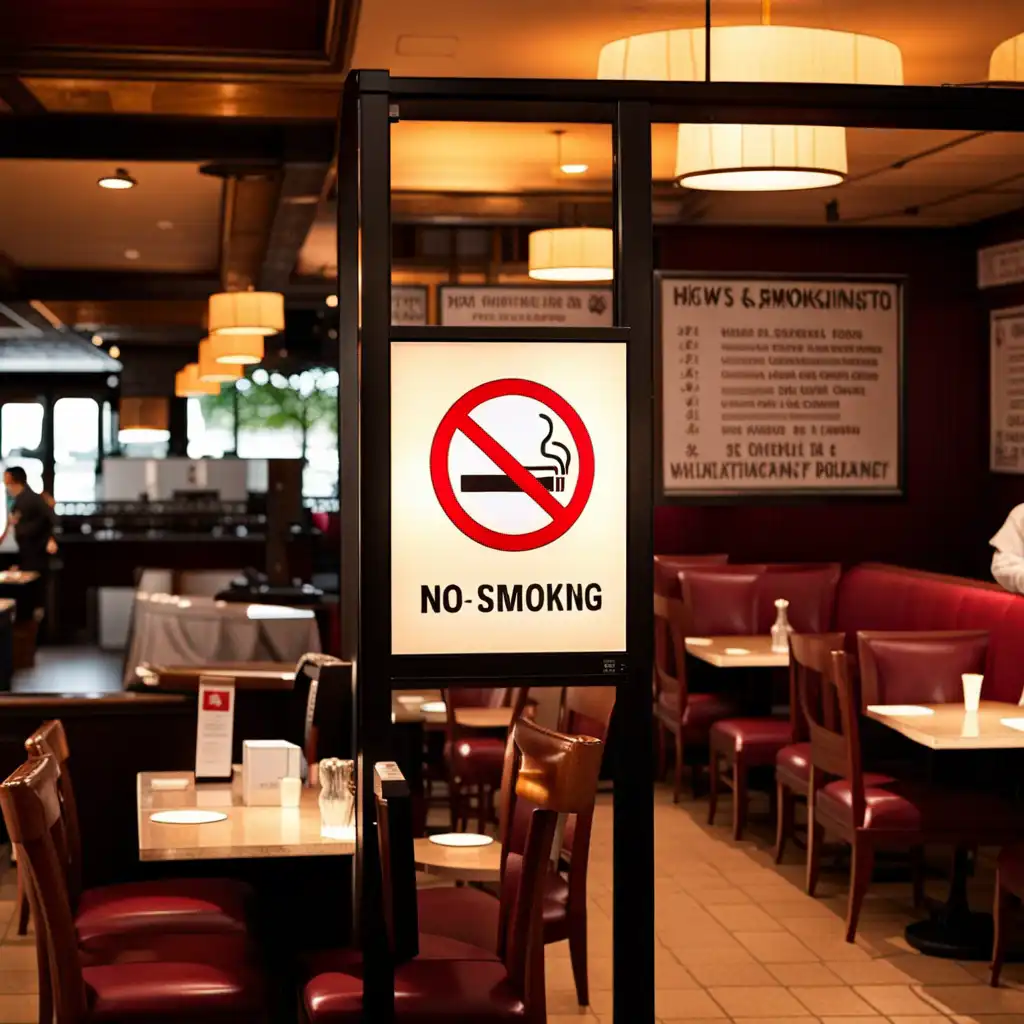
ˈpremɪs
A place where business, entertainment, or professional activities take place
We were asked not to smoke inside the premises of the restaurant.
ˈpremɪs
In logic, a statement that is assumed to be true for the sake of argument within a system
In a logical argument, you must accept the premise before you can debate the conclusion.
No se pudo cargar el audio. Inténtalo de nuevo más tarde.
The word 'premise' means the basic idea or assumption that something is based on. It is commonly used in writing, speaking and thinking. For example, if we say "The premise of this argument is that all people have the right to be treated equally," it means that the argument is based on the idea or assumption that everyone should be treated the same. In everyday language, it can also refer to the building or property where a business or event takes place. So, if we say "The premise of the restaurant is quite small," it means the property or building where the restaurant is located is not very large.
The main difference between assumption and premise is how they are used in an argument or discussion.
An assumption is a belief or idea that is taken for granted, without evidence or proof. It is an untested assertion that someone makes.
For example, if someone says that all teenagers are lazy, that is an assumption because there is no proof that all teenagers are like that.
In summary, assumptions are untested beliefs, while premises are proven statements. When making an argument or discussion, it is important to use premises instead of assumptions.
Abrir palabra: Assumption →A hypothesis is an educated guess or proposed explanation for something that is yet to be proven or tested.
It is usually used in scientific research where a researcher might come up with a hypothesis to explain a specific phenomenon, and then design experiments to test whether that hypothesis is correct or not.
A hypothesis is a proposed explanation that is yet to be tested, while a premise is a statement or proposition used as the basis for an argument.
Abrir palabra: Hypothesis →A postulate is an assumption or idea that is accepted without proof.
In simpler terms, a postulate is something you believe to be true but cannot prove, while a premise is something you use to support your argument or claim.
Abrir palabra: Postulate →A presupposition is an assumption or a belief that is taken for granted in a given situation or context. It is a belief that is considered to be true without any proof or evidence.
The main difference between premise and presupposition is that a premise is a statement used to support a conclusion, and a presupposition is an assumed belief or assumption that is taken for granted.
Both can be used in arguments, debates, or discussions, but the premise is more directly related to the argument's conclusion, while presupposition is more underlying and implicit.
Abrir palabra: Presupposition →A proposition is a statement or claim that can be true or false.
It is not necessarily used as part of an argument, but rather as a standalone idea that can be debated or discussed. For example, "The earth is round" is a proposition that can be debated and proven or disproven.
A premise is used as a starting point to form a logical argument, while a proposition is a standalone statement that can be debated or discussed.
Abrir palabra: Proposition →Both premise and supposition are used to convey an assumption or belief about something. The difference lies in how they are used.
Supposition refers to an unproven assumption or belief about something that may or may not be true. It is a conjecture or hypothesis that requires further investigation or proof.
For example, "I have a supposition that aliens exist, but until we have concrete evidence, it remains only a supposition."
A premise is a fact or evidence that you can use to justify your argument or theory, while a supposition is a belief that you hold but cannot yet prove.
Abrir palabra: Supposition →A theory is a more developed and tested idea that explains how something works or why something happens.
For example, "The theory of evolution explains how species have evolved over time through natural selection."
A premise is an initial idea or starting point, while a theory is a well-supported explanation. Premises are applicable in creative writing or argumentation, while theories are applicable in scientific research and analysis.
Abrir palabra: Theory →Thesis refers to a statement that is put forward as the main idea or argument of a piece of writing.
It is usually a statement or an opinion that is supported by evidence, arguments, or reasoning. For example, the thesis of an essay could be "Social media has a positive impact on modern communication," and the writer will then use evidence and arguments to support this claim.
To summarize, a premise is a statement used to support a conclusion, while a thesis is the main idea or argument of a piece of writing.
Abrir palabra: Thesis →They argue that it doesn't reveal anything because its premise is so unrealistic that study participants don't take it seriously. But new technology is making this kind of ethical analysis more important than ever. For example driver-less cars may have to handle choices
Ver en YouTube ↗The democratic system is premised on trust in the masses' wisdom. We believe that the collective is wiser than its parts and that, at the end of the day, it shall make the right choices and take the right decisions.
it's a pretty simple premise. Get an addict all the people in their life gather them together, confront them with what they're doing and they say if you don't shape up, we're going to cut you off. So what they do is they take the connection to the addict, and they threaten it they make it contingent
Ver en YouTube ↗The Lobster' is very particular, and we did need to create a very specific world with specific rules so the whole premise would work.
be I'm not here to be didactic or professorial in any way it's like a funhouse I know nothing that's the premise I'm a humble student
Ver en YouTube ↗I'm not a fast writer, and I find the process of writing a first draft to be painful and frustrating. Usually, I start with a character, a premise, and some image that gives me a particular feeling.
of killing them we rather advised him to put the better burglar proving in security doors on their premises to keep them out and sunset nobody is complaining again but monkeys do get shot and they have no official protection happily one policeman is not
Ver en YouTube ↗If we start - premise that the information is mine, and we give the individual's rights, we worry about what happens during a breach. If you try to protect access to it, as opposed to not even making it available, you have less to worry about who will break the wall.
along millions of people around the world would love to not see people die or suffer unnecessarily from illnesses that they could be prevented from I live under the premise that all lives are of
Ver en YouTube ↗I don't think it's an incredibly radical premise to try and have sympathy for someone who has made a mistake.
he made drip or action paintings following a similar premise, though he developed a signature technique and never looked for images or messages hidden in the works. First he took the canvas off of the easel and laid it on the floor, a subversive act in itself.
Ver en YouTube ↗The premise of insurance is to spread the risk. It's the premise of homeowner's insurance, of car insurance, and of health insurance. It's one reason why it's important to have insurance when you're healthy, so that when you get sick, you won't go sign up just when you get sick, because that increases the cost for everyone.
We live in a three-dimensional world where everything has length, width, and height. But what if our world were two-dimensional? We would be squashed down to occupy a single plane of existence, geometrically speaking of course. And what would that world look and feel like? This is the premise
Ver en YouTube ↗I just thought 'Blue' was a great premise and a great set-up for conflict. I love the idea of exploring a character who's living a secret life and is going to drown in the lies she's telling.
generally on how to help their readers find an extra hour in the day. And the idea is that we'll shave bits of time off everyday activities, add it up, and we'll have time for the good stuff. I question the entire premise of this piece but I'm always interested in hearing what they've come up with before they call me.
Ver en YouTube ↗Sometimes I'll get a premise, you know, for a book. In fact, I get those quite often. And I don't commit to it until I really know the voice of that character. It's almost as if the character is speaking to me.
so that those ideas will remain valuable, and people will be incentivized to come up with more ideas, and the culture will be more innovative. But I think there's a case to be made that we should spend at least as much time if not more, valuing the premise of connecting ideas and not just protecting them.
Ver en YouTube ↗Most urgently, women's identity must be premised upon our 'beauty' so that we will remain vulnerable to outside approval, carrying the vital sensitive organ of self-esteem exposed to the air.
He knew the underlying facts, but he also knew that facts do not drive conversation online. What drives conversation online is emotion. See the original premise of social media was that it was going to bring us all together, make the world more open and tolerant and fair And it did some of that.
Ver en YouTube ↗How is AIDS research to progress when the premise of science is questioning but the premise of questioning HIV is considered so dangerous that even venturing into the facts is too great a risk?