chloride
noun chloride
ˈklɔːraɪd
A compound that has chlorine and one more element or group of elements.
Sodium chloride is the scientific name for table salt.
chloride
ˈklɔːraɪd
Chargement…
ˈklɔːraɪd
A compound that has chlorine and one more element or group of elements.
Sodium chloride is the scientific name for table salt.

ˈklɔːraɪd
A negative ion made of chlorine.
The chloride ion has a charge of -1.
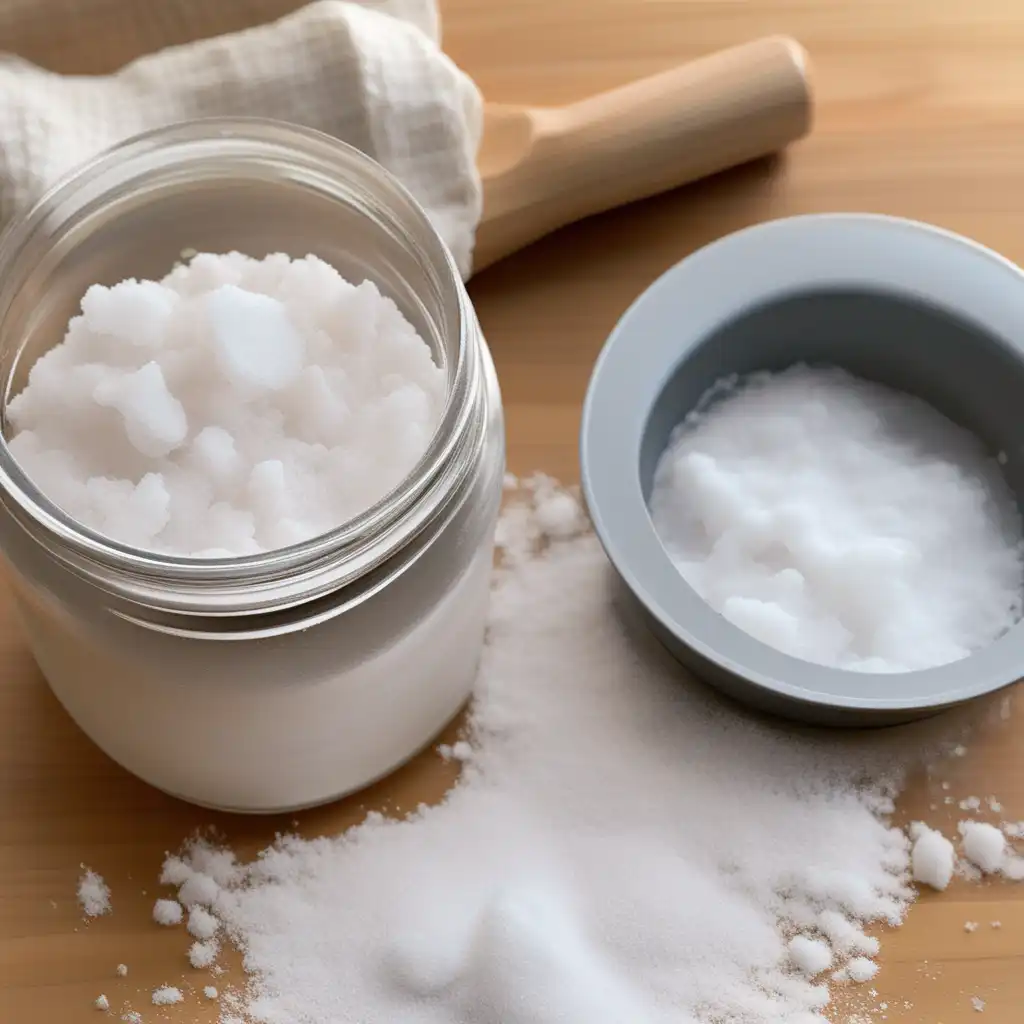
ˈklɔːraɪd
A type of salt that is used for de-icing or making play dough.
She added magnesium chloride to the solution.
Impossible de charger l’audio. Réessayez plus tard.
Chloride is a word that is often used in science and chemistry. It refers to a combination of the element chlorine with another element, such as sodium or potassium, which creates a type of salt. Chloride can also refer to a type of chemical compound, such as hydrochloric acid. You might come across the word chloride if you are studying science or if you are reading about certain products, like cleaning agents or salt substitutes, that contain this substance. Overall, chloride is a term used to describe a type of salt or chemical compound that is created by combining the element chlorine with another element.
Anion is a term used to describe a negatively charged ion, which can be made up of many different elements. Chloride specifically refers to an anion made up of chlorine.
In simpler terms, anion is a general term for any negatively charged ion, whereas chloride specifically refers to a negatively charged ion made up of chlorine.
Ouvrir le mot: Anion →Electrolytes are substances that conduct electricity when dissolved in water. They can include chloride, as well as other ions such as sodium, potassium, calcium, and magnesium.
Electrolytes are important for various bodily functions including muscle contractions, nerve impulses, and blood pressure regulation.
Chloride is a specific molecule that is important for various bodily functions, while electrolytes are a group of substances that are necessary for electrical and chemical processes in the body.
Both chloride and electrolytes have important roles in maintaining the health of our bodies.
Ouvrir le mot: Electrolyte →Salt is a broad term that refers to any compound that is made up of positively and negatively charged ions. Chloride is a specific type of ion (a negatively charged atom) that is commonly found in salts.
For example, table salt is made up of sodium ions (positively charged) and chloride ions (negatively charged).
The term salt is more commonly used in everyday language to refer to substances that are used for seasoning or preserving food, such as table salt or rock salt.
Salt is a general term for a broad class of compounds, while chloride is a specific type of ion that is commonly found in salts.
The term salt is more commonly used in everyday language, while chloride is typically used in technical contexts.
Ouvrir le mot: Salt →also influence flame color. For instance any unreacted carbon atoms from the logs form little clumps of soot that rise into the flames and emit the yellow-orange light we associate with a campfire. Substances like copper calcium chloride,
Voir sur YouTube ↗Companies are experimenting with replacing sodium chloride with potassium chloride, because most of the health problems come from sodium. It works for some products, but if you diminish the amount of sodium, people want sugar and fat instead.
So I brought my two biochemistry friends and we went to talk to him about our crazy theory. And that theory was that life produces all small molecules, so many molecules. Like everything I could think of but not being a chemist. Think about carbon dioxide carbon monoxide, molecular hydrogen molecular nitrogen, methane methyl chloride --
Voir sur YouTube ↗Whereas, generally speaking, zinc reacts suitably only with the first members of the alkyl iodides, with magnesium it is possible to use bromides, iodides, and in many cases, chlorides.
experiments that it seemed to work salt that goes into the ground can be a problem if it builds up too high because plants can't grow calcium chloride we knew could help the texture of the cucumbers and from an environmental
Voir sur YouTube ↗or they can separate based on charge. The membranes that are used to separate salt and water typically separate based on charge. And these membranes are negatively charged, and help to repel the negatively charged chloride ions
Voir sur YouTube ↗polonium named for Marie's native Poland, and radium the Latin word for ray. They also coined the term radioactivity along the way. By 1902 the Curies had extracted a tenth of a gram of pure radium chloride salt from several tons of pitchblende, an incredible feat at the time.
Voir sur YouTube ↗That attraction binds together compounds like table salt, which is made of positively charged sodium ions stuck to negatively charged chloride ions. But a gecko's feet aren't charged and neither are the surfaces they're walking on. So what makes them stick?
Voir sur YouTube ↗contains high amounts of sodium and chloride. The cells pump these ions into a hollow tube that runs through the sweat gland. Then because it's saltier inside the tube than outside,
Voir sur YouTube ↗a spongy plastic used in insulation. Soon after came polyvinyl chloride or vinyl which was flexible yet hardy. Acrylics created transparent, shatter-proof panels that mimicked glass.
Voir sur YouTube ↗and one positively charged ion. And the attraction between these opposite charges is called an ionic bond. This is the kind of sharing where you just give away your toy to someone else and then never get it back. Table salt sodium chloride,
Voir sur YouTube ↗and that's what that image on the left is -- gradually getting encrusted with the calcium carbonate. So after a while we could take that out, use it as a lightweight building block. And if you think about the carbon in that, that would have come out of the atmosphere into the sea and then locked away in a building product. The next thing is sodium chloride.
Voir sur YouTube ↗