boggy
adjective boggy
ˈbɑːɡi
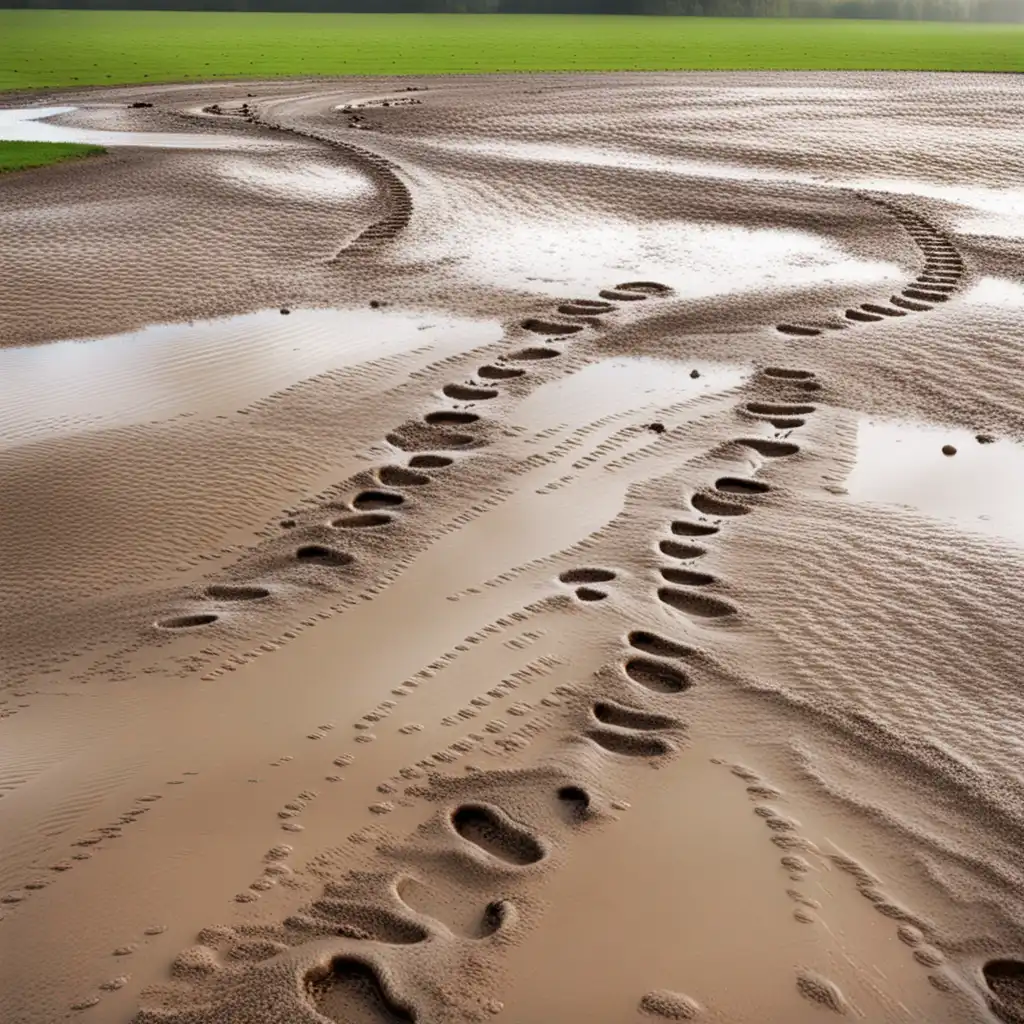
Consisting of, or similar to, a bog or marsh; wet and muddy.
After the heavy rain, the fields turned boggy and it was hard to walk through them.
boggy
ˈbɑːɡi
Cargando…
ˈbɑːɡi
Consisting of, or similar to, a bog or marsh; wet and muddy.
After the heavy rain, the fields turned boggy and it was hard to walk through them.
No se pudo cargar el audio. Inténtalo de nuevo más tarde.
The word 'boggy' is used to describe something that is soft and wet, like muddy ground. You might use it to describe a swampy area, a wet field, or a muddy path. It's not a very common word, but it's useful for describing the texture of something that is wet and soft.
The words boggy and marshy both describe wet, muddy ground.
However, boggy means that the ground is very soft and spongy, where your feet can sink in, while marshy means that the ground is more shallow and has a layer of water on top.
Boggy is often used to describe land that is difficult to walk on or build on, while marshy describes land with a lot of grass and low-lying shrubs, often found near bodies of water.
Abrir palabra: Marshy →Muddy refers to ground that is covered in a thick layer of wet soil, usually after rain or near muddy water bodies. The ground feels soft and slippery.
Boggy describes terrain that is waterlogged and muddy describes ground covered in wet dirt.
Abrir palabra: Muddy →The term slushy describes a substance that is partially melted snow or ice, leaving it wet and heavy. Slush usually refers to a mixture of snow and water that forms when it begins to melt.
Essentially, boggy describes wet and spongy land, while slushy describes partially melted snow or ice.
Abrir palabra: Slushy →Soft refers to something that is easy to bend, mold, or press with little resistance. It is applicable when referring to materials like cloth or cushions, or feelings such as gentle, tender or soothing.
The word boggy describes a specific type of wet ground making it difficult to move over, while soft refers to texture or feeling that is pliable or gentle.
Abrir palabra: Soft →Both boggy and soggy mean wet, but boggy usually refers to an area of land that is very soft and wet, as if it has a lot of mud or peat.
Soggy can describe anything that is excessively wet, such as a towel or a piece of bread that has been soaked in water.
Boggy describes a soft and wet area of land, while soggy can describe anything that is excessively wet.
Abrir palabra: Soggy →The term swampy describes an area of land that is waterlogged and has stagnant water. Swamps are usually found in marshy areas and may be inhabited by crocodiles and other reptiles.
Boggy areas are wetter than swampy areas, but both may be inhospitable to human habitation due to the presence of mosquitoes and other insects.
Abrir palabra: Swampy →Boggy refers to a soil or ground that is soft and wet, but not necessarily completely saturated with water. Whereas, the word waterlogged refers to a soil or ground that is completely saturated with water, causing the ground to become heavy and difficult to walk on.
A waterlogged ground could be a flooded field or a soil after heavy rain or flooding.
In simple words, boggy means only a little wet, while waterlogged means completely wet and heavy.
Abrir palabra: Waterlogged →Boggy means a place that is often wet and muddy, making it difficult to walk through. It's applicable when describing an area that contains a lot of waterlogged soil, moss, and plants.
Wet simply means a surface is covered with moisture. It's applicable when describing an area that has recently experienced rain or water has been spilled.
Boggy refers to a specific type of wet condition that makes movement difficult, while wet is a general term used to describe the presence of moisture.
Abrir palabra: Wet →Wild Lions Swim in a...
Ver en YouTube ↗Bobby Bones Descends a...
Ver en YouTube ↗