womankind
noun womankind
ˈwʊmənkaɪnd
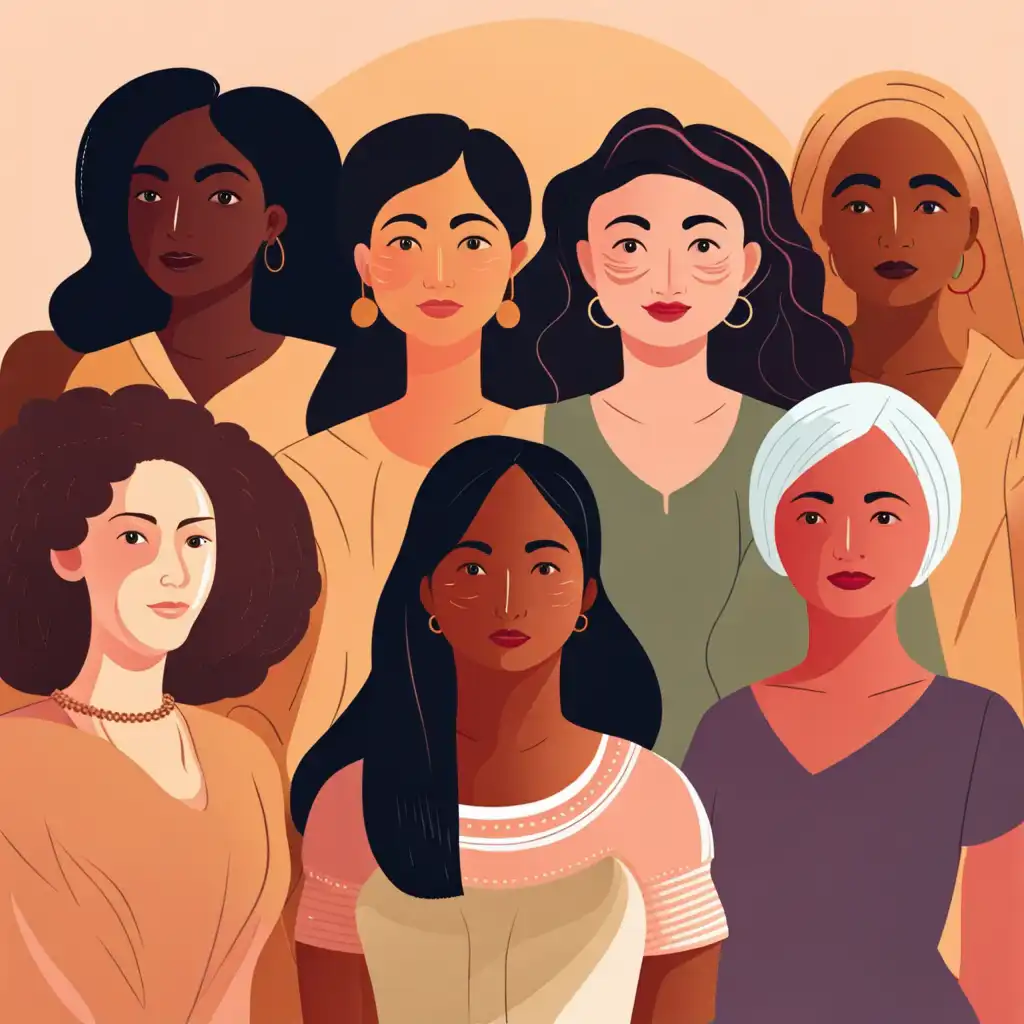
All women in the world as a group or category
She made a significant contribution to womankind through her tireless advocacy for women's rights.
womankind
ˈwʊmənkaɪnd
Loading…
ˈwʊmənkaɪnd
All women in the world as a group or category
She made a significant contribution to womankind through her tireless advocacy for women's rights.
Audio could not be loaded. Please try again later.
The word 'womankind' is used to refer to all women collectively, as a group or as a gender. It can be used to discuss issues related to women's rights, achievements, and experiences. For example, "Womankind has made significant progress in the workplace over the past few decades" or "Her speech resonated with the struggles and triumphs of womankind." It is not a word that is commonly used in everyday speech, but more often in formal or academic writing.
Femininity refers to the qualities, attributes, or characteristics traditionally associated with being female, such as sensitivity, grace, and nurturing.
Femininity refers to traditional and often narrow gender roles and traits associated with being a woman, while womankind is a broader term that acknowledges and celebrates the diversity of women.
Open word: Femininity →Lady refers to a specific woman while the word womankind refers to all women in general. For example, if you were talking about a specific woman, you would say "the lady over there" but if you were talking about women in general, you would say "womankind has made great advancements in various fields." Lady is more specific and applicable to a particular woman, while womankind is more general and applicable to all women.
Open word: Lady →Sisterhood refers to the bond between women who share a common interest or experience, like a sorority or a group of close female friends.
Both terms are applicable in different contexts. Sisterhood is used more in a social or interpersonal sense, while womankind is used more in a broader, societal sense.
Open word: Sisterhood →Woman refers to an individual adult female human. It's used to describe a single female person.
The term womankind, on the other hand, refers to all women collectively as a group, and it can also include women throughout history.
It's often used to describe the qualities or characteristics that unite all women together as a social group.
Woman is used when referring to one specific person while womankind is used when talking about women as a group.
Open word: Woman →Womanhood refers to the state of being a woman or the qualities and characteristics associated with being a woman.
It is often used to describe the solidarity and shared experiences of women around the world. While womanhood typically refers to an individual woman's identity, womankind refers to women as a whole.
Open word: Womanhood →Womankind refers to all women as a collective group, such as "the progress of womankind in society." Womanliness refers to the qualities or characteristics that are typically associated with being a woman, such as empathy, nurturing, and grace.
It is applicable when describing attributes or behaviors that are considered feminine or traditionally associated with women, such as "her womanliness shone through as she comforted her friend."
Open word: Womanliness →Deborah Rhodes: A tool...
Watch on YouTube ↗Ancient, woman-centered words and beliefs never, like, fall off the planet. Having long done taken on a life of their own, they - like womankind - evolve, and survive. Chameleon style.
Being pregnant and carrying a child is a blessing unique to womankind and a mother instinctively wants the best for her child.
To the mass of mankind - meaning also womankind - marriage may be the only possible thing; but to the individual, it may be the one thing impossible.
If any foes of mine are there, I pardon every one: I hope that man and womankind will do the same by me.
I think it would be difficult to argue that I'm a net-negative for womankind. I've tried pretty hard to bring in unusual female voices and perspectives. Not just young women and not just white women, either. I don't know that I'm the best target for improvement. I don't know that I'm the problem.
Every woman who chooses - joyfully, thoughtfully, calmly, of their own free will and desire - not to have a child does womankind a massive favour in the long term.
Thank God I have four sons. The mother/daughter relationship is one of mankind's great mysteries, and for womankind, it can be hellaciously complicated. My mother and I are quintessential examples of the rewards and frustrations, and the joys and infuriations it can yield.
In 1861, Bachofen published his radical thesis that the Amazons were not a myth but a fact. In his view, humanity started out under the rule of womankind and only switched to patriarchy at the dawn of civilization.