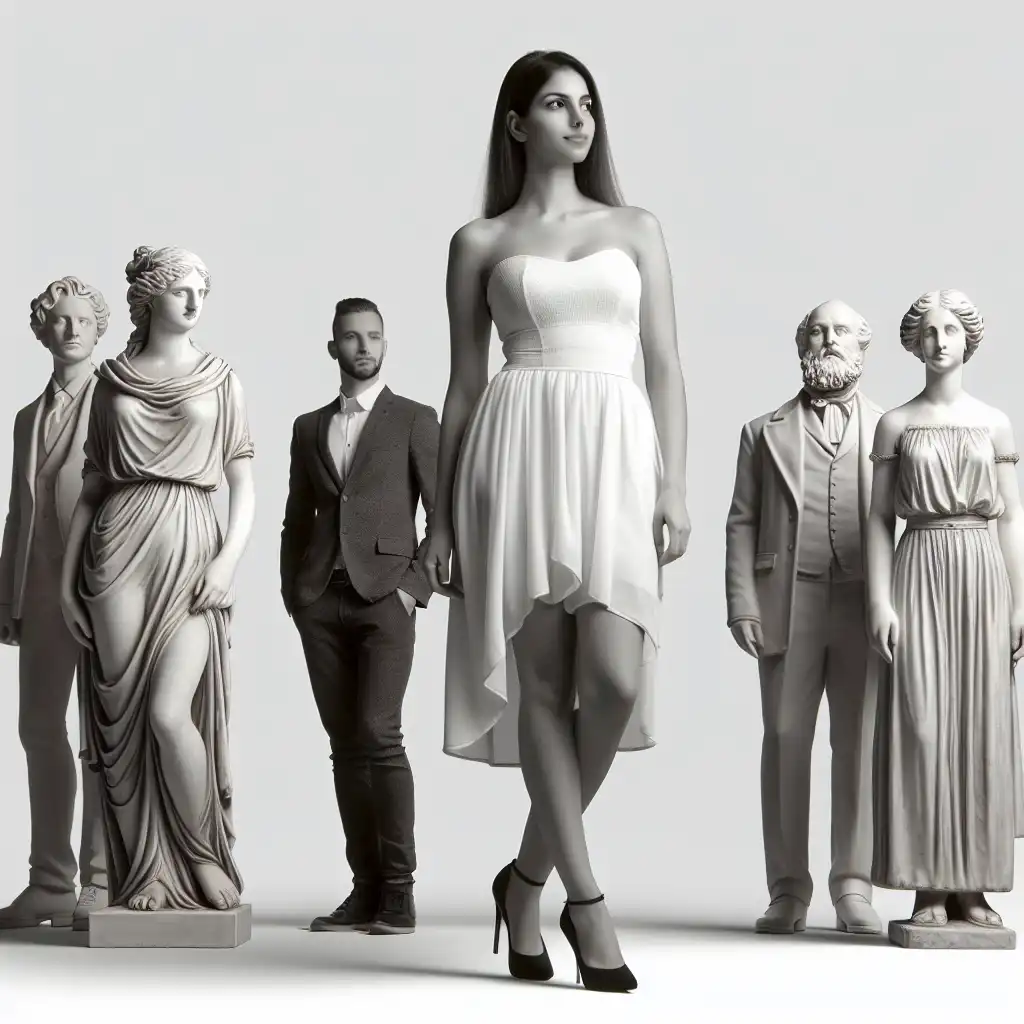
statuesque
adjective statuesque
ˌstætʃuˈesk
Tall, impressive, and dignified like a statue.
She was a statuesque woman, towering over everyone in the room with her elegance.
statuesque
ˌstætʃuˈesk
加载中…
ˌstætʃuˈesk
Tall, impressive, and dignified like a statue.
She was a statuesque woman, towering over everyone in the room with her elegance.
音频无法加载,请稍后再试。
The word 'statuesque' is often used to describe someone or something that is tall, elegant, and well-proportioned. Usually, it is used to describe a woman who has a tall and stunningly beautiful figure. You may hear this word used in reference to models, actresses or other people who have a very impressive and striking appearance. For example, "The actress walked onto the stage, statuesque in her black dress."
Elegant means graceful, refined, and tasteful.
Elegant describes a sense of grace and refinement, while statuesque describes a physical attribute of being tall and dignified.
打开单词: Elegant →Graceful means having or showing elegance or beauty of form, movement, or motion.
It describes someone or something that moves smoothly and beautifully. For example, a ballet dancer can be described as graceful.
Graceful refers to elegance in movement or motion, while statuesque refers to physical appearance or stature.
打开单词: Graceful →Impose means to force something on someone or something.
It is usually used when someone is making a demand or giving an order. For example, "The teacher imposed a strict rule on the class.".
So to summarize, impose is used in situations where someone is forcing something, while statuesque describes a physical appearance that is elegant and tall like a statue.
打开单词: Impose →Impressive means something that makes a strong impact or inspires awe. It could be used to describe a tall building, a powerful speech, or an incredible athlete's performance.
It is more descriptive and specific than "impressive."
Impressive can describe any kind of outstanding qualities or performances, while statuesque is specifically used to describe a tall, slender, and graceful appearance.
打开单词: Impressive →Both majestic and statuesque describe something that is grand or beautiful, often in a physical sense.
Majestic describes something that is dignified, powerful, or noble.
It is often used to describe landscapes, sunsets, or animals that inspire awe or admiration. For example, a mountain range might be described as majestic because it commands respect and admiration for its size and grandeur.
Majestic describes something that inspires awe, while statuesque describes something that is beautiful and graceful in a more physical way.
打开单词: Majestic →Regal usually implies a royal, majestic or dignified bearing. It is applicable to a person or thing that is elegant, imposing or impressive in a formal or grand manner.
Regal refers to an impressive and grand demeanor while statuesque refers to a tall and elegant physical build.
打开单词: Regal →State refers to a political or geographic region that has its own government and laws.
State describes a specific government or region, while statuesque describes physical appearance or characteristics.
打开单词: State →Statuesque describes a person who is not only tall, but also has an elegant and graceful appearance. It implies a sense of beauty, poise and confidence, often used to describe a woman.
Tall simply means having a height greater than average. It is a measurement of size and does not attribute any specific qualities to a person's appearance.
Statuesque describes a person's appearance while tall describes their height.
打开单词: Tall →I would say I'm voluptuous. Statuesque. Definitely curvaceous.
With 'Broadcast News,' it became a non-issue, and with 'The Piano,' it became a non-issue. Both parts were written for more statuesque women. It was nice to change people's minds about that, because that's neither here nor there.
A lot of the composing posture you see in Joanna I actually took from Lauren Bacall from 'To Have or Have Not.' I absolutely adored that movie as a kid, and I just remembered this woman who was so statuesque, and I was like, 'I want to do that.