
dismount
verb dismount
dɪsˈmaʊnt
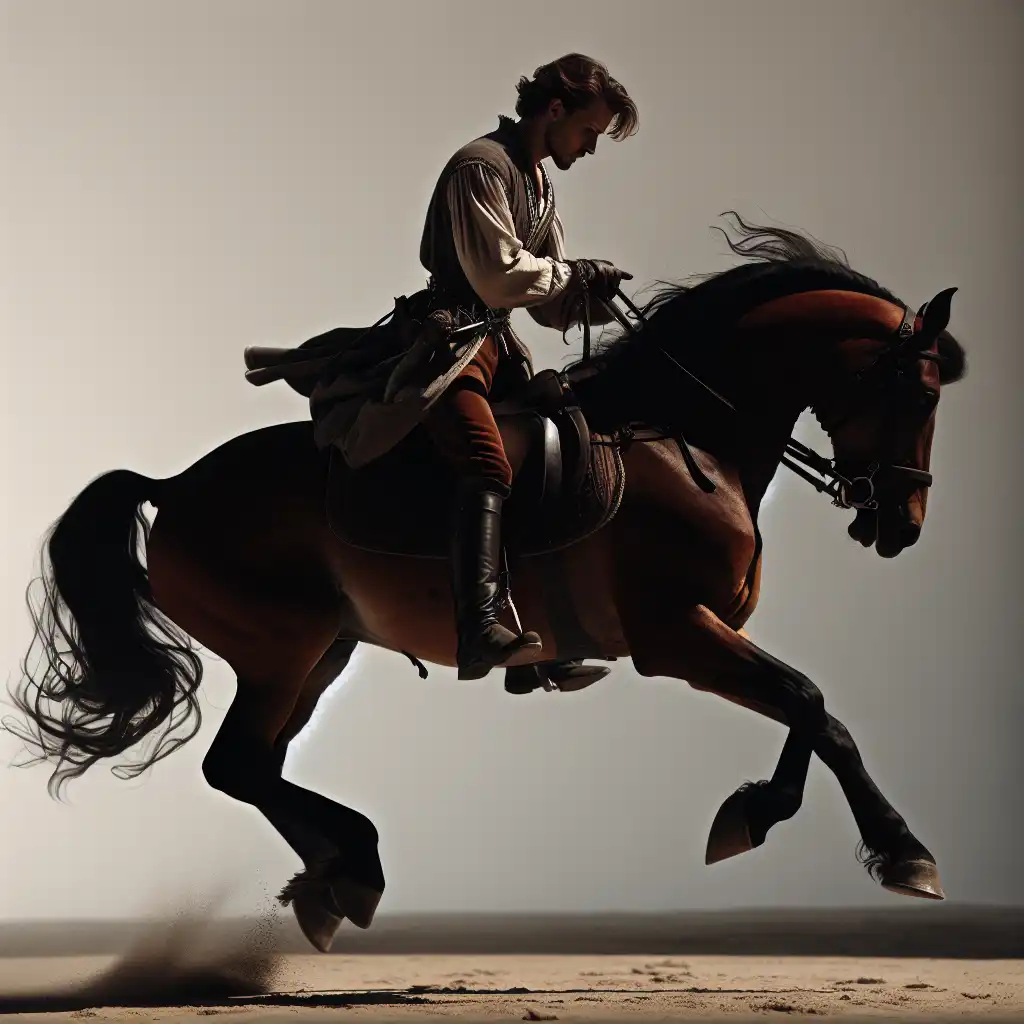
To get off something such as a horse or a bike.
After a long journey, she dismounted from her horse.
dismount
dɪsˈmaʊnt
Cargando…
dɪsˈmaʊnt
To get off something such as a horse or a bike.
After a long journey, she dismounted from her horse.

dɪsˈmaʊnt
To remove something from its support or mount.
He dismounted the painting from the wall.
dɪsˈmaʊnt
An act of getting off something such as a horse or a bike.
The rider's dismount was elegant and graceful.
No se pudo cargar el audio. Inténtalo de nuevo más tarde.
The word 'dismount' is used when someone gets off of a horse, bike, or any other object they are riding. For example, if you are riding a bike and want to get off, you would dismount the bike by putting your feet on the ground and stepping off. It is also used in sports like gymnastics when someone finishes a routine by jumping off a balance beam or a horse. So, 'dismount' is used to describe the action of getting off of something you are riding or balancing on.
Alight means to get off or exit from a mode of transportation, such as a bus or an airplane.
Alight is more general and can be used in various situations while dismount is more specific to getting off of a rideable object.
Abrir palabra: Alight →Descend refers to the act of coming down from an elevated position or moving from a higher to a lower level.
This word is often used to describe actions such as coming down stairs or a ladder, getting off a plane or descending a mountain.
Abrir palabra: Descend →Disembark is used when you are getting off a vehicle, such as a plane, ship, or train. It means to leave the vehicle after you have arrived at your destination.
To summarize, disembark is used when you are getting off a vehicle, and dismount is used when you are getting off an animal or bike.
Abrir palabra: Disembark →Dismount typically means to get off of a horse or bicycle, and is used in those specific contexts.
Get down can be used more generally to mean to descend from any height or position, such as getting off of a tall ladder or stepping down from a high platform.
It can also be used to refer to ceasing an activity or stopping doing something, such as telling someone to get down from their high horse or to get down to work.
Abrir palabra: Get down →Dismount is a term used specifically for getting off of horses, bikes, or other similar vehicles.
It is not used to describe getting off of things like chairs or couches.
Get off is a more general term and can be used for getting off of any kind of object or surface.
It can be used for getting off of chairs, beds, cars, or anything else you might sit or stand on.
Dismount is used for getting off of horses and bikes, while get off is a more general term that can be used for getting off of anything.
Abrir palabra: Get off →Dismount is used when getting off a horse or a bicycle, while leave can be used in many different situations, but generally means to go away from a particular place or situation.
For example, you would use dismount when you get off your bike after riding it, whereas you would use leave when you are finished visiting a friend's house and you go home.
Abrir palabra: Leave →ground and the time that I'm telling you about when I saw that bit of Mane on the ground that was from a meeting incidence after he after he dismounted and she decided of course she's got to give him the ceremonial smack otherwise it's just
Ver en YouTube ↗We know that dismantling old oppressive regimes is a great deal faster and easier than building new flourishing democracies. Chinggis Khaan once said, 'It was easier to conquer the world on horseback than to dismount and govern.' True validation of democracy lies less in what we tear down, and more in what we build.
But then in the first hour disaster struck. Unable to hold myself upright in the saddle, going down an oversized step, I flung forward and smacked my face on the back of the horse's head. There was panic, my head hurt fiercely, but the path was too narrow for us to dismount.
Ver en YouTube ↗You need to dismount when your horse is dead. What was relevant 20 years ago is no longer relevant today. Therefore, you need to reinvent yourself.
The traveller who aspires to reach the highlands of Tibet from Kashmir cannot be borne along in a carriage or hill-cart. For much of the way, he is limited to a foot pace, and if he has regard to his horse, he walks down all rugged and steep descents, which are many, and dismounts at most bridges.