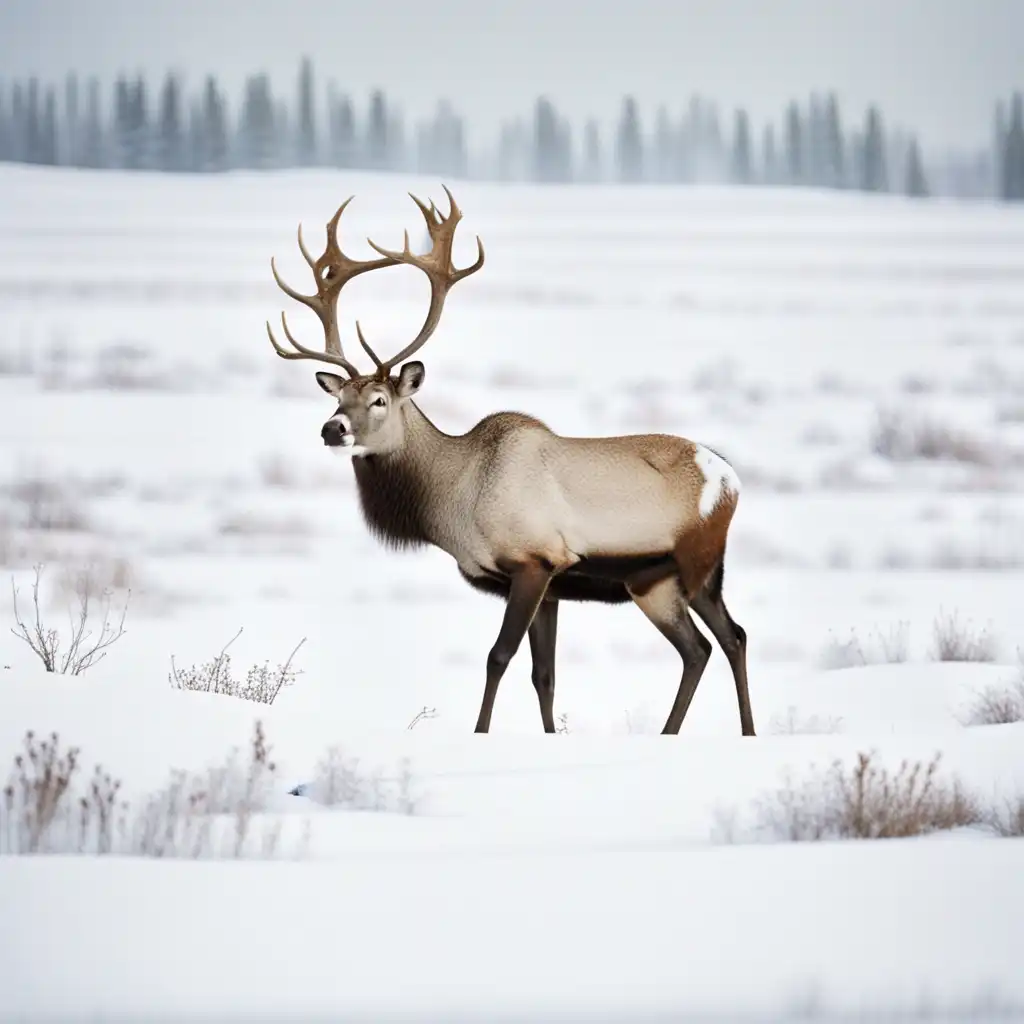
Caribou are large mammals that are also known as reindeer. They are found in the northern regions of the world, including Canada, Alaska, Scandinavia, and Russia. Caribou have big antlers and they are herbivores, meaning they only eat plants. They are important to many indigenous people for their meat, hides, and bones. In English, the word "caribou" is used to refer to this animal.
Antelope and caribou are both types of animals, but they are different in a few ways.
Antelopes are found in Africa and parts of Asia, and they are known for their slender bodies and long, curved horns. They are typically faster and more agile than caribou, and are often preyed upon by lions and other big cats.
Caribou are found in northern regions of North America, Europe, and Asia. They are also known as reindeer, and are typically larger than antelopes with broad, flat antlers.
Overall, antelopes are associated with warmer climates and are more suited for open grasslands, while caribou are adapted to colder environments and are more suited for forested and tundra regions.
Buck refers to a male deer, while caribou refers to a type of wild reindeer found in colder regions. Buck is applicable when talking about deer, while caribou is applicable when talking about North American reindeer.
Caribou and deer are both types of hoofed mammals that belong to the same family, but there are some differences between them.
They are also larger than deer and can weigh up to 700 pounds. Caribou travel in herds and are known to migrate long distances in search of food.
Deer are found in many different parts of the world, including the Americas, Europe, and Asia. They are smaller than caribou and typically have a brown coat.
Male deer, called bucks, have antlers while females, called does, do not. Deer are also more solitary animals, although they do form small groups during mating season.
Caribou are found in colder regions and have larger antlers and are larger in size, while deer are found in more diverse regions and are smaller, often without antlers on females.
Caribou and elk are both large species of deer, but they differ in several ways.
Caribou live in the northern regions of North America, Europe, and Asia, while elk are found in North America and parts of Asia.
Caribou are typically smaller and more slender than elk, with longer legs and wider hooves to help them navigate through snow and swampy terrain.
Elk are larger and more robust than caribou, with shorter legs and more compact hooves. Their antlers are usually simpler and more symmetrical than those of caribou.
In terms of their uses, caribou are often hunted for their meat and hides, while elk are sometimes hunted for sport or their antlers.
Caribou and gazelle are two different types of animals.
Gazelles are a type of antelope that are found in Africa and Asia. They are known for their speed and agility, which helps them escape from predators such as cheetahs and lions.
Gazelles are also herbivores and mostly eat grass and leaves. They are often preyed upon by carnivorous animals, making them an important part of the food chain.
Caribou are found in cold, northern regions and have large antlers and thick fur. Gazelles are found in Africa and Asia, are known for their speed, and are part of the food chain.
Caribou and moose are two different species of large, hoofed mammals. The main difference between them is their physical appearance and habitat.
Moose are found in the northern parts of North America, Europe, and Asia. They are larger and heavier than caribou, with a more robust build and a distinctive snout that looks like a shovel.
Male moose have large antlers with broad, flattened paddles, while females have smaller, more slender antlers (or no antlers at all).
Moose tend to live in forested areas and are known for their excellent swimming abilities.
Caribou look more slender and have large, branching antlers, while moose are larger and have shovel-like snouts and broad, flattened antlers (in males).
Caribou live in snowy environments and migrate long distances, while moose live in forests and are excellent swimmers.
Caribou and reindeer are the same species of deer, but they are called different names in different regions.
In North America, they are called caribou, and they are found mainly in Alaska, Canada, and Greenland. Caribou are typically larger and have longer legs and wider hooves than reindeer.
They are also more migratory than reindeer, traveling long distances between their summer and winter habitats.
In Europe and Asia, they are called reindeer, and they are found in northern regions such as Scandinavia and Russia. Reindeer are typically smaller and have shorter legs and narrower hooves than caribou.
Caribou and reindeer are the same animal but just have different names depending on where they are found.
Caribou and stag are both types of deer, but they come from different regions. Caribou are found primarily in North America, whereas stags are found primarily in Europe and Asia.
Caribou are typically larger and have broader antlers, while stags have more points on their antlers.
You would use the word caribou when referring to a North American deer, and stag when referring to a European or Asian deer.
You might vote for the horsefly or perhaps the wasp, but for many people, the worst offender is by far the mosquito. The buzzing the biting, the itching, the mosquito is one of the most commonly detested pests in the world. In Alaska swarms of mosquitos can get so thick that they actually asphyxiate caribou.
when not moving caribou spend much of the day with their heads buried in the snow the males have lost their antlers but the females keep theirs throughout the winter as mothers they need to be able to protect their excavations for beneath the snow they find a lichen
A reindeer is a deer with antlers, kind of close to caribou. They're small. It's like a big Great Dane. I don't think you could ride one. I couldn't, for sure.
each male is now crowned with spikes of unfeeling bone fighting is one reason for the male Caribous transformation and this helps solve the mystery of why antlers shed
I had all kinds of allergy problems with certain meats, and with fruits and vegetables with pesticides. So I turned to bear, caribou, venison, hippopotamus, buffalo, elk and moose. Taste-wise, buffalo and elk are tied for first. Not gamy, and loaded with protein. And very expensive, I might add.
The family fearful for his life took away all of his weapons, all of his tools. Now you must understand that the Inuit did not fear the cold; they took advantage of it. The runners of their sleds were originally made of fish wrapped in caribou hide.
I spend most of hunting season at the ranch. We all love to hunt whitetails, and we have a pretty good supply in South Texas. I also love to hunt elk in Arizona, mule deer in Utah, and I've been to Canada to hunt caribou.
Before you rip off three feet of toilet paper, consider that each year 500,000 acres of virgin boreal forest in northern Alberta and Ontario are being clear-cut to make the stuff. These forests are home to some 500 First Nation communities, as well as caribou and bears, moose and wolves, and, in the summertime, billions of songbirds.
when not moving caribou spend much of the day with their heads buried in the snow the male's have lost their antlers but the females keep theirs throughout the winter as mothers they need to be able to protect their excavations for beneath the snow they find a lichen
record of human caribou interactions what we're doing with all these bones is trying to put together a picture of what this ecosystem was like centuries to thousands of years ago the Arctic refuge is an amazing place gorgeous landscapes incredible wildlife viewing beautiful
during the short summers which range from fifty to sixty days a variety of wildlife including arctic foxes polar bears and caribou live in the Arctic tundra global warming is changing the