atom
noun atom
ˈætəm
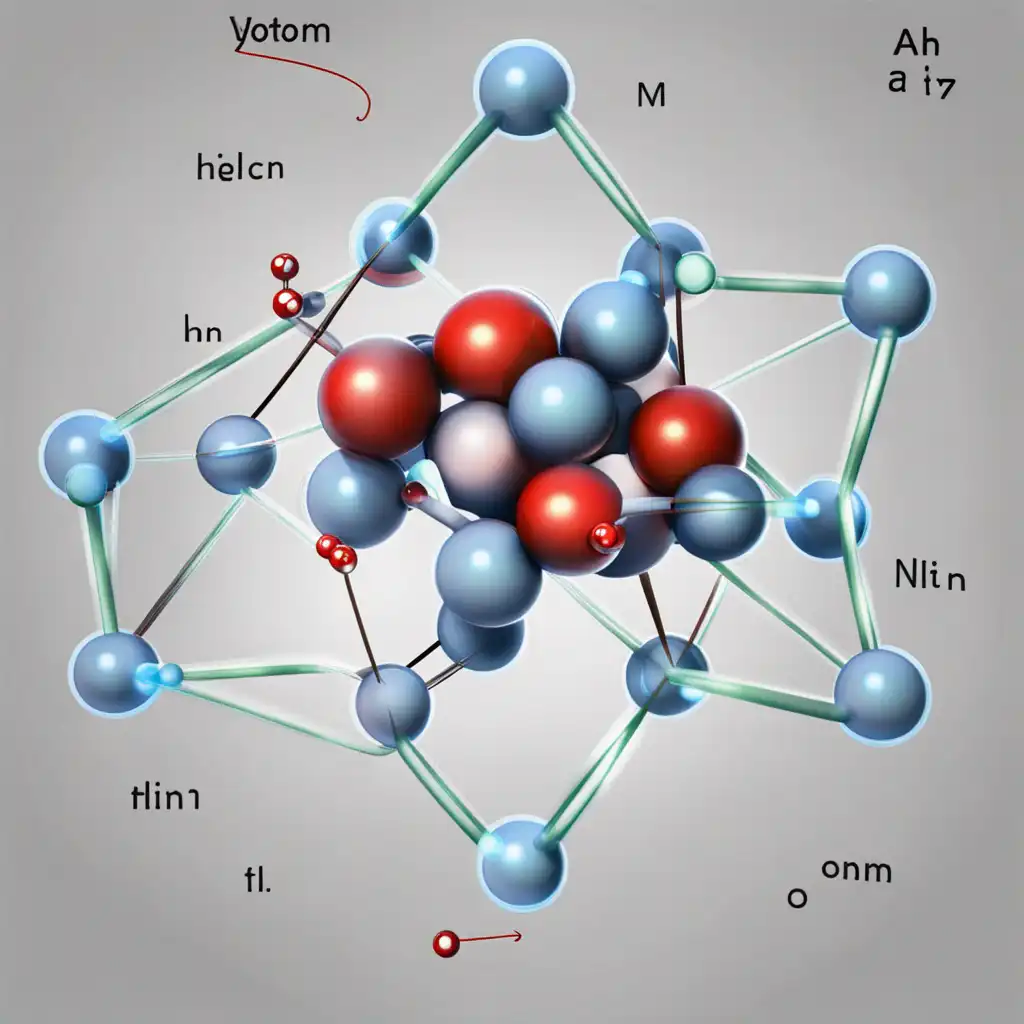
The smallest unit of a chemical element that still keeps its properties
An oxygen atom combines with two hydrogen atoms to form a molecule of water.
atom
ˈætəm
लोड हो रहा है…
ˈætəm
The smallest unit of a chemical element that still keeps its properties
An oxygen atom combines with two hydrogen atoms to form a molecule of water.

ˈætəm
An extremely small amount of something
There is not an atom of truth in his accusations.

ˈætəm
In computing, it refers to a basic unit of data with metadata, commonly in web feeds
RSS and Atom are popular XML-based feed formats.
ऑडियो लोड नहीं हो सका। कृपया बाद में फिर कोशिश करें।
An atom is a tiny thing that makes up everything around us, like the air we breathe and the things we touch. Atoms are like building blocks that join together to make all different kinds of things. They are so small that you can't see them with your eyes, or even with most microscopes. But they are very important in science and understanding the world around us. For example, atoms help us understand how chemical reactions work and how different materials conduct electricity.
An atom is the basic unit of matter that makes up everything around us, including ourselves. It consists of a nucleus (center) made up of positively charged protons and neutral particles called neutrons, surrounded by negatively charged electrons that orbit the nucleus in shells.
Electrons are subatomic particles that carry a negative charge and are located in the electron cloud surrounding the nucleus of an atom.
In simpler terms, an atom is like a tiny ball with other tiny balls inside it, and electrons are the little negatively charged balls that move around the bigger ones.
शब्द खोलें: Electron →An atom is the smallest unit of matter that retains the properties of an element. An element is a substance that is made entirely from one type of atom.
Atoms are applicable in the context of chemistry, where they determine the properties of molecules and compounds. Elements are applicable in the context of the periodic table, which shows the arrangement of elements according to their properties.
An atom is like a building block, while an element is like a pile of similar building blocks.
शब्द खोलें: Element →An ion is an atom or molecule that has gained or lost one or more electrons, resulting in a positive or negative charge.
Ions can be formed by chemical reactions or exposure to radiation.
An atom is a neutral unit of matter, while an ion is an atom or molecule with a charge. Atoms are important in understanding chemistry as they are the building blocks of molecules, while ions play a role in chemical reactions and conductivity in solutions.
शब्द खोलें: Ion →A molecule is a group of two or more atoms that are chemically bonded together. Molecules have their own unique properties and can be broken down into their individual atoms through a chemical reaction.
For example, water is a molecule made up of two hydrogen atoms and one oxygen atom (H2O).
In summary, atoms are the building blocks of matter while molecules are the result of the combination of two or more atoms through chemical bonding.
शब्द खोलें: Molecule →An atom is the smallest unit of matter that retains the properties of an element. Atoms are made up of three types of subatomic particles: protons, neutrons, and electrons.
Protons are positively charged, electrons are negatively charged, and neutrons have no charge.
A neutron is a subatomic particle that is found in the nucleus of an atom, along with protons. Neutrons have no charge, and they help to hold the nucleus together through the strong nuclear force.
An atom is the basic unit of matter, while a neutron is a specific subatomic particle found within the nucleus of an atom.
शब्द खोलें: Neutron →Electrons orbit around the nucleus of an atom.
A nucleus is the dense central core of an atom, which is made up of protons and neutrons.
An atom is the whole structure with a nucleus at its center, while the nucleus is just one part of that structure. The term atom is applicable when we are talking about the entire chemical element, while nucleus is used when we are referring specifically to the core of an atom.
शब्द खोलें: Nucleus →Atoms are the smallest particle of an element that retains its chemical properties. They are the building blocks of matter and make up everything around us, including rocks, water, air, and living things.
A particle is a generic term that can refer to any subatomic particle, such as electrons, protons, neutrons, or even smaller particles like quarks or neutrinos.
Particles can be found in atoms, but they can also exist independently, such as in particle accelerators or cosmic rays.
So in short, atoms are a specific type of particle that make up matter, while particles refer to any subatomic particle, including those found in atoms.
शब्द खोलें: Particle →An atom is the smallest unit of matter that retains the chemical properties of an element. It consists of a nucleus (made up of protons and neutrons) surrounded by electrons.
Protons are positively charged subatomic particles found in the nucleus of an atom.
The protons are the positively charged particles found in the nucleus.
The term atom is used when referring to the overall structure of an element, while proton is used specifically when talking about the positive particles within the nucleus of an atom.
शब्द खोलें: Proton →So you ask just how small are atoms? To understand this let's ask this How many atoms are in a grapefruit? Well let's assume that the grapefruit is made up of only nitrogen atoms, which isn't at all true but there are nitrogen atoms in a grapefruit. To help you visualize this let's blow up each of the atoms
YouTube पर देखें ↗It has been discovered that all the world is made of the same atoms, that the stars are of the same stuff as ourselves. It then becomes a question of where our stuff came from. Not just where did life come from, or where did the earth come from, but where did the stuff of life and of the earth come from?
are hydrogen and oxygen atoms, and that's what water is. Of course we don't. We understand very easily very straightforwardly, that water is nothing more than the hydrogen and oxygen molecules suitably arranged. Everything else in the universe is the same.
YouTube पर देखें ↗Human atoms are the notes, their life the symphony.
forever the challenges is making fusion work at the National Ignition facility what we're trying to do is overcome a natural barrier that nature has set up for atoms to fuse together
YouTube पर देखें ↗The universe is made of stories, not of atoms.
combinations than atoms in the universe just was and still is after today in male-dominated sport was it realistic from my parents to think that I can
YouTube पर देखें ↗The bikini is the most important thing since the atom bomb.
ultimately depends on the basic laws of physics it depends on the size of molecules which depends on the size of atoms which depends on fundamental properties of the universe like the strength of the force of electromagnetism and the mass of an
YouTube पर देखें ↗It has been rightly said that nothing is unimportant, nothing powerless in the universe; a single atom can dissolve everything, and save everything! What terror! There lies the eternal distinction between good and evil.
in the three minutes that followed the birth of our universe. Eventually clusters of atoms accumulated and formed stars. Within these stars nuclear reactions fused light elements, such as hydrogen and helium, to form heavier elements such as carbon and oxygen.
YouTube पर देखें ↗Life exists in the universe only because the carbon atom possesses certain exceptional properties.
The universe is bustling with matter and energy. Even in the vast apparent emptiness of intergalactic space, there's one hydrogen atom per cubic meter. That's not the mention a barrage of particles
YouTube पर देखें ↗As actors, we do our best to keep things light and to encourage in the audience an openness to the changing atoms in the room.
But look deep into the atomic structure of any of them, and you'll see a world in constant flux. Stretching, contracting, springing, jittering, drifting atoms everywhere.
YouTube पर देखें ↗We hope that this honor you have done us will bring the time of further realization of these benefits closer and will help all mankind to live better and be happier through the atom and isotopes.
is intimately connected to those distant invisible galaxies. We can think of them as part of our universe. They make up a single giant edifice obeying the same physical laws and all made from the same types of atoms, electrons protons quarks neutrinos that make up you and me.
YouTube पर देखें ↗In an economy where more and more value is in information - is in the bits, not the atoms, where bits can be copied essentially for free - any time you have that situation, economic schemes that rely on existing models of intellectual property laws for protection are going to do less and less well.
that create gold in stars. But these machines can only construct gold atom by atom. So it would take almost the age of the universe to produce one gram at a cost vastly exceeding the current value of gold. So that's not a very good solution.
YouTube पर देखें ↗Evolution, climate change, and the construction of the physical universe down to its atoms are processes that we measure in millions or billions of years.