stucco
noun stucco
ˈstʌkəʊ
A type of plaster used for coating walls and ceilings, especially outside of buildings.
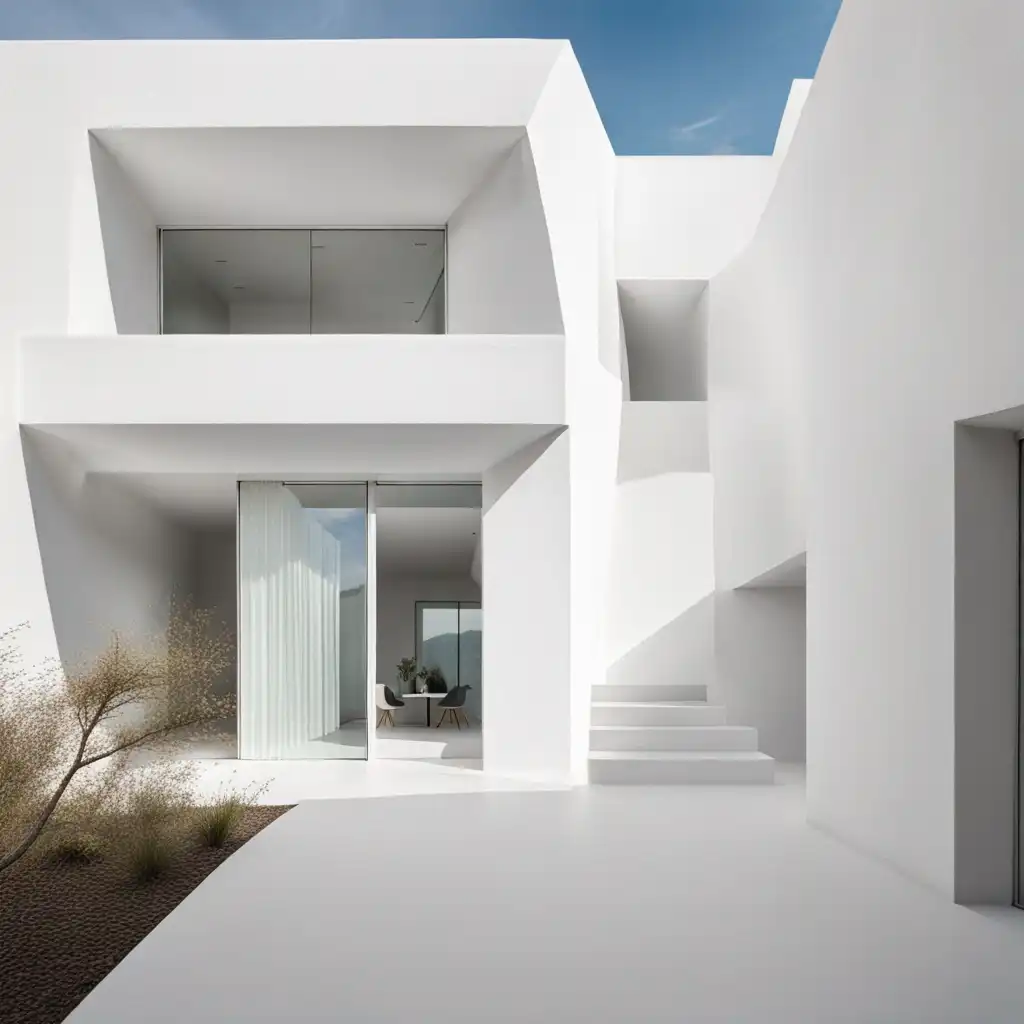
The exterior of the house was covered in white stucco.
stucco
ˈstʌkəʊ
Chargement…
ˈstʌkəʊ
A type of plaster used for coating walls and ceilings, especially outside of buildings.
The exterior of the house was covered in white stucco.
ˈstʌkəʊ
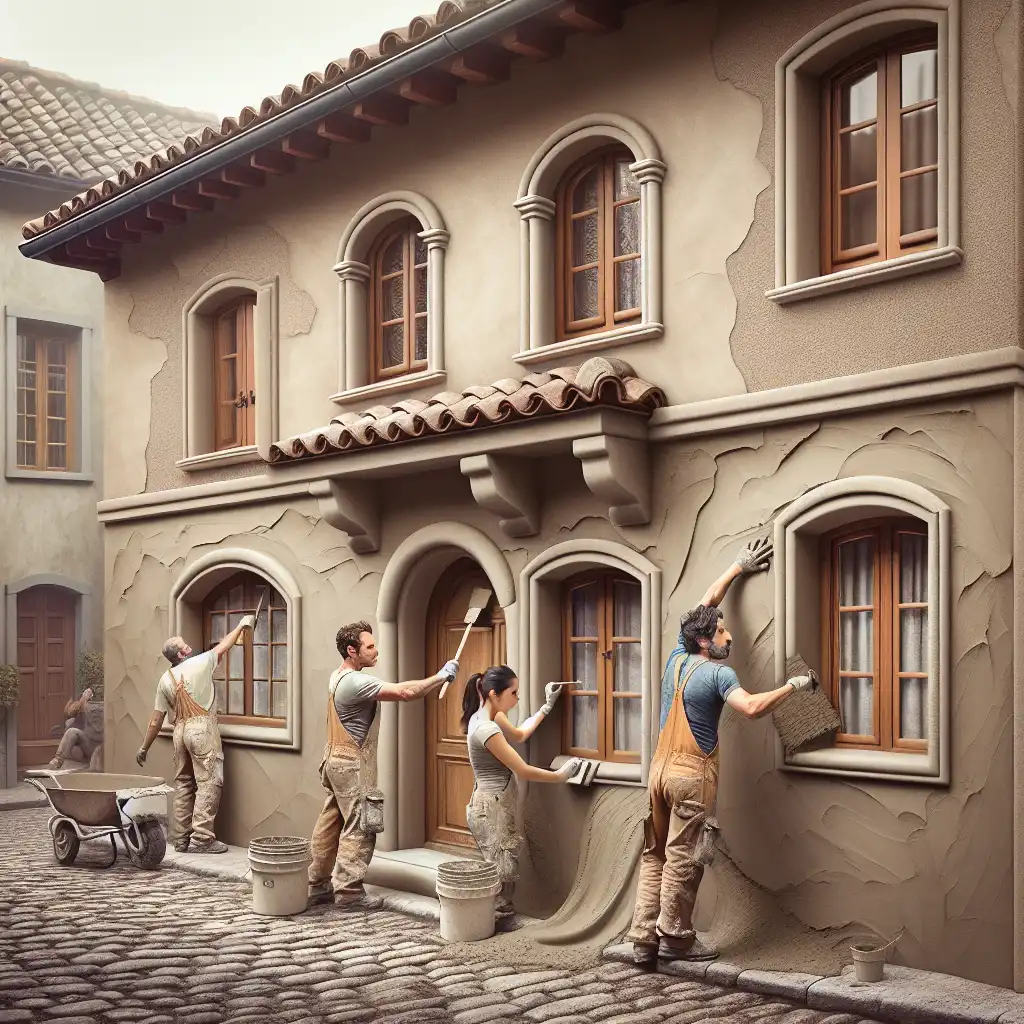
To cover or decorate with stucco.
They decided to stucco the exterior walls of the house.
Impossible de charger l’audio. Réessayez plus tard.
Stucco is a type of material that is used to decorate the outside of buildings. It is made of a mixture of cement, sand, and water that is applied to the walls of a building in layers. Stucco can be made in different colors and textures, and it creates a smooth, plaster-like finish on walls. You might see stucco used on homes, churches, or other buildings in warm, sunny climates where moisture is not a problem.
A coat is a piece of clothing that is worn to cover the body, usually with sleeves and buttons or a zipper down the front.
A coat is something you wear to keep warm, while stucco is something applied to a building to protect it and make it look nice.
Ouvrir le mot: Coat →Embellish means to decorate or enhance something with additional elements, such as adding more details or colors. This is used when you want to make something look more attractive, like adding sequins to a dress or painting a mural on a wall.
Embellish is about adding decorative details, while stucco is about adding texture and creating a specific style.
Ouvrir le mot: Embellish →Finish refers to the final coating or surface applied to a wall, ceiling, or other surface after it has been constructed. This can include paint, wallpaper, or texture.
Essentially, the finish is what makes the surface smooth or textured and gives it its final appearance.
Stucco, on the other hand, refers specifically to a type of finish that is made by applying a rough plaster mixture to the exterior of a building.
To sum up, the difference between the words finish and stucco is that finish is a general term used to describe any final coating or surface layer, while stucco is a specific type of finish that is used primarily on the exterior of buildings.
Ouvrir le mot: Finish →Molding and stucco are two different things used in construction. Molding refers to any decorative strip of material that's used to decorate or enhance the look of a structure.
Examples of molding include crown molding, door casing, and baseboards. Molding is usually made of wood or synthetic materials and is installed around doors, windows, and along walls.
Molding is used for decorative purposes inside a building, while stucco is used to protect and decorate the exterior walls of a building.
Ouvrir le mot: Molding →Ornamentation refers to decorative elements or embellishments, such as carvings, moldings, or patterns, added to a building or object to enhance its aesthetic appeal.
Ornamentation is a decorative element added to an object, while stucco is a material used to create a textured surface on walls.
Ouvrir le mot: Ornamentation →Plaster is a material made from gypsum, lime, or a combination of both, mixed with water to create a paste.
Plaster is often used in interior spaces.
It is usually applied to exterior walls and is more durable than plaster.
Plaster is used for interior walls and ceilings, while stucco is used for exterior walls.
Ouvrir le mot: Plaster →Render and stucco are both related to building materials and construction.
Render refers to coating a wall with a mixture of cement, sand, and water to make it smooth and even. This process is commonly used to cover up brick or concrete walls to give them a more finished look.
Render is best used for smoothing out walls and hiding imperfections, while stucco is more of a decorative choice that can give a building a unique look.
Ouvrir le mot: Render →David Macaulay: All...
Voir sur YouTube ↗I love the beige, tan, stucco world where the sun bleaches things out to the point that it can look somewhat ugly.
Palenque and the Ancient...
Voir sur YouTube ↗You pass the old L.A. County jail, which is surprisingly beautiful. It's got a handsome stone facade and stately columns. The new L.A. County jail - called The Twin Towers - isn't beautiful at all; it's a stucco panopticon the color of sick flesh.
The walls of the Franciscan Church of the Assumption of the Holy Virgin Mary were ruined stucco chipping away from the brick underneath, with ghostly frescoes, concrete-filled niches, and one complete, vivid crucifix painted over the altar.
Before World War II, Modernist architects sometimes had to resort to custom fabrication or outright fakery to achieve the machine imagery advocated by the Bauhaus after its initial, Expressionist, phase. Stucco masqueraded as reinforced concrete; rivets were used for decoration.